













Hello Everybody, I'm brand new here, and green AF in the tree climbing world so please go easy on me. Today I took down my first oak (first tree with an actual canopy as well) I also climbed SRT for the first time ever and had a question about the way climbers will ascend their main line if you cannot get a line up to a high limb, or get a friction saver. Today I used my flipline and had my main line in an alpine butterfly with a quickie attached, VT with a hitchhike pulley strait to my bridge ring. It worked OK, but I didn't really like how I would have to orient the main line and weight/cinch it down before it slipped down the tree each time I moved it. I just feel like there is probably a more efficient way to ascend my main line as I ascend other than every few feet resetting it up the spar? Thank you in advance for any advice and much needed help for this greenie.
Navigation
Install the app
How to install the app on iOS
Follow along with the video below to see how to install our site as a web app on your home screen.
Note: This feature may not be available in some browsers.
More options
You are using an out of date browser. It may not display this or other websites correctly.
You should upgrade or use an alternative browser.
You should upgrade or use an alternative browser.
Main climbing line cinch
- Thread starter Slaphappy
- Start date

moss
Been here much more than a while
- Location
- Carlisle, Massachusetts, U.S.
Advancing up the tree that way I would attach the Quickie on the end of my line. If you're using an Alpine Butterfly with the Quickie midline (is that what you were doing?) so you have tail hanging down as a pulldown, the weight of that line is going to constantly loosen your cinch as you try to set it above you. With a Quickie on the end of your line it's much easier to advance the cinch further, you can throw it up higher over a nub or limb ahead of you and get more vertical movement per pitch. You can hook a throw bag in the Quickie too to make your advancing throws more effective. Once you get to a good place to set your canopy anchor to work you can install your line with the AB midline to create a pulldown.
-AJ
-AJ

kludge
Participating member
- Location
- Eastern PA
In ascending the tree for removal, I would not use my main line for ascent. I would go up using spur and lanyard up. I would use my climb line as second lanyard or perhaps a short DDRT to pass crotch unions. Once I got to my TIP (tie in point) I would switch to SRT or maybe stay DDRT.
Ascending a line SRT is mainly something I do for pruning. I preset it with a throw line.
I strongly recommend Tree Climbers Companion by Jepson, getting a mentor, and watching lots of YouTube videos on tree climbing. These will get you the some of the information you need to do this job safely.
Ascending a line SRT is mainly something I do for pruning. I preset it with a throw line.
I strongly recommend Tree Climbers Companion by Jepson, getting a mentor, and watching lots of YouTube videos on tree climbing. These will get you the some of the information you need to do this job safely.

Amen.In ascending the tree for removal, I would not use my main line for ascent. I would go up using spur and lanyard up. I would use my climb line as second lanyard or perhaps a short DDRT to pass crotch unions. Once I got to my TIP (tie in point) I would switch to SRT or maybe stay DDRT.
Ascending a line SRT is mainly something I do for pruning. I preset it with a throw line.
I strongly recommend Tree Climbers Companion by Jepson, getting a mentor, and watching lots of YouTube videos on tree climbing. These will get you the some of the information you need to do this job safely.

how are you trying to set your line?
I know this info im about to type out doesnt help much in this scenario, but I hope it helps in the future
I was climbing with a local arborist a few days ago, and I ran this setup: climb line with an alpine butterfly about 5ft from my spliced eye, a biner thru the eye, then a locking shackle (uses excessive turns + friction to stay shut, basically a quickie) around my climb line, and thru the butterfly, throw the spliced end over the limb you want to tie into tie a butterfly, then connect the side you will climb on to the butterfly with the shackle/quickie and pull tight, your carabiner in the eye will run up to the limb, you can now tie in SRT, once you get to your tie in, just connect the biner in the spliced eye to your hitchclimber, or whatever device you use, dis connect any SRT aids (Ropewrench, chicane, etc), and now your DRT for work positioning and the rappel down
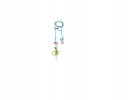
works great, drawing is crappy but I think it will get my point across
I know this info im about to type out doesnt help much in this scenario, but I hope it helps in the future
I was climbing with a local arborist a few days ago, and I ran this setup: climb line with an alpine butterfly about 5ft from my spliced eye, a biner thru the eye, then a locking shackle (uses excessive turns + friction to stay shut, basically a quickie) around my climb line, and thru the butterfly, throw the spliced end over the limb you want to tie into tie a butterfly, then connect the side you will climb on to the butterfly with the shackle/quickie and pull tight, your carabiner in the eye will run up to the limb, you can now tie in SRT, once you get to your tie in, just connect the biner in the spliced eye to your hitchclimber, or whatever device you use, dis connect any SRT aids (Ropewrench, chicane, etc), and now your DRT for work positioning and the rappel down
works great, drawing is crappy but I think it will get my point across
Thanks for the advice there, I did have a longer tail than needed after the butterfly, so the weight pulling it down makes sense. I'm definitely going to try that throwbag trick, and come back a bit closer to the tail. I appreciate the response!Advancing up the tree that way I would attach the Quickie on the end of my line. If you're using an Alpine Butterfly with the Quickie midline (is that what you were doing?) so you have tail hanging down as a pulldown, the weight of that line is going to constantly loosen your cinch as you try to set it above you. With a Quickie on the end of your line it's much easier to advance the cinch further, you can throw it up higher over a nub or limb ahead of you and get more vertical movement per pitch. You can hook a throw bag in the Quickie too to make your advancing throws more effective. Once you get to a good place to set your canopy anchor to work you can install your line with the AB midline to create a pulldown.
-AJ
I did get the Jepson trio of books, great stuff in there and youtube as well is a very valuable and helpful resource for sure. Still looking for that mentor though, so thats why Im coming to this forum filled with people that have the knowledge and experience and I'm hoping to sponge up as much as possible. Thanks for the advice on using the main line as a secondary lanyard, I'll have to try that out.In ascending the tree for removal, I would not use my main line for ascent. I would go up using spur and lanyard up. I would use my climb line as second lanyard or perhaps a short DDRT to pass crotch unions. Once I got to my TIP (tie in point) I would switch to SRT or maybe stay DDRT.
Ascending a line SRT is mainly something I do for pruning. I preset it with a throw line.
I strongly recommend Tree Climbers Companion by Jepson, getting a mentor, and watching lots of YouTube videos on tree climbing. These will get you the some of the information you need to do this job safely.
Thank you for the reply, the drawing gets the point across fine and is super helpful. Looks like we were running very similar setup, but the carabiner at the rope end is something I didn't think of, I like the thought of being able to use it as another lanyard and being able to maneuver it around easier. I'm going to try this out this weekend and my rope wrench will finally be in! so Ill be able to play around with the system a bit. Thanks again for the great replyhow are you trying to set your line?
I know this info im about to type out doesnt help much in this scenario, but I hope it helps in the future
I was climbing with a local arborist a few days ago, and I ran this setup: climb line with an alpine butterfly about 5ft from my spliced eye, a biner thru the eye, then a locking shackle (uses excessive turns + friction to stay shut, basically a quickie) around my climb line, and thru the butterfly, throw the spliced end over the limb you want to tie into tie a butterfly, then connect the side you will climb on to the butterfly with the shackle/quickie and pull tight, your carabiner in the eye will run up to the limb, you can now tie in SRT, once you get to your tie in, just connect the biner in the spliced eye to your hitchclimber, or whatever device you use, dis connect any SRT aids (Ropewrench, chicane, etc), and now your DRT for work positioning and the rappel down
View attachment 74190
works great, drawing is crappy but I think it will get my point across
hope everything works out for ya, ever since learning this setup, I have used it almost daily without issues, only annoying thing is, to get your line back you must go DRT, although a longer tail on the spliced end will make it retrievable from the groundThank you for the reply, the drawing gets the point across fine and is super helpful. Looks like we were running very similar setup, but the carabiner at the rope end is something I didn't think of, I like the thought of being able to use it as another lanyard and being able to maneuver it around easier. I'm going to try this out this weekend and my rope wrench will finally be in! so Ill be able to play around with the system a bit. Thanks again for the great reply
just my $.02

Stumpsprouts
Been here much more than a while
- Location
- Asheville
If you leave just a few feet of retrieval tail after the alpine butterfly, you can tie any old rope to it if you’re running short on your climb line and pull on that when you’re done. (That would be more for a pruning climb)hope everything works out for ya, ever since learning this setup, I have used it almost daily without issues, only annoying thing is, to get your line back you must go DRT, although a longer tail on the spliced end will make it retrievable from the ground
just my $.02
Gawd knows I love SRT and use it whenever humanly possible, but part of becoming a competent well-rounded treeman is developing as many skillsets as you can, and knowing when to deploy the right skillset for a given job...Hello Everybody, I'm brand new here, and green AF in the tree climbing world so please go easy on me. Today I took down my first oak (first tree with an actual canopy as well) I also climbed SRT for the first time ever and had a question about the way climbers will ascend their main line if you cannot get a line up to a high limb, or get a friction saver. Today I used my flipline and had my main line in an alpine butterfly with a quickie attached, VT with a hitchhike pulley strait to my bridge ring. It worked OK, but I didn't really like how I would have to orient the main line and weight/cinch it down before it slipped down the tree each time I moved it. I just feel like there is probably a more efficient way to ascend my main line as I ascend other than every few feet resetting it up the spar? Thank you in advance for any advice and much needed help for this greenie.
If you are doing an oak removal and cannot set a line from the ground then spurs are by far your best option..Simply the right tool/skillset for the job.
As kludge said, spur/flipline up while using your climbing system to pass limbs/unions until you get to your chosen TIP. Then deploy whichever flavor (SRT or DdRT) works best for the task at hand.
As a young climber please to not make the mistake of overlooking, underestimating, or neglecting DdRT. Many times it is the better tool for the job....
Last edited:

SomethingWitty
Arkansawyer
- Location
- LR
I still almost always work down removals on a moving rope unless it's a slick spar that I would have to set a choking system on. It's just so smooth to cut, descend, reset in seconds, cut and repeat.Gawd knows I love SRT and use it whenever humanly possible, but part of becoming a competent well-rounded treeman is developing as many skillsets as you can, and knowing when to deploy the right skillset for a given job...
If you are doing an oak removal and cannot set a line from the ground then spurs are by far your best option..Simply the right tool/skillset for the job.
As kludge said, spur/flipline up while using your climbing system to pass limbs/unions until you get to your chosen TIP. Then deploy whichever flavor (SRT or DdRT) works best for the task at hand.
As a young climber please to not make the mistake of overlooking, underestimating, or neglecting DdRT. Many times it is the better tool for the job....
I think the people who are starting on SRT are missing out on a lot of fun and building some sweet upper body strength, too.
Thank you for the input Rico. I have only set up the Ddrt system once before and like I said in the post that was my first SRT climb as well, previously I only took down pine, cut as climb with spikes & double lanyard, one on upper d's other on lower d's (definitely not efficient or the safest but hey we all gotta aquire gear and start somewhere. I am so green I do have a ton to learn, and I'll be on the forums more and more to gain as much knowledge as possible, and try and get as much experience as I can at the same time. Thx for the advice!Gawd knows I love SRT and use it whenever humanly possible, but part of becoming a competent well-rounded treeman is developing as many skillsets as you can, and knowing when to deploy the right skillset for a given job...
If you are doing an oak removal and cannot set a line from the ground then spurs are by far your best option..Simply the right tool/skillset for the job.
As kludge said, spur/flipline up while using your climbing system to pass limbs/unions until you get to your chosen TIP. Then deploy whichever flavor (SRT or DdRT) works best for the task at hand.
As a young climber please to not make the mistake of overlooking, underestimating, or neglecting DdRT. Many times it is the better tool for the job....
Definitely gonna try out more Ddrt very soon, maybe I'll play around this weekend with the settup. Thx for the responseI still almost always work down removals on a moving rope unless it's a slick spar that I would have to set a choking system on. It's just so smooth to cut, descend, reset in seconds, cut and repeat.
I think the people who are starting on SRT are missing out on a lot of fun and building some sweet upper body strength, too.

Reach
Been here much more than a while
- Location
- Atglen, PA
I’ll second that one, for sure! If you know the basics, you can get yourself out of a lot of trouble should your mechanical devices fail/break/jam. Otherwise, you’re stuck until someone rescues you.Definitely learn and practice it, it’s a basic fundamental skill.
I love the gadgets too, but any working climber should be able to safely get around up there with nothing but a saddle and rope.












New threads New posts
-
test
-
-
 Free CEUs: February 05 & March 05 - 'Urban Forestry Today' Webcasts @ Noon (Eastern)
- Started by UFT
- Replies: 0
-

-

-
-








