Lakeside Work

Brando CalPankian

Carpal tunnel level member
Location
Pine City, MN
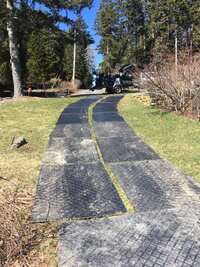
So it finally happened. I finally had a job where we obliterated someone's yard. In all my years I've never screwed up a yard so bad.

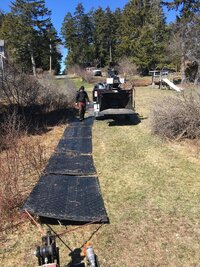
We matted the turf, we caught every piece, we used the avant, we did everything we could. It still got ruts and damaged. 10 yards of soil and 40 lbs of seed plus straw and now a day and a half to fix it.

What more can be done? The client is bummed but understands. It's in a million dollar home area. I'm mortified. Nothing would have been in the reach of a crane under 400'. Even a backyard crane wouldn't have helped. There was a massive slope with only one tiny entrance going through the neighbors yard (luckily his daughter).

I'm at a loss. Would 50 mats help? How do you mitigate this or how do you determine when this has a high likelihood of happening? It's been dry and all the ice was off the lake. He went out and checked prior to work and gave us the go ahead.

Trying not to beat myself up but I feel bad for my crew and the customer. I was expecting some damage but not a half yard renovation.
 
From what I’m reading the only viable option is to set a realist expectation.
Don’t rely on the client to check, go there and meet with them. Walk the same ground as you know your equipment and tree work.

You can skip the avant- which isn’t realistic, smaller lighter machine and more trips? Maybe lay down some plastic and make a THICK chip road and mat on top of that. But it would probably take twice the time as just fixing the damage.

Would matted mini skid road been better? Push or pull a trailer or cart?
Wider load dispersal?
Frozen ground?

Lawn damage waiver?
 
I figured there would be some damage. The bottom completely fell out. It was bad. The mats were sliding down the hill even with the grippy side down.

I was out two weeks prior. We'd planned it for last week but with the chaos that happened we pushed to this week. Not much for precip between then. I could have checked, and probably will in the future. Maybe probe the ground deeper than a foot?

It seemed like the trips were the issue. The ground was dry but as we kept driving over it it seemed like the water got pulled up. We left for a bit today to get top soil and when we came back it'd dried back up some.

Never thought of a chip road. Or maybe just start with top soil then mats? We'd have been money ahead to have felled the trees and fix the damage for sure since we're fixing damage now anyways....

I've been thinking about the mini skid. Maybe pinning the mats to the hill could have helped too (just crossed my mind). We'd have needed 50+ mats to do the whole yard. We matted the areas we were driving most and they ended up just as bad oddly.

The hill made frozen ground a no go, one oak was so dead I wouldn't have climbed it. 2 large (30"+) ash trees and one large (40") white oak. The wood was heavy. We took small sections but it didn't seem to matter. Felt like damned if we do damned if we don't.

Maybe ball cart and winch? Would have cost a fortune in time.

Have y'all just told a client "look, it's going to fuck shit up. We'll just plan on fixing it?" Maybe that would have been better. We have a turf waiver but this was not something I'd have been okay with leaving.

Back to the mini skid idea.... I've only ran the small bobcat one. It sucked for removals. Maybe there's better grapples/tip load ones that could have been better in this scenario. Maybe someone on here has a good take about mushy ground success with one.

Thank you for the insight.
 
Really interesting - years ago I was on the way to a gas plant on lease roads (gravel) in wooded hilly areas up north. The field operators had warned us to be out by about ~11:00 AM in the spring for couple of weeks. What happened they related, was the sun would hit the shrub covered hills beside the road in spots and because of the soil/ gravel, run off every spring would make it's way down the slopes towards the road, but under the roadbed which was still frozen. They had ditched and drained to their hearts content but everything iced up and the water would flow downhill no matter what they did. The undersurface water would turn the road into quicksand in spots if your 4X4 broke thru the ice crust and it would be a winching operation for hours to get outta there. Sure enough, we were late and we got two trucks stuck and spent the afternoon in a dig/ mat/ winch fest to get back to pavement. Funny things can happen with water and run off in the spring. After spring freeze/ thaw in the summer the road was fine. Never forget that lease road.
 
Really interesting - years ago I was on the way to a gas plant on lease roads (gravel) in wooded hilly areas up north. The field operators had warned us to be out by about ~11:00 AM in the spring for couple of weeks. What happened they related, was the sun would hit the shrub covered hills beside the road in spots and because of the soil/ gravel, run off every spring would make it's way down the slopes towards the road, but under the roadbed which was still frozen. They had ditched and drained to their hearts content but everything iced up and the water would flow downhill no matter what they did. The undersurface water would turn the road into quicksand in spots if your 4X4 broke thru the ice crust and it would be a winching operation for hours to get outta there. Sure enough, we were late and we got two trucks stuck and spent the afternoon in a dig/ mat/ winch fest to get back to pavement. Funny things can happen with water and run off in the spring. After spring freeze/ thaw in the summer the road was fine. Never forget that lease road.
This is really relatable. We were fine until about noon. I was just finishing the second ash and the ground turned to goo. It seemed like we couldn't go anywhere with the machine at all. I figured being that close to the lake the frost had to be out (lake was 90% clear, today there was boaters). Maybe it's my inexperience with Minnesota weather. Tbh that would make sense.
 
High-lead yarding with a winch across mats.


Pics and / or diagrams/ distances help for the ideas.


Mats reduce ruts but don't prevent them. Steel road plates would still leave marks. Matt's help you to not get stuck or tear turf.


Alturnalinks are hugely helpful.
I'll look into alturnalinks. We got sand hill plastics 4x8's. I didn't realize it could still leave marks. I've only used plywood, which sucks to move. I should have some time to draw something up soon.

The not tearing makes so much sense. There were large swaths of unbroken grass with 4" ruts. I'd never seen anything like it. The areas that were broken were the areas we turned, the hill, and where the mats didn't link up.

This is making so much more sense. I'll bet we could roll out some of the lumps with a turf roller.
 
Sometimes it’s more of a vibration thing. Like working with concrete, vibrate it and the ‘cream’ rises.
I’ve driven into spots with the chipper to fly chip. Easy going yet when I got out of the tree the chipper was up the axle as the truck was following. Groundie didn’t notice!?
It was just the vibration of the machine and it was enough to goo up the soil. On our bluffs there are dikes that look like you took a puddle of water color and blew on it with a straw. Some look a lot like trees fanning upward on the faces. The theory some geologists are disputing is these are slim fissures and small earthquakes ‘inject’ upwards from deeper layers pushing fine particles upwards and fan out.
 
I would call this a learning experience. Now you can outline a realistic expectation for customers and most of the time they will be pleasantly surprised by how much you did NOT fuck up their lawn. And when it just happens, you can say sorry, but this is just the nature of tree work. It’ll look fine. Some of the tree job sites I see look like mars around here by the time they’re done, people don’t even try. You do really important and dangerous work that requires a lot of skill, and that needs to be appreciated and put into perspective for clients.
 
When we start a job and the minute it starts to leave a larger impact on a yard than I explained to the h.o then I immediately present the updated information to them and explain.

Either we can pause your project until it dries out to complete the job under the conditions that was explained to at the time of the estimate or the h.o will accept all impact from this point forward and we will finish.

This is the best procedure that we’ve came up with and people either understand or don’t.

Sucks going back to a job but better than fixing yards for free.
 
Some juices aren't worth the squeeze. We have a rich neighborhood right next to Detroit and some of the homeowners have an idea in their head that they get quoted unfairly high prices for tree work because "people think we have lots of money". Well they do, most are extremely well off. The other part of it though is that the clean-up and yard impact expectation is so high, it just costs more because it takes much more time and care. We've had people spot 1/8" twigs about 12" long in a "native plant garden" and ask us to go over the yard again. Get outta here with that crap.
 
Really like that idea of the mats tied together. What’s the storage setup look like. Always trying to figure out how not to have to carry single mats on my back lol
We do it sporadically so generally we tie them onsite. Otherwise folding them in sets of 5(?) and transport on a large pallet with forks. A job last Fall had a bunch strung out for the mini on a steep yard so the upper mat was tied to the base of a planting. The links Southsound mentioned look dope.
 
So it finally happened. I finally had a job where we obliterated someone's yard. In all my years I've never screwed up a yard so bad.

We matted the turf, we caught every piece, we used the avant, we did everything we could. It still got ruts and damaged. 10 yards of soil and 40 lbs of seed plus straw and now a day and a half to fix it.

What more can be done? The client is bummed but understands. It's in a million dollar home area. I'm mortified. Nothing would have been in the reach of a crane under 400'. Even a backyard crane wouldn't have helped. There was a massive slope with only one tiny entrance going through the neighbors yard (luckily his daughter).

I'm at a loss. Would 50 mats help? How do you mitigate this or how do you determine when this has a high likelihood of happening? It's been dry and all the ice was off the lake. He went out and checked prior to work and gave us the go ahead.

Trying not to beat myself up but I feel bad for my crew and the customer. I was expecting some damage but not a half yard renovation.
Don’t beat yourself up shit happens. You took precautions and conditions won out. You came back in and fixed things making it right, in a few weeks I doubt you will be able to tell you were even there. It’s just grass.
I get the blow to your ego and I’ve been there too. It’s not like you set out to make a mess when you left the shop. Take it as a learning experience and move on.
 
We do it sporadically so generally we tie them onsite. Otherwise folding them in sets of 5(?) and transport on a large pallet with forks. A job last Fall had a bunch strung out for the mini on a steep yard so the upper mat was tied to the base of a planting. The links Southsound mentioned look dope.
I've parked my truck on the top of the hill on the top mat as an anchor for the chain of mats.
 
So much good information here. It's been super insightful.

We made it right. A lot of time and energy to get things prepped and ready. Customer is happy.

Moving forward, I now know more. More info for clients, what to be looking for, and more mats. We got a big grass roller too.

Articulating why it happened was helpful. I think it eased his mind and mine.

The end result should be a better yard than he started with. Doing his stumps for free this fall too.

Thank you for all of the replies. It helped a lot.
 

New threads New posts

Kask Stihl NORTHEASTERN Arborists Wesspur TreeStuff.com Teufelberger Westminster X-Rigging Teufelberger
Back
Top Bottom