Re: Just \"fixed\" the weak spot in my rigging system
[ QUOTE ]
Hey Jomoco.
I know what you mean - but it is the rigging rope and the sling that attaches the block that takes almost all the dynamic force. I assume you are consearned about the "crane sling"? I know it is ment for static lifting - but the safe working load is way (!) higher than the other components in the system, so I am pretty sure it is a far safer choise than sling tied of rigging rope or similar.
Or am I completely off track here...?

Climb safe..!
[/ QUOTE ]
When I'm doing crane removals I like steel chokers and a clevis for medium to heavy picks, but these are low dynamic controlled picks.
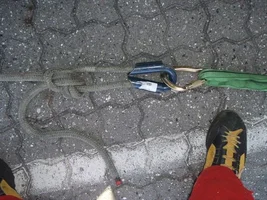
I kinda jumped Reg's case when I watched one of his vids of a highly dynamic takedown in which he tied off his loads with two half hitches and steel biner lock-off. This struck me as being improper rigging because each load would crash into the lowering spar with enough violence that had the primary impact against the spar been applied to that steel biner, serious damage would have been inflicted on either the biner or the rope. I can see steel on steel being able to withstand that kind of dynamic impact, but steel on rope?
I'm paranoid enough in these situations to explicitly avoid sharp or rough wood edges that could cut/wear my bull lines and adding steel into that dynamic mix is unnecessary in my opinion.
So when I'm doing highly dynamic takedowns that involve lots of loads crashing into spars and slapping about, I avoid any steel in my load tie-offs and use only pure rope terminations, generally two half hitches locked off with a timber hitch.
Two separate applications, and two distinctly separate rigging methods.
I like your rigging for controlled crane work, but question it's use in highly dynamic rigging use in the tree itself without a crane.
jomoco