
Navigation
Install the app
How to install the app on iOS
Follow along with the video below to see how to install our site as a web app on your home screen.
Note: This feature may not be available in some browsers.
More options
You are using an out of date browser. It may not display this or other websites correctly.
You should upgrade or use an alternative browser.
You should upgrade or use an alternative browser.
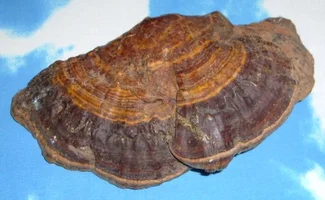
id this fungus?
- Thread starter stevebullman
- Start date


- Location
- The Kingdom of Fife
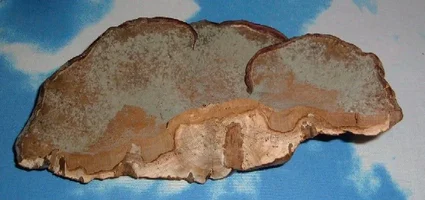
Steve, has the hallmarks of ganoderma spp, but I would not like to say that it is. Diagnossis before prognossis that was what I was taught. Could not find it in my books either. Looks a pretty established growing Fb. I´ll keep searching though.
Scotty
Scotty
- Location
- The Kingdom of Fife
- Location
- The Kingdom of Fife
i dont think thats what it is but im not sure.....i dont think that has a concave underside does it?
- Location
- The Kingdom of Fife
Not to sure also, it is hard to tell. The last time i probably saw a resinaceum was probably at college. that book Diagnosis of ill health in trees needs to be updated, maybe it has been Ive got the second edition. tried searching the web also but was running into brick walls.
Scotty
Have you tried burning the upper surface with a lighter apparently Ganoderma spp bubbles.
Scotty
Have you tried burning the upper surface with a lighter apparently Ganoderma spp bubbles.
Here's an excellent Brit site of fungi
http://194.203.77.76/fieldmycology/
You can check it out, my vote is ganoderma resinaceum
http://194.203.77.76/fieldmycology/
You can check it out, my vote is ganoderma resinaceum

- Location
- Lansing, NY
How about Ganoderma applanatum
nice site ekka cheers.
im just not totally convinced its a ganoderma, but ive yet to find anything else. most ganoderma fungus i coe across are convex at the bottom, thats whats throwing me
im just not totally convinced its a ganoderma, but ive yet to find anything else. most ganoderma fungus i coe across are convex at the bottom, thats whats throwing me
This fungi is most likely to be Ganoderma lucidum. It is commonly known as Ling Chih. This fungi has a shiney surface on top. It should be corky/moist when fresh and woody/dry when old. It should have no odor. This fungi generally grows on living deciduous trees.
Someone mentioned that it may be Ganoderma applanatum. But it doesn't appear to be it because G. applanatum does not have a shiney surface and has grey and brown to black concentric rings. The pictured showed here has reddish tints and appears to be shiney. The white-greyish areas that you see in additional photos is probably a secondary fungus (mold), which is indicative of the later stages of decomposition.
It cannot be a Resinous polypore (Ischnoderma resinosum) because this polypore grows on nonliving logs and stumps of deciduous trees and does not have a shiney cap. Rather, it has a velvety cap and has liquidy amber drops that exude from the underside. It also a anise (black licorice) odor and is soft like a saturated sponge when fresh - not corky.
Note that the G. lucidum is a concern for arborists, for it is a heart rot fungus for deciduous trees. Now, I. resinosum is not a concern because it is a dead-feeder and does not grow on living trees.
I don't know what location you found it at, though.... it could be Ganoderma oregonense, if you found it in the NW US, eg Washington State.
I have additional photos of all these species if anyone would needs extra images for their reference collection.
Ty
Someone mentioned that it may be Ganoderma applanatum. But it doesn't appear to be it because G. applanatum does not have a shiney surface and has grey and brown to black concentric rings. The pictured showed here has reddish tints and appears to be shiney. The white-greyish areas that you see in additional photos is probably a secondary fungus (mold), which is indicative of the later stages of decomposition.
It cannot be a Resinous polypore (Ischnoderma resinosum) because this polypore grows on nonliving logs and stumps of deciduous trees and does not have a shiney cap. Rather, it has a velvety cap and has liquidy amber drops that exude from the underside. It also a anise (black licorice) odor and is soft like a saturated sponge when fresh - not corky.
Note that the G. lucidum is a concern for arborists, for it is a heart rot fungus for deciduous trees. Now, I. resinosum is not a concern because it is a dead-feeder and does not grow on living trees.
I don't know what location you found it at, though.... it could be Ganoderma oregonense, if you found it in the NW US, eg Washington State.
I have additional photos of all these species if anyone would needs extra images for their reference collection.
Ty
Nice Rankinaceae and welcome.
http://www.forestpests.org/ash/varnishfungus.html bit of a link, the only thing that made me think not this one was there's no "white" around or underneath the bugger.
If ya got pics, post away.
http://www.forestpests.org/ash/varnishfungus.html bit of a link, the only thing that made me think not this one was there's no "white" around or underneath the bugger.
If ya got pics, post away.
thanks for the input rankin but i can def rule out lucidum as theres no lateral stalk!
4 days on and i just realized i put this in the wrong thread doh!
Apologies if I have been unclear. Ganoderma lucidum does NOT have any white or grey characteristics. I meant that if you have noticed white or grey on the top of this fungus it is most likely from a secondary fungi. That is, some kind of mold that was eating up the remains of a very old Ganoderma lucidum. If there were grey, brown or black zonations on it it would most likely be Ganoderma applanatum.
Note that according to the Audubon Society Field Guide to North American Mushrooms by Lincoff and Knopf; Mushrooms of Northeastern America by Bissette and Bissette and Mushrooms and Other Fungi of North America by Phillips a lateral stalk is NOT always present with Ganoderma lucidum. Therefore a lateral stalk CANNOT be a dependable morphological characteristic to determine this species.
Note that according to the Audubon Society Field Guide to North American Mushrooms by Lincoff and Knopf; Mushrooms of Northeastern America by Bissette and Bissette and Mushrooms and Other Fungi of North America by Phillips a lateral stalk is NOT always present with Ganoderma lucidum. Therefore a lateral stalk CANNOT be a dependable morphological characteristic to determine this species.
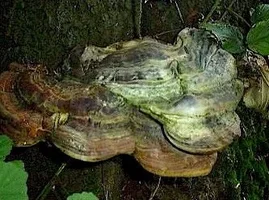
Just sending some pics of fungi as I previously promised.
This is a photo of an old, dry and aged Ganoderma applanatum. The green tints are NOT indicative to this species but are rather due to algae. Note that there is no red colors of any kind associated with this species.
Ganoderma applanatum is very diverse fungus for it can reside on deciduous or coniferous trees whether living or not. Therefore, Ganoderma applanatum can be considered a heart rot of living trees.
This is a photo of an old, dry and aged Ganoderma applanatum. The green tints are NOT indicative to this species but are rather due to algae. Note that there is no red colors of any kind associated with this species.
Ganoderma applanatum is very diverse fungus for it can reside on deciduous or coniferous trees whether living or not. Therefore, Ganoderma applanatum can be considered a heart rot of living trees.
Attachments
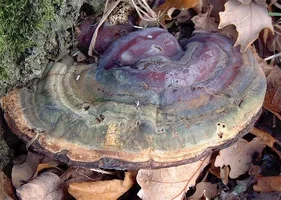
More photos here:
Ganoderma applanatum is also referred to as "The Artist's conk because you can literally write/draw on the underside when fresh.
Note that the color of the spores of Ganoderma applanatum are brown. The fungus on this post was taken from the lower areas of a 'shelf' arrangement. As a result, the spores were dropped onto the upper side of this specimen giving it a more brownish color. Algae and spore drops such as in this photo and the last commonly confuse accurate identification attempts.
Ganoderma applanatum is also referred to as "The Artist's conk because you can literally write/draw on the underside when fresh.
Note that the color of the spores of Ganoderma applanatum are brown. The fungus on this post was taken from the lower areas of a 'shelf' arrangement. As a result, the spores were dropped onto the upper side of this specimen giving it a more brownish color. Algae and spore drops such as in this photo and the last commonly confuse accurate identification attempts.
Attachments
More photos again:
This is the upper portion of Ischnoderma resinosum or more commonly referred to as the Resinous Polypore. Note the "velvet" appearance of cap and that it is not shiny. It is rather soft and saturated with water when fresh and will occasionally give off an anise odor (like black licorice).
This is the upper portion of Ischnoderma resinosum or more commonly referred to as the Resinous Polypore. Note the "velvet" appearance of cap and that it is not shiny. It is rather soft and saturated with water when fresh and will occasionally give off an anise odor (like black licorice).
Attachments
More photos here:
Ischnoderma resinosum will also exude amber drops of fluid from the underside of the cap when fresh. This species is NOT found on living wood but rather strictly on dead/decaying wood. Therefore, this species is not a problem in the way of heart rot of trees.
Ischnoderma resinosum will also exude amber drops of fluid from the underside of the cap when fresh. This species is NOT found on living wood but rather strictly on dead/decaying wood. Therefore, this species is not a problem in the way of heart rot of trees.
Attachments
New threads New posts
-
test
-
KBNest -Midline Attachable SRS Canopy Anchor.
- Started by TreeSteward
- Replies: 1
-

-
-

-
-


