How dead is TOO dead?

How dead is too dead? @colb
Testing to failure is obviously an option in some situations. When it's not you apply the forces necessary to make observations and place barriers, blocks, supports, redirects or whatever solution necessary to avoid collatera damage.
Sooooo it really is never too dead.

Sounds identical to dealing with live trees... Thanks for putting up with my reticence.
 
Wasn't trying to be a dick but thanks for the comment!! Appreciate it. Probably the biggest lesson I have taken away from this whole dead tree talk over the last few years is, if you lack the experience and do not have an experienced mentor with you as a coach walk away. I am not experienced with dead trees. I own that and gauge every dead one by that motto. If its too much for my experience level (with dead trees) I have nothing to prove. No on a totally unrelated but sort of related note. I have lost respect for bosses who would knowingly put their employees health at risk to make a buck. I worked for a guy who would put the other climber in dead punky and rotten trees all the time. He finally came to know he couldn't bully me into it. He got tired of sending me home at the cost of proving a point. Sometimes I would tell him I wasn't confident about a certain tree. He would say, no problem, I wouldn't climb it either and then put the retard up there. It's wrong. There are many ways to skin a cat and do so by reducing risk. If it is impossible to reduce that risk then let somebody else get the job. Is it work the health of your guys? Is it worth the financial impact to your biz to settle in a law suit? There's more than one tree in the city. Passing on a job isn't a pride thing. Sometimes its prudent. Charge out the ass. Get 2 cranes on the job, rent a lift, get a helo. Why is it on us to do the job cheaply? We aren't the ones who let this thing sit there dead for years and then want it down now. So you never change the oil in your truck. Neglect rite? Then it blows up and you want it repaired for the price of an oil change? BS. Homeowner neglect. It's not our responsibility to cushion the blow financially at the cost of our safety. Our industry doesn't get paid as it should due to this bidding practice. I better bid low because whoever tree company will get the job. Screw it, let them have it!! Then the homeowner will know when somebody gets killed or their property is trashed. Not my problem. I once bid a good job at a reasonable price. Somebody lowballed me by $75.00 The company who did the job pushed a large oak block off the spar onto a groundie. He didn't die but he was bad off. Had no workmans comp either. Customer called me and asked what they should do about the remainder of the tree. I did not finish it for them. Maybe because I asked if the $75.00 was worth all that or maybe because I told them I did not want the job. Who knows. I didn't even let the conversation get far enough to give a price. There is no fair market value for tree work from the consumers view point. We are expected to be cheap. Screw that, price it for what its worth no matter what the cost. We are talking about the health of our workers and the liability of our companies.

I want to pass an offering plate at this time. Thank you, Steve, for that powerful message.
 
Advice to bust out some of the dead limbs with a throw line is a good one if it can work in that situation. That will tell you lots before you even climb, and also possibly save you. I've worked in dead trees where I haven't worried unduly about the base or even my tie in, but that an unstable limb will break, catch and ride my rope down onto my head.
It's always helpful to know when and why a tree has died too. That can help you decide.

Sent from my SAMSUNG-SM-G930A using Tapatalk
 
If it's to shaky to climb and tie into, then look for alternative tie in points. Two lines in 2 adjacent trees, a crane, a DMN rigging hub suspended by other lines, or use a lift. Common sense will keep you safe if you listen. I remember one I descended out of when I got about 2/3s up. I was face level with a cluster of 5 wood pecker holes that were penetrating 3/4 in and I was already watching the tips shake more and more as I climbed. I set a pull rope under the holes and we pulled it over with a base cut. We had the room but it was unfortunate for the client a couple bushes were sacrificed. That or call in a crane .... which the client did not want to pay for. As said earlier, no crew should have to be called to risk life and injury because of home owner negligence.
 
Break-away Pole Strap -
May save my life, someday:

Dead trees...
Working out dead stems adjacent to your primary anchor spar...

(Note: no matter how you choose to use or modify this technique it is ALWAYS implied that you have a second form of protection attached to an entirely independent anchor point other than what your lanyard is triangulated to!)

Check this out. Takes a while to trust it. Never had one fail, yet. Never tested one to failure; probably should if only for my brain’s sake. Depending on scenario, you decide how many rings to clip into. This might be the 3rd set of split rings I’ve replaced due to use deformities in 10 years.

break-away-lanyard-rings_20150410_183948-jpg.31415
 
The breakaway lanyard point is must know knowledge when you have a solid tip but the branch or tree you are on is heavy and may fail. In the event of failure your lanyard will turn loose of the anchor your lanyard is tied to and prevent tip failure.
 
Break-away Pole Strap -
May save my life, someday:

Dead trees...
Working out dead stems adjacent to your primary anchor spar...

(Note: no matter how you choose to use or modify this technique it is ALWAYS implied that you have a second form of protection attached to an entirely independent anchor point other than what your lanyard is triangulated to!)

Check this out. Takes a while to trust it. Never had one fail, yet. Never tested one to failure; probably should if only for my brain’s sake. Depending on scenario, you decide how many rings to clip into. This might be the 3rd set of split rings I’ve replaced due to use deformities in 10 years.

break-away-lanyard-rings_20150410_183948-jpg.31415

Such a cool idea!
My roommate uses 3 of these big heavy duty zip ties for the same thing.
I hadn't thought about split rings. I could toss a set on and just clip them out of the way most of the time.

I just thought about keychain biners. Do they come in locking and with low load ratings?
 
Nice post, Brian. Welcome to the TreeBuzz forum! I look forward to reading more from you.

Tim
B. Lats is a smart dude and creative mind.

There are some accessory clips out there rated for 150+lbs.
If your on a wind-twisted piece of wood and it shifts slowly, is a "breakaway" set up that covers you for you body weight + sum going to snap away? I feel like some set ups are a mental sense of security, or something that would work if there was a complete break/failure, not if things shifted kinda slow, which I guess in some case would leave you time to unclip and move yourself?
I have no experience trying breakaway stuff, or testing them to break away. Anyone have any experience with using a breakaway set up that was tested out by a work situation? In other words, has anyone had they're set up work before in a worst case scenario event?
 
Such a cool idea!
My roommate uses 3 of these big heavy duty zip ties for the same thing.
I hadn't thought about split rings. I could toss a set on and just clip them out of the way most of the time.

I just thought about keychain biners. Do they come in locking and with low load ratings?

So those rings will break in the even the trunk does? Preventing it from pulling you down with your attached lanyard? (Assuming of course you are tied in to something other than the dead tree as well)
 
So those rings will break in the even the trunk does? Preventing it from pulling you down with your attached lanyard? (Assuming of course you are tied in to something other than the dead tree as well)
That's the concept. Good tie in elsewhere and a breakaway short safety for positioning that is strong enough to work, but not strong enough to rip you in half.
 
Kris, that's a tough question to chime in on. It's nice to hear you don't have the Superman ego common among climbers and it sounds like you did a good assessment of the situation. With a couple years under your belt you are still probably learning your boundaries both in what you are comfortable with and what you are physically able to achieve. It may take a few more to gain the experience and confidence to truly determine whether a dead tree can be climbed safely and what actions can be taken to mitigate the dangers each tree presents. It's good to step outside of your comfort zone every once in a while, that's how you improve, but putting yourself in a situation that makes you truly uncomfortable can lead to serious mistakes.

Having a strong knowledge of the species and the hazards associated with the species in question will go a long way. Are there specific defects or hazards that the tree is prone to? How well does the tree compartmentalize decay? What caused the tree to die/die back. How does the specific insect or disease that killed the tree affect it's structural integrity? What factors may lead to failure? Root instability? Sap rot? Decay? So it's not so much a question of how dead is too dead, it's a game of spot what's trying to kill me and is it possible to work around these issues.

There are so many rigging techniques to reduce the load on the tree but sometimes the best option is to look at removing potential targets. Fences, sheds and even decks can be moved. I've had clients opt to move a structure to save paying for a tracked lift or crane.
 
Last edited:
Kris, that's a tough question to chime in on. It's nice to hear you don't have the Superman ego common among climbers and it sounds like you did a good assessment of the situation. With a couple years under your belt you are still probably learning your boundaries both in what you are comfortable with and what you are physically able to achieve. It may take a few more to gain the experience and confidence to truly determine whether a dead tree can be climbed safely and what actions can be taken to mitigate the dangers each tree presents. It's good to step outside of your comfort zone every once in a while, that's how you improve, but putting yourself in a situation that makes you truly uncomfortable can lead to serious mistakes.

Having a strong knowledge of the species and the hazards associated with the species in question will go a long way. Are there specific defects or hazards that the tree is prone to? How well does the tree compartmentalize decay? What caused the tree to die/die back. How does the specific insect or disease that killed the tree affect it's structural integrity? What factors may lead to failure? Root instability? Sap rot? Decay? So it's not so much a question of how dead is too dead, it's a game of spot what's trying to kill me and is it possible to work around these issues.

There are so many rigging techniques to reduce the load on the tree but sometimes the best option is to look at removing potential targets. Fences, sheds and even decks can be moved. I've had clients opt to move a structure to save paying for a tracked lift or crane.
I liked how you mentioned making yourself aware of potential dangers. I took a First Responder Academy through the college I attended, and the most useful tool I learned was to survey the scene. This means from the ground on. Each new piece of information adds to the puzzle.

Thanks for the shout cuthighnletfly! One thing I mentioned to you personally was the house of cards analogy. Each situation is a system of pieces, or cards. As you build your position to take necessary actions, you create systems with a potential for failure. Given, these potentials can be secure enough to keep going, but you must keep in mind the weakest link is the strength of the system. Being able to achieve your goals depends on building a system which will secure your life is out of harm's way.

That being said, what about keeping a lanyard out of harm's way while being secured to the piece in question for positioning. I run a double lanyard which is 40 ft. I use ten for my lanyard, and 30 for a 15ft drt reach or second lanyard. I also have a 60 ft New England Safety Blue line for longer drt runs, and a 110 ft Yale Imore line for being in the tree a while. With more options for suspending your own weight, one could remove themselves from being held by the danger tree/limb.

If there's nothing around but potential targets, maybe tag lines and directional felling might be the best way to go. You might break something, but it won't be yourself.

Sent from my XT1585 using Tapatalk
 
Wasn't trying to be a dick but thanks for the comment!! Appreciate it. Probably the biggest lesson I have taken away from this whole dead tree talk over the last few years is, if you lack the experience and do not have an experienced mentor with you as a coach walk away. I am not experienced with dead trees. I own that and gauge every dead one by that motto. If its too much for my experience level (with dead trees) I have nothing to prove. No on a totally unrelated but sort of related note. I have lost respect for bosses who would knowingly put their employees health at risk to make a buck. I worked for a guy who would put the other climber in dead punky and rotten trees all the time. He finally came to know he couldn't bully me into it. He got tired of sending me home at the cost of proving a point. Sometimes I would tell him I wasn't confident about a certain tree. He would say, no problem, I wouldn't climb it either and then put the retard up there. It's wrong. There are many ways to skin a cat and do so by reducing risk. If it is impossible to reduce that risk then let somebody else get the job. Is it work the health of your guys? Is it worth the financial impact to your biz to settle in a law suit? There's more than one tree in the city. Passing on a job isn't a pride thing. Sometimes its prudent. Charge out the ass. Get 2 cranes on the job, rent a lift, get a helo. Why is it on us to do the job cheaply? We aren't the ones who let this thing sit there dead for years and then want it down now. So you never change the oil in your truck. Neglect rite? Then it blows up and you want it repaired for the price of an oil change? BS. Homeowner neglect. It's not our responsibility to cushion the blow financially at the cost of our safety. Our industry doesn't get paid as it should due to this bidding practice. I better bid low because whoever tree company will get the job. Screw it, let them have it!! Then the homeowner will know when somebody gets killed or their property is trashed. Not my problem. I once bid a good job at a reasonable price. Somebody lowballed me by $75.00 The company who did the job pushed a large oak block off the spar onto a groundie. He didn't die but he was bad off. Had no workmans comp either. Customer called me and asked what they should do about the remainder of the tree. I did not finish it for them. Maybe because I asked if the $75.00 was worth all that or maybe because I told them I did not want the job. Who knows. I didn't even let the conversation get far enough to give a price. There is no fair market value for tree work from the consumers view point. We are expected to be cheap. Screw that, price it for what its worth no matter what the cost. We are talking about the health of our workers and the liability of our companies.


Amen brother!!
 
The key rings on the lanyard for a breakaway is good idea if they had been tested in some way. I know with my luck if I used them I would probably get the only ones made in China that used quality steel and they wouldn't break and then the squeeze would happen. You have to have some idea how strong they are.
 
The key rings on the lanyard for a breakaway is good idea if they had been tested in some way. I know with my luck if I used them I would probably get the only ones made in China that used quality steel and they wouldn't break and then the squeeze would happen. You have to have some idea how strong they are.

That just makes me think string.
Solid steel or aluminum ring with a short, small diameter tether (with an mbs and abs rating)?
Maybe a loop to girth hitch on to your D that is sewn around the ring so that you can take it on and off.
 
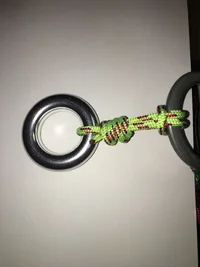
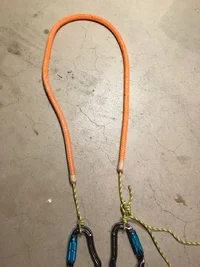
image.webp image.webp Another possibility, along the same line as yours, is to have the rope part of the lanyard be the breakaway. A smaller accessory cord with maybe the cover from a larger rope for chafe protection and easier handling. But at what weight should it break? I don't remember from other threads on this subject if it ever was decided.
 

New threads New posts

Kask Stihl NORTHEASTERN Arborists Wesspur TreeStuff.com Teufelberger Westminster X-Rigging Teufelberger
Back
Top Bottom