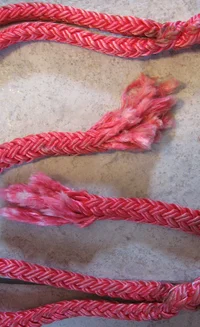
Had some splices tested!

First I'd like to give credit and thanks to Knot and Rope Supply for testing my slings for me and their great service.

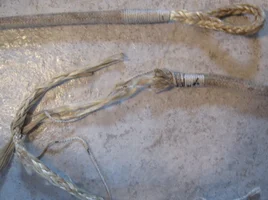
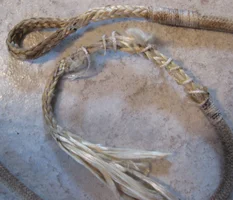
Im fairly new to splicing so I wanted to test some before I went using any and figured Id share them on the buzz too. Thought Id post some pics of what I had done and the results of them. I had 3 slings tested. Two HRC slings (eye and eye hitches, just larger eyes and longer) with two different length buries and a 5/8" tenex sling.

This first pic is of the HRC with a 7" bury.

(I wanted to see the difference in tests with two different length buries. Had seen alot of guys on here debating whether longer or shorter buries actually matter.)

-Tyler
 

Attachments

  • 230711-036.webp
    230711-036.webp
    293.6 KB · Views: 229
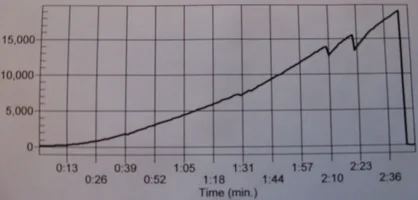
And finally, here are the results of the 5/8" Tenex. It broke at 18,880 lbs. 80 lbs over the tensile strength of the rope itself.

The HRC slings broke somewhere in the brummels (still trying to figure out exactly where) and the tenex broke exactly in the middle of the sling, no where near the splices or even buries.

John from Knot and Rope may add why or how the HRC's broke and why there is such a difference between the two diff length buries.
 

Attachments

  • 230716-041.webp
    230716-041.webp
    118.8 KB · Views: 95
Well I am sure that you can trust your splices!
Good job Tyler, and thanks for sharing!
beerchug.gif
 
[ QUOTE ]
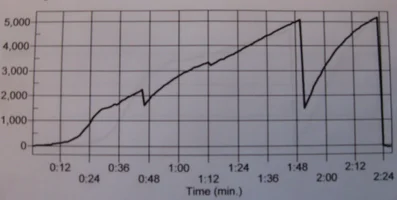
Heres the test results for the HRC with 7" bury. It broke at 5,190 lbs.

[/ QUOTE ]

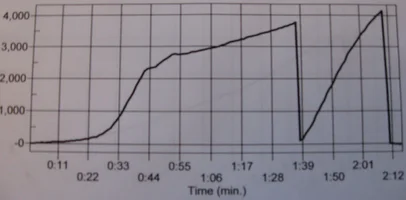
What's with the the drastic drop before it goes back up to 5000# when it breaks? Does that make any sense?
 
Banjo,

At first I personally thought that was an individual strand breaking but when I talked to John from Knot and Rope, he explained to me that that is the actual brummel slipping/settling/setting in. It seems to do that in all three of my tests. The tenex doesnt look as drastic but it looks like it also drops a thousand or two before going back up.

Hopefully that makes sense. Let me know if theres any more questions!

-Tyler
 
[ QUOTE ]
...At first I personally thought that was an individual strand breaking but when I talked to John from Knot and Rope, he explained to me that that is the actual brummel slipping/settling/setting in. It seems to do that in all three of my tests. The tenex doesnt look as drastic but it looks like it also drops a thousand or two before going back up...

[/ QUOTE ]

Good on you for having these tests performed! This is a great aid in helping people understand how this stuff actually works.

The locked Brummel seems especially confusing to people, and your photo of the 3-inch bury experiment shows what happened pretty well. In fact, your splice came apart in a way I knew could happen, but had never seen.

Here's a photo of an experiment I did some time ago with a locked Brummel in 5/16-inch Tenex.
3667443705_f3fd176b4e_o.jpg
.

The rope is under 2740 lbs tension and it is starting to break. The Brummel tail was never buried as it was in your case, but note how the Brummel has become an extremely tight little knot and the tail weave has become highly compressed. When the Brummel finally breaks, at about half the nominal strength of the rope, the tail will still be there, all scrunched up, and the Brummel itself will still be there much as it appears in the photo. The eye will still be intact because the break happens to the left of the Brummel.

Your result is entirely different. There is no scrunched-up tail, there is no longer a Brummel, and there is no eye. Your bury, the Brummel tail, first pulled out as the splice came apart. This was the initial giant drop in tension. As the tension continued to build after this event, your locked Brummel would have tightened down and looked just like mine. But your tail was too short too hold, or already was partially unravelled, and it simply pulled through. The "lock" failed and the tail pulled out. The result is the huge unravelled horse tail that used to be your bury.
 
Moray,

Thanks for your thoughts and opinions, this is why I posted these results because there are so many ways these splices can break and with totally different results. I dont know if I completly agree with the the drop in tension because of the tail pulling out. If you notice, in all 3 graphs, they all have a similar drop, not always the same time or at the same tension but all three splices which were done with locking brummels. But dont count me on this because I am not 100% sure this is the reason.

But I do agree with how the lock takes alot of the brute force and it seems like the actual lock gets bunched up real bad before it does break.

Just a little while ago I PMed John Hartenburg from Knot and Rope and asked if he would clarify anything for us so hopefully anything I did not make clear or describe correctly, he can clear up for us.

I am also currently trying to find some where close to me that I can go and watch my splices being tested to understand them even further.

Thanks for your test explanation Moray.

-Tyler
 
Hi guys, thought I could weigh in here with some ideas about why the 7" bury holds an extra 1,000 lbs compared to the 3" bury.

For starters, as you can see by those printouts, as the load on the splice increases the splice slips a bit. This small amount of slippage is enough to alleviate a portion of the load on the rope, and that is why you see the short drop. After that the rope is pretty much as tight as it gets, and the weak part (the locked brummel) part of the splice gives way and shreds the rope and it all pulls out.

Having the extra few inches seems to disperse the load a little better and provide a bit more friction which helps the splice last longer against the unrelenting force of the break tester.

The obvious question then would be if 7" is good, then how about 14"?

You might get an even higher break strength, but since these are being used as prusik cords the 14" bury really wouldn't help much, in fact, it would make the cord a little to stiff and would hinder the performance.

So I hope that helps, I am not an expert on the miniscule details of what happens in these splices, but in my observations, this seems to be what happens.
 
It's really good to talk theory in the context of good experimental data. I completely agree with the following: [ QUOTE ]
...For starters, as you can see by those printouts, as the load on the splice increases the splice slips a bit. This small amount of slippage is enough to alleviate a portion of the load on the rope, and that is why you see the short drop.

[/ QUOTE ] The core of HRC is Vectran, so it is slippery, extremely strong, and stretches very little under load. It is hard to know after the fact how much it slipped in the big slip event, but it is likely the bury had not come clear out. The slippage that did occur would have forced the Brummel into a tight little knot.

Here's an example of an 8mm Bee-Line eye-2-eye I tested.

4197284955_3f0f18cc05.jpg


The eye on the left survived intact, but the one on the right has failed. The core is Vectran, just like the HRC, but the bury in this case was about 4 inches. It failed at about 5100 lbs., and this is probably a perfect match for what happened in the 3-inch HRC experiment at the first dramatic tension drop. The Brummel has become a hard little knot and fibers are breaking on both sides of it. Much of the splice has pulled out, but not quite all. I stopped the experiment at this point, but had I continued to pull, the tension would have continued to build until the Brummel either broke or pulled apart.

[ QUOTE ]
After that the rope is pretty much as tight as it gets, and the weak part (the locked brummel) part of the splice gives way and shreds the rope and it all pulls out.

[/ QUOTE ] This statement needs a bit of interpretation or explanation. The "weakness" of the Brummel depends entirely on the status of the entire splice/Brummel combo. With a proper splice with a sufficiently long bury, the Brummel is not weak at all. In fact it is irrelevant and without function. When tested to failure, such a splice will not slip, the Brummel will never do anything, and the rope will finally break at the end of the bury at near nominal rope strength. If you tested such a splice without a locked Brummel, it would behave in exactly the same way.

The Brummel goes into action when the bury is so short or defective that the splice slips, as happened in the 3-inch HRC experiment and in the 4-inch Bee-LIne experiment. Brummels are weak. I have tested a number of them in several different hollow braids, and they preserve somewhere between 30% and 50% of nominal rope strength (compared to a splice, which would be close to 100%).

When should one use a locked Brummel? When you have an insufficient bury that might slip at a load your rope might actually see. Does that mean you can use really short buries because the locked Brummel is there to save your bacon should the splice slip? No. The really short bury is also the realy short tail of the Brummel, and if it is short enough, it will unravel and the Brummel will pull apart as happened in the 3-inch HRC experiment. If the tail is long enough, it will not unravel and the rope will fail by breaking right at the Brummel. This latter behavior is what you're after--it gives you a guaranteed minimum strength for your spliced eye when you choose to use a shorter than normal bury. (And some peace of mind for those who don't trust splices in the first place.)

 
John,

Thanks for putting in your thoughts and experience in on the splices.

Moray,

I def agree that having the longer tail is more insurance to your splice and we shouldnt be trying to cut them smaller to get away from a bulkier hitch or save a few inches of hitch cord. Obviously from my tests and probably many others have done, it shows that it helps to have the bury a little longer.

About when to use a straight brummel or a locking brummel, I think you should almost always just do a locking brummel. It doesnt take that much more time and I believe its much safer. Whether its for life support or not, you never know who may borrow or pick up your gear to use it real quick, it will be a safe and secure splice if done with a locking brummel.
 
YoungBuzzer, it is nice to see your lively interest in this subject. People who do their own splices, especially, should really make the effort to understand this stuff.

[ QUOTE ]
...About when to use a straight brummel or a locking brummel, I think you should almost always just do a locking brummel

[/ QUOTE ]

I have a particular interest in the locked Brummel (LB) for a several reasons. One, it is a devilishly clever idea; two, it is very useful; three, it seems to be widely misunderstood; and four, it is grossly overused.

I don't think anyone would argue about points 1 or 2, but the other two may be a bit controversial. When I made the rhetorical remark about when to use a LB, I was not thinking of the ordinary unlocked Brummel as the alternative as your quote would suggest. I had in mind just a simple splice with no Brummel of any kind. If you follow the manufacturer's instructions for the simple hollow-braid bury splice, Class I or Class II as appropriate, you will produce a splice that has no more need of an LB than I need a parachute when I take a walk downtown. The arborist supply places seem to always stick them on their eye-2-eyes and whoopie slings so people eventually come to believe they are simply a necessary part of the hollow-braid splice. These commercial products have the full-length manufacturer-specified bury; to tack on an LB in front of the splice seems like pure sales gimmickry to me. Anyone who wants to disagree with that should explain how the LB does something useful when stuck in front of a regulation-length bury. I have tested plenty of hollow-braid splices to failure, most of them with seriously substandard bury lengths, and it was only the most extreme shortys that ever slipped. One could simply say the manufacturer specs are highly conservative (as they should be!); a splice that meets specs does not need a backup LB.

[ QUOTE ]
...you never know who may borrow or pick up your gear to use it real quick, it will be a safe and secure splice if done with a locking brummel.

[/ QUOTE ]

This is actually an excellent point and I am glad you made it. I would modify it slightly, removing the bit about the locked Brummel, and simply refer to non-standard equipment. I use a lot of fixed loops, eye-2-eyes and so on that have substandard bury lengths that I know to be safe because I have tested them or because I always use them for a specific application in a specific configuration that makes them safe. I would not trust them in some more general application and would not want them to fall into the hands of someone who might not use them the way I do.

We're talking engineering here. Engineer your splices so they perform the intended job. Don't add anything you don't need, and don't leave anything out!
 
Moray,

When your talking about just a straight splice ("regulation length bury"), are you talking about just burying it back into the body of the rope with a certain tail length buried?

I would have to disagree with the locked brummel not giving a straight bury an advantage. I think the way we use these types of splices (eye and eye hitches) that should have the locking brummel. The locking brummel is to help keep the splice in tack from being tampered with or when it is being stored or just on our saddle somewhere. Also, our hitches are always being moved or tended to keep slack out of our system. Sometimes the spliced eyes are pushed upwards, therefore putting slack into the splice itself. I believe that if it were just a straight bury, there would be more of a chance of the splice coming out during these movements. Not saying a straight bury would always just slip out but I think your splice could slip over time or if it was loading awkwardly unlike a locking brummel would never budge.

Also, when you are talking about fixed loops are you just splicing the two eyes together like two chain links?

Once we feel better about this topic being understood by one another I'd like to get into whipping, locking stitching, etc. But later.

-Tyler
 
[ QUOTE ]
...When your talking about just a straight splice ("regulation length bury"), are you talking about just burying it back into the body of the rope with a certain tail length buried?

[/ QUOTE ]

Here are the Samson Class I instructions for a hollow-braid splice. This is the splice I am talking about.

http://www.samsonrope.com/site_files/12S_C1_EyeSpl.pdf

[ QUOTE ]
Also, when you are talking about fixed loops are you just splicing the two eyes together like two chain links?

[/ QUOTE ]

No, I mean a simple loop. Each end of the rope is spliced into the other, sort of like crossing your arms. Samson has instructions for it on their site. The splice itself is just like the eye splice.

[ QUOTE ]
...The locking brummel is to help keep the splice in tack from being tampered with or when it is being stored or just on our saddle somewhere. Also, our hitches are always being moved or tended to keep slack out of our system. Sometimes the spliced eyes are pushed upwards, therefore putting slack into the splice itself. I believe that if it were just a straight bury, there would be more of a chance of the splice coming out during these movements. Not saying a straight bury would always just slip out but I think your splice could slip over time or if it was loading awkwardly unlike a locking brummel would never budge.

[/ QUOTE ]

I can't tell you how many versions of this story I have read. Before I shoot you down, let me agree with you that your concerns are entirely valid and I share them. If you make an eye splice following the Samson instructions and skip the lock stitching, you definitely have created a vulnerable splice. If you grasp the buried part with both hands and bend it back and forth, the splice promptly starts to creep apart. Anyone can do this experiment.

Now repeat the experiment with a locked Brummel. Once again your unstitched splice will start to creep apart. Admittedly it can't creep very much because the Brummel is in the way. Now load the eye with plenty of weight, and the Brummel will tighten up a bit and absorb the little bulge of slack you created by wiggling the splice. Now go through the whole drill again. You get the picture. The picture that jumps into my head every time someone trots out this idea that the LB prevents a splice from creeping apart is that of a ruptured hose someone has repaired with electrical tape. Drip, drip, drip.

The Samson instructions, I might point out, make no mention of the locked Brummel, but they insist that proper stitching at the splice throat is required to complete the splice. I entirely agree. The stitching completely stops the drip, and has another benefit I won't go into right now. I have nothing against the LB, as I said before. I unhesitatingly use it in its narrow range of usefulness, i.e., to give a guaranteed minimum backup strength to an eye splice with a shorter than regulation bury. Is there some other use to it?

Tyler, since you had the interest and wherewithal to send in samples for break testing, you certainly have everything you need to do some simple experiments at home with no special equipment. It's amazing how much fact you can separate from fiction in your own living room!
 

New threads New posts

Back
Top Bottom