Fungal ID, I need help!

Zacchaeus

New member
Location
Jasper
Alright all you expert Fun-guys & gals out there!!
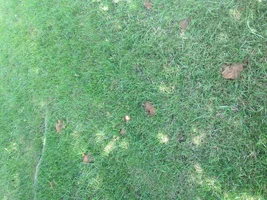
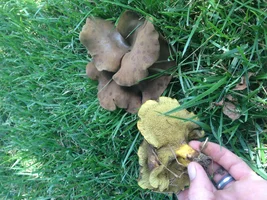
I saw these mushrooms growing around a small, vigorous ash tree today. There were many mushrooms growing in the grass underneath the tree. The reason they concern me is that they were VERY numerous and almost exclusively found within the drip line of the tree. It was an 8" ash with a crown about, oh, 16' wide or so.
What kind of fungus am I looking at?
What damage, if any, does it cause?
Any tips or advice?
Should I (or the homeowner) be concerned or alarmed??

Thank you all so much!
 

Attachments

  • IMG_2715.webp
    IMG_2715.webp
    575.3 KB · Views: 35
  • IMG_2716.webp
    IMG_2716.webp
    1.3 MB · Views: 30
Looks to me like a Favolus or maybe Favolaschia. Some workers place the former common species in Neofavolus. Whatever.
That is generally on wood, not turf, but woody roots near the ground surface can bear them.
Whether or not I'm "on" with respect to genus, I'd go with the following:

1. Not causing disease of the living tree.
2. May indicate decaying root wood closely below the lawn surface. Take a trowel and see.
3. Not really "actionable" but very nice to observe.
 
I've always wanted to go to a birdwatching session and ask the presenter, after she has differentiated the grebes from the canvasbacks, are they edible?
As it is , there is much in nature that I do not care to eat, even if the texts say "edible". What you want to look for are creatures that are "good" or "choice". Still you might go awry, allergies as they are.
 
There are no wood decaying mushrooms that are poisonous or hallucinogenic (BUT do not take my word for that).

Kevin knows far more but Favolus etc. are Polypores and are variously names as Polypore or a number of other synonyms.
 
Certainly most (all?) psychoactive members of what we used classify in genus Psilocybe bruise blue when fresh. The same active principal is also in some Gymnopilus and Panaeolus that do not bruise blue (although G. spectabilis can bruise bright orange or even green). Some native Eurasian folk use members of genus Amanita as a source of profound psychoactives, which also do not bruise blue. My thought is that "their" A. muscaria is different from ours which have additional, potentially lethal toxins.
I've been a consultant for the NH State Police on these matters, among my other duties.
 
I don't know of any toxic polypores on wood, although most are not especially palatable. There are some toxic, non-psychoactive members of gilled fungi, especially in the gilled family of the Cortinariaceae. And of course, the jack-o-lantern mushroom (Omphalotus olearius) is gilled and on wood and pretty toxic with respect to gastrointestinal upset, but I don't think there have been fatalities. We see the latter most every year, usually confused with chanterlles.
 
Last edited:
I had heard that fact from Paul Stamets, i had just assumed it was 100%. Maybe instead its "all blue bruising fungi is psychoactive" instead of "all psychoactive fungi bruise blue"
 
To Waldo: I most certainly would defer to Dr. Stamets. More likely, your converse statement is true, that all blueing species are psychoactive. But again, I'm not claiming any other position. I haven't look at the recent Stamets guide to the Psilocybe. I generally follow the older work of the late G. Guzman, so here I am also out-of-date. My doctoral work was with the Clavicipitaceae of the Ascomycetes, which contribute to my interest of the group.
 

New threads New posts

Kask Stihl NORTHEASTERN Arborists Wesspur TreeStuff.com Teufelberger Westminster X-Rigging Teufelberger
Back
Top Bottom