frost SPLIT lindens

I work for a municipality on the island of Montreal and during a recent cold snap, I discovered that about half of all our lindens (Tilia cordata) had split. Either right down the middle of the trunk, or from one of the principal branch unions to the base of the trunk. All of the trees affected were planted between 30 and 40 years ago and the ALL have very crowded principal unions with plenty of tight crotches with included bark. I realize that all these factors render the trees more susceptible to splitting and cracking, especially since basswoods have a fairly soft wood. I was just wondering if anyone else had come across a phenomenon such as this during an extreme cold. It really only affected the lindens and no other species...but it affected them severely. Some of them we're going to be able to cable and brace, but many we're going to have to take down. I'll try and get some pictures when I'm into work next week.
 
I see it in planetrees alot in our area. They typically seal over, but im sure its just a great spot for decay to start in the trunk.

Could you stitch them together with through bolts and nuts and washers, or did many of them tear off pieces?
 
We see this in northern Ontario on a large portion of the lindens. Green ash too. I've seen many lindens with seams that open several inches every winter.

Although they can be a contributing factor to tree failure, they are not justification for removal by their presence alone.

Lindens here are dumb and they send out dense limbs and co dominant stems all over the place. Also street trees are never trained, just elevated every 10 years or so leaving large pruning wounds on the low trunk. This contributes to trunk decay and trunk splitting.

I don't think bracing will help at all. Restricting the trunk movement may lead to more splitting.

Vin
 
Consider wood quality along with the negatives. Lindens are very tough; i've seen very hollow ones stand strong, and splitting potential can be mitigated to nearly nothing.

Defect-led risk assessment is a slippery slope to hell.

But the pics would be great to see.

Anyone in europe you can ask? they are so common there.

If robinia's hint is right,
you could Paint em all white!
 
[ QUOTE ]
Although they can be a contributing factor to tree failure, they are not justification for removal by their presence alone.

I don't think bracing will help at all. Restricting the trunk movement may lead to more splitting.

[/ QUOTE ]

I was thinking the same thing... cracks alone don't seem to be cause for taking a tree down, though in a high value obstacle environment, it might not be worth taking any chances..

Also I have been wondering about cabling leading to splitting at the unions... whether tight cables might lessen that effect.. if high cables might make it worse etc..

We just pruned and cables a big linden last week. it was a lot of fun to work with that great tree. It had significant dead bark running down from the inclusions, with fruiting fungus in the main union... took some post job video ...
 
Sun scald/frost crack is common in areas with intense cold and simultaneous sun reflection off of snow onto the tree trunk, creating massive temperature swings in the tree tissue. Younger Lindens, hybrid soft maples(i.e. Autumn Blaze, Sunset Red), and other soft/thin barked trees seem to be affected the most from my observations. Wrapping in the winter can be one way to deter the cracking process, but only as a preventative. I have had success with this issue in smaller diameter trees(less than 8" diameter) when wrapped annually.


Obviously, you Muni. Arborists aren't going to go wrapping every tree in Ontario, but it could be a good choice to help preserve new plantings.
 
I don't think that frost crack are preventable. They are entirely different than sunscald and although both tend to occur on sw sides of the trunk cracks don't show any tissue death.

Good pruning practices can reduce the severity of cracks and their effect on the branch attachments closely.

Who, municipal or otherwise, really wants to wrap or paint the trunk of a tree every winter? So much work and so ugly.

Just don't stick your hand in one on a cold morning and leave it there for too long, it might close in the afternoon and not let you go until the fall.

v
 
I've understood they are preventable, just as long as the azimuth of a tree is not changed drasticaly at planting. Stick it in the ground the way it came out. North side of a tree still facing north.

But then, how would this explain sudden appearances like these? Most SW injury I've seen looks to have been there from the start. ie: after transplanting.

Is it possible these have just gotten worse Chris?
 
[ QUOTE ]


Who, municipal or otherwise, really wants to wrap or paint the trunk of a tree every winter? So much work and so ugly.

v

[/ QUOTE ]


Takes me an hour to wrap 8 trees(costs the customer $75). How is that a lot of work? Seems like a good investment to me considering they spent $1,000 on some nice trees and have spent another $1,000 having them fertilized.
 
many are on the southwest side of the trunk but definitely not all of them. and yes, i do believe that these splits were pre-existing and were worsened by the sudden cold spell...but i'm not sure if the initial cause was the cold, or just a really bad structural defect. our lindens are similar to what vin described in thunder bay...co-doms everywhere with ultra tight unions and sometimes 3-4 feet of included bark. they were never pruned to establish good branch structure, only had their canopies raised over the years to provide clearance.

[ QUOTE ]


I don't think bracing will help at all. Restricting the trunk movement may lead to more splitting.


[/ QUOTE ]

I understand that bracing the split in the trunk wouldn't likely help at all...but what about bracing a severely split union? Some unions are split to the point where one of the limbs, which are often 2 feet in diameter, is at risk of failing and taking out some pretty valuable targets. (homes, cars, pedestrians, utility wires) Rather than creating a 2 foot pruning wound by removing the limb, wouldn't bracing the union with some bolts be a better option?
 
[ QUOTE ]

Although they can be a contributing factor to tree failure, they are not justification for removal by their presence alone.


[/ QUOTE ]

I'm hoping we don't have to remove very many...but in a few cases I believe they pose too much of a risk to keep. Especially the 2 that are in a park used daily by a daycare. Either way, I'd like to keep as many as possible without putting any property or people at too much of a risk.
 
[ QUOTE ]
... in a few cases I believe they pose too much of a risk to keep. Especially the 2 that are in a park used daily by a daycare. Either way, I'd like to keep as many as possible without putting any property or people at too much of a risk.

[/ QUOTE ]

Are they most likely to split in bad weather?

In the US, kids are swept inside at the very hint of bad weather--lightning 5 miles away, etc.

This affects target rating. A lot. pics would be cool to see; not much frost cracking in nc.

I guess i am the only one who likes whitewash. it's an asian kind of thing anymore; very common in china etc. but it was also i hear done by native/first americans in california. made by grinding up oyster shells.
 
[ QUOTE ]

Takes me an hour to wrap 8 trees(costs the customer $75). How is that a lot of work? Seems like a good investment to me considering they spent $1,000 on some nice trees and have spent another $1,000 having them fertilized.

[/ QUOTE ]

Yes wrapping newly planted tree to get them through their establishment phase may be warranted and cost effective. But, wrapping a tree through it's life span would be crazy expensive.

Frost crack up here in "the north" aren't always a result of SW damage to thin bark, younger parts of the tree. They can probably always be linked to a defect, either sunscald, a pruning wound, root flare damage etc.

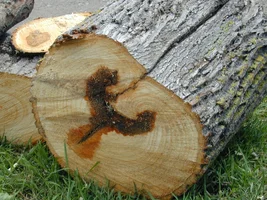
Here is a picture of a linden frost crack which i would say is typical.

If this crack merges with a crotch then the attached limb or codom is definitely under threat and maybe cabling or bracing should be implemented, maybe subordination too.

V
 

Attachments

  • 352085-DSCN1344.webp
    352085-DSCN1344.webp
    427.6 KB · Views: 37
yeah that's similar to what we have, except generally more severe, and many of them merge with a tight union, making the limb kinda risky.

i still haven't had a chance to snap any photos...we're forbidden to use our phones on the job and i've had the public works foreman with me all week. he has decided he doesn't know enough about tree care and wants to spend the week with me to learn how to "care for trees how you're supposed to". i guess a week ride along is all it takes!
 

New threads New posts

Back
Top Bottom