
I just ordered a pair of 2 ton blocks and a couple tenex slings from Sherrill today(along with some other toys!) My question is, what is the best hitch for securing the blocks? I have only been using false crotches for clearing the canopy and taking out the trunk in sections(on removals) but I hate the tree damage potential. So I finally got my blocks but have never used them before. I know the timber hitch is used and the Marl(?) but I am not sure which is the best or if there is something even better. I have seen diagrams of the timber and plan on trying it out on a cottonwood in my own yard for some practice but I would appreciate any input folks might have for me.

Navigation
Install the app
How to install the app on iOS
Follow along with the video below to see how to install our site as a web app on your home screen.
Note: This feature may not be available in some browsers.
More options
You are using an out of date browser. It may not display this or other websites correctly.
You should upgrade or use an alternative browser.
You should upgrade or use an alternative browser.
false crotch hitches
- Thread starter ezekiel
- Start date

- Location
- Ontario, Canada

- Location
- Home of the New Jersey Devils
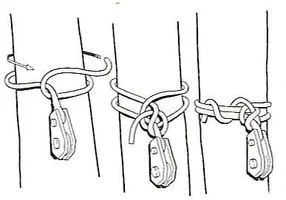
Cow hitch for me, until the trunk gets too large for two wraps. Then I use the Timber hitch.
I would also suggest to use all of the extra tail in the cow hitch by timber hitching it back or a simple clove hitch if there is a bunch of tail.
I would also suggest to use all of the extra tail in the cow hitch by timber hitching it back or a simple clove hitch if there is a bunch of tail.
Thanks for the attatchment, that makes it very clear! I am not sure what the better half is, I have heard the name but can't find an image right now. I ordered a 12' and a 16' sling just to have some variation. I also ordered the large whooopie sling but planned to use that for my port-a-wrap. I have heard that the timber has tendancy to roll out but that cow looks solid, like a double constrictor. Thanks for the help guys!
- Location
- Ontario, Canada
- Location
- Ontario, Canada
Glad to help.
I always take lots of wraps, more than the picture illustrates, no less than three and usually more.
I always take lots of wraps, more than the picture illustrates, no less than three and usually more.
knudeNoggin
New member
Doesn't a Cow (w/Better Half or not) put a lot of force
and abrasion on the turn around the standing part (loaded
line)? I've been fiddling with ways to bring two parts of
rope to bear, here, but w/o satisfaction esp. re ease of
tying (something someone up the tree much appreciates!).
So, how about making a roundturn or two (coils like for a
friction hitch) in tying the Timber Hitch!? (Ashley shows
this and says it's noticeably stronger--but he didn't sit
on a pile of test data.) This seems to much better *pad*
the entry of the loaded standing part, and also enables
one to snug up the hitch to the tree (though perhaps this
brings concerns about the angle from the entry point).
It would also somewhat lessen forces on pulling out the
Timber Hitch's end (but tuck well). Further, the T.H.
is more rope-efficient than the Cow.
Another idea is to center the block between two tails,
and then attach them in a full turn (opp. directions)
to tie off with Reef or other bend back in front of
you--this knot being removed from much force by the
wraps around the tree. It would also allow a steeper
slope of rope on vertical parts.
knudeNoggin
and abrasion on the turn around the standing part (loaded
line)? I've been fiddling with ways to bring two parts of
rope to bear, here, but w/o satisfaction esp. re ease of
tying (something someone up the tree much appreciates!).
So, how about making a roundturn or two (coils like for a
friction hitch) in tying the Timber Hitch!? (Ashley shows
this and says it's noticeably stronger--but he didn't sit
on a pile of test data.) This seems to much better *pad*
the entry of the loaded standing part, and also enables
one to snug up the hitch to the tree (though perhaps this
brings concerns about the angle from the entry point).
It would also somewhat lessen forces on pulling out the
Timber Hitch's end (but tuck well). Further, the T.H.
is more rope-efficient than the Cow.
Another idea is to center the block between two tails,
and then attach them in a full turn (opp. directions)
to tie off with Reef or other bend back in front of
you--this knot being removed from much force by the
wraps around the tree. It would also allow a steeper
slope of rope on vertical parts.
knudeNoggin
So you just tie a timber with a couple of rounds at the begining? As far as the last example goes, you are using two seperate slings? The timber does seem a more efficient use of sling length but the cow looks like it would snug up better. I'll sure try all these out though. Could youy direct me to some images of these different methods? It is hard to get a clear picture in my head just reading discriptions.
- Location
- Ontario, Canada
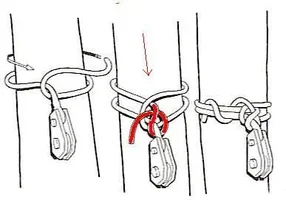
The eye in the illustration should be much longer so you capture both parts of the eye under the half hitch.
Hey Zeke,
Get yourself a copy of Sherrill's cataolg. I learned many knots from the tips buried in those pages over the years. I must admit that I haven't spent much time in the latest issue (the layout is rather discombobulated and doesn't follow a logical order) but the 2002 issue had many good illustrations of different knots and hitches. Also look in your copy of Jeff Jepson's 'Tree Climber's Companion' for pictures of knots and hitches. Many here can attest to the vast amount of important info in that book. I learned some stuff from it and I had almost 15 years experience before I ever picked it up.
Get yourself a copy of Sherrill's cataolg. I learned many knots from the tips buried in those pages over the years. I must admit that I haven't spent much time in the latest issue (the layout is rather discombobulated and doesn't follow a logical order) but the 2002 issue had many good illustrations of different knots and hitches. Also look in your copy of Jeff Jepson's 'Tree Climber's Companion' for pictures of knots and hitches. Many here can attest to the vast amount of important info in that book. I learned some stuff from it and I had almost 15 years experience before I ever picked it up.
- Location
- S.E. Wisconsin
In most references I have seen about the timber hitch it is mentioned that it can be unreliable. I believe this is true, especially in a dynamic situation like we are talking about.
The cow hitch, when tied to smooth bark and only a half hitch, can be pulled right off the tree with a relitively small amount of force, I know, I did it with my winch. If you replace the better half with a clove hitch (two better halves) the rope will break before it slides apart.
In the attached picture of the cow, it shows the tail wrapped up like a little mini timber hitch. If it is being pinched under load, perhaps this is enough to keep it strong with only a better half, I dunno. Mostly it's done to keep the tail out of the pulley.
Another point, as long as I'm nit picking, the splice bury shouldn't be bent at the main load point, like we often see in pictures of the cow and timber hitches.
The cow hitch, when tied to smooth bark and only a half hitch, can be pulled right off the tree with a relitively small amount of force, I know, I did it with my winch. If you replace the better half with a clove hitch (two better halves) the rope will break before it slides apart.
In the attached picture of the cow, it shows the tail wrapped up like a little mini timber hitch. If it is being pinched under load, perhaps this is enough to keep it strong with only a better half, I dunno. Mostly it's done to keep the tail out of the pulley.
Another point, as long as I'm nit picking, the splice bury shouldn't be bent at the main load point, like we often see in pictures of the cow and timber hitches.
- Location
- Ontario, Canada
</font><blockquote><font class="small">In reply to:</font><hr />
the splice bury shouldn't be bent at the main load point,
[/ QUOTE ]
Mike, why not?
It seems to me that the rope would be the strongest at the bury because it's doubled up.
the splice bury shouldn't be bent at the main load point,
[/ QUOTE ]
Mike, why not?
It seems to me that the rope would be the strongest at the bury because it's doubled up.
- Location
- Bucks Co. P.A.
I use the Cow as well with one better half, a second does nothing for the performance. A little timber wrap for extra tail is good, with a small bight at the beginning of your timber wraps to help "pop" out the last part before you untie the Cow. This hitch does get real tight when heavily loaded. Some say use carpet or other to put between rope and trunk. That's up to you if you like the tree. I've had the bark and cambium layer just bulge out and seperate after being loaded. The hitch was hard to get apart after as well.
As far as the throat of the splice being bent as in pictures or wherever you see it at, remember it's shown with no load. I tie the hitch as close and tight to the block or shackle as possible so when it is loaded the throat ends up past the hitch at it's greatest load. Stare at it next time when you load it through the whole process. Get right in it's face and see what it does. Tying it close to start with allows closer distance between block and half hitch on the stem your taking out. Though not a big difference, it is enough to matter to me. That 6 in., maybe more or less, matters in larger rigging.
The tail of the Cow definately needs to be tucked for extra grab. Another half or clove won't matter on the throat. Only one part of the half is in contact. If that slips through, it all comes through. If you can, you can use a static line with your block on it. Try different hitches out. Some work better than others on different loads.
Later
As far as the throat of the splice being bent as in pictures or wherever you see it at, remember it's shown with no load. I tie the hitch as close and tight to the block or shackle as possible so when it is loaded the throat ends up past the hitch at it's greatest load. Stare at it next time when you load it through the whole process. Get right in it's face and see what it does. Tying it close to start with allows closer distance between block and half hitch on the stem your taking out. Though not a big difference, it is enough to matter to me. That 6 in., maybe more or less, matters in larger rigging.
The tail of the Cow definately needs to be tucked for extra grab. Another half or clove won't matter on the throat. Only one part of the half is in contact. If that slips through, it all comes through. If you can, you can use a static line with your block on it. Try different hitches out. Some work better than others on different loads.
Later
Which reference told you the timber hitch was unreliable? If two common sense-rules are followed, the timber hitch is very reliable and secure.
1) Always have at least 3 tucks trapped against the object. If the object is very large compared to the rope size, you have to make sure you have enough wraps placed far enough back so that they stay clamped no matter what.
2) In the case of lengthwise pull, make sure any sliding motion will cause the wraps to tighten, not loosen.
I don't believe it's an exaggeration to say that a properly tied Timber Hitch is at least in the upper 95th percentile for hitch security.
1) Always have at least 3 tucks trapped against the object. If the object is very large compared to the rope size, you have to make sure you have enough wraps placed far enough back so that they stay clamped no matter what.
2) In the case of lengthwise pull, make sure any sliding motion will cause the wraps to tighten, not loosen.
I don't believe it's an exaggeration to say that a properly tied Timber Hitch is at least in the upper 95th percentile for hitch security.

TheTreeSpyder
Branched out member
- Location
- Florida>>> USA
i think of a timber hitch is an upper strength loose, simple eyesplice. Security i think depends on who you talk to and how it is loaded; holding better in constant pressure rather than intermitent, for load pressure is about all the security it has, so as load pressure drops, so does security(?). Then a jerk, or even slow deft pull can find timber hitch's particular Achille's Heel to turn it's strenght against itself with 'pull before security'(?). i think timber hitch is a good strategy for many things and finishes, quick temporary hold too, but is best with a some sort of easy backup or for straighter pulling etc. in a killick i think for more serious applications.
A quickie with minimum line in falsce crothching maybe, but i'd always back up the tail with some sort of security to stop any initial 'creep' and loosening to undermine the whole works etc. IMLHO.
A quickie with minimum line in falsce crothching maybe, but i'd always back up the tail with some sort of security to stop any initial 'creep' and loosening to undermine the whole works etc. IMLHO.
- Location
- S.E. Wisconsin
</font><blockquote><font class="small">In reply to:</font><hr />
It seems to me that the rope would be the strongest at the bury because it's doubled up.
[/ QUOTE ]
Load tests prove this practice damages the splice.
</font><blockquote><font class="small">In reply to:</font><hr />
The tail of the Cow definately needs to be tucked for extra grab. Another half or clove won't matter on the throat.
[/ QUOTE ]
Uhh, what? If it needs to be tucked at the end, it needs more than just a better half. I have proven this myself with load tests. To say a half hicth holds as well as a clove hitch is wrong. Tie them both to a pole and pull, you'll see.
In the attachment of the cow with a better half and twisted tail, notice the tail is twisted a short distance from the knot. If this set up is tied to a horizontal limb, the load will pull the lines where the tucks are, away from the limb, thereby loosening the holding power of the tuck and causing the hitch to become very weakly attached.
If on the other hand, you tie a clove instead of a half hitch to teminate the cow, it will remain fairly secure, with or without the tucks.
If I misunderstand your comments, excuse me.
It seems to me that the rope would be the strongest at the bury because it's doubled up.
[/ QUOTE ]
Load tests prove this practice damages the splice.
</font><blockquote><font class="small">In reply to:</font><hr />
The tail of the Cow definately needs to be tucked for extra grab. Another half or clove won't matter on the throat.
[/ QUOTE ]
Uhh, what? If it needs to be tucked at the end, it needs more than just a better half. I have proven this myself with load tests. To say a half hicth holds as well as a clove hitch is wrong. Tie them both to a pole and pull, you'll see.
In the attachment of the cow with a better half and twisted tail, notice the tail is twisted a short distance from the knot. If this set up is tied to a horizontal limb, the load will pull the lines where the tucks are, away from the limb, thereby loosening the holding power of the tuck and causing the hitch to become very weakly attached.
If on the other hand, you tie a clove instead of a half hitch to teminate the cow, it will remain fairly secure, with or without the tucks.
If I misunderstand your comments, excuse me.
- Location
- S.E. Wisconsin
</font><blockquote><font class="small">In reply to:</font><hr />
I don't believe it's an exaggeration to say that a properly tied Timber Hitch is at least in the upper 95th percentile for hitch security.
[/ QUOTE ]
I would add a third rule:
3. Don't use a timber hitch where intermintent loading occurs, such as those loads encountered by a pulley during, but mostly between loading.
If you doubt me, tie a proper timber hitch to a large smooth pole. Tie a second rope to the eye and lightly flip it around. You should have no problem untying the timber hitch.
I don't believe it's an exaggeration to say that a properly tied Timber Hitch is at least in the upper 95th percentile for hitch security.
[/ QUOTE ]
I would add a third rule:
3. Don't use a timber hitch where intermintent loading occurs, such as those loads encountered by a pulley during, but mostly between loading.
If you doubt me, tie a proper timber hitch to a large smooth pole. Tie a second rope to the eye and lightly flip it around. You should have no problem untying the timber hitch.
- Location
- Ontario, Canada
Mike;
Who was doing the testing on the splices and are the results published?
Who was doing the testing on the splices and are the results published?
New threads New posts
-
test
-

-
-
 Fruit tree holding on by a thread, client wants to get another year out of it. Thoughts?
- Started by climbingmonkey24
- Replies: 13
-
-

-

