Explain what a lateral branch is...

I got a some what stupid question to ask but learning something new everyday doesn't hurt but can yall explain what a lateral branch is? I been learning things from the ISA study audio cd's and what they say, I can only picture things in my head and I'm pretty sure I know what it is but want to be sure.
 
here you go. Google is your friend!
https://www.google.com/search?q=+lateral...lient=firefox-a

I don't know how good your local public library is but some times they can borrow books for you from Universities (inter-library loan). Ed Gillman, Alex Shigo, and Harris are all great authors on Arborculture. Book titles would be "Guide to Structural Training" (?exact title) (Gillman). "A New Tree Biology" (Shigo), and "Arborculture" (Harris). These on top of the study guide got me in the mid 97% on the test. Also to add that you don't really need the latest editions of these books, I didn't. They may have new info, but the old info is still valid. In fact Harris added so much new info, he had to edit out good information to make room. (I've read all of the editions of "Arborculture"
 
Ok so my thinking was right and you guys confirmed it. Evo, I been listening to them cd's for at least 2 hours a day and have listened to some of the sam ones multiple times already and learned some great info from them. Thanks and yes I think I should check out the library and see what kinda good books they got.
 
Unfortunately, this is an area that I only have very rudimentary knowledge.

If anyone has other good educational links which discuss pruning, branch removal, tree identification, please, please, please share them with us.

You guys on TB have a wealth of knowledge. I hope over time, this will rub off on me. :-)

Thanks for sharing the UFL Edu page.

-Michael
 
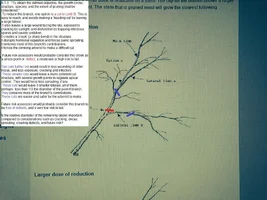
I like to distinguish between 'heading' cuts, and topping cuts that are made in good faith to avoid a 'heading' cut.

See attached.
 

Attachments

  • 384038-Reductiondiagramtoppingvs.heading.webp
    384038-Reductiondiagramtoppingvs.heading.webp
    392.6 KB · Views: 94
I realize that is just an example, but I wouldn't do either one of those options. It looks like too much material is removed, and resprouting would be an issue. It's a good image though! Gets the point across.

-Tom
 
Guy, I didn't see anything about topping cuts in that attachment. It looked like it was distinguishing between less and more of the same type of pruning. I definitely agree with you that there are more logical placements for reduction cuts and I am glad you brought that up! Very good point. The 'blue' is what I think of as reduction cuts. They are still laterals but smaller cuts, whereas heading cuts always look like the last resort to me and usually find there place in storm recovery.

When a tree is pruned it should maintain its grace and fulness, just a little tighter. I think when heading cuts are used throughout a healthy tree it does not follow the natural beauty, whereas Guy's 'blue' cuts retain the aesthetics while doing its job of reducing the canopy.

This bulletin from The Arbor Day Foundation is a fun read.
http://issuu.com/arbordayfoundation/docs/prune-young-shade-trees?e=1019685/4092147
 
But John, the blue cuts WERE heading cuts, to laterals <1/3 diameter of the parent. The red cut seems to be made "without regard to health or structure", which defines 'topping'.

The source of the confusion is that 'heading cut' has 2 definitions. One is 'internodal' the other is 'to a lateral <1/3 the diameter of the parent.' Unless this definition is clarified, confusion is inevitable, and the 'heading cut' concept will misguide more than it guides.

I write (and follow) pruning specs all the time, and have never needed to use that dinosaur of a term. I apologize to those studying for a test. nothing's perfect.

o and the attached is some research that seems to indicate that red cut would not be the right one.
 

Attachments

Just so everyone follows - there are several other links on the UFL page. including http://hort.ufl.edu/woody/stem-reduction-animated3.shtml

I guess it is hard to tell what percentage that is in the picture. I understand that heading includes the <1/3 lateral as well, but I think you can usually find a compromise between what you are suggesting with <1/3 and the Large reduction cuts.

The 'blue' cuts you suggested are a great option if that much is needed to be removed, but who's to say those branches aren't 1/3. But I understand your point...even if they are under 1/3 they still would be better than the 'red' cut.

Every tree needs its own treatment - these examples merely aid in understanding the concept, you cannot take these images and map them onto a tree you are pruning. My 'heading' dislike pertains to the overall look of a tree when you are looking over the finished product. If the tree branches looks stubby and many of the branched have too much of a contrast to the remaining laterals the tree has lost its natural grace. I think a tree can be reduced in a healthy and structural way with out taking away from the grace.

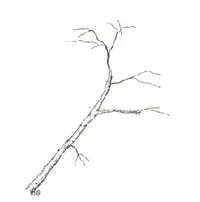
The attached is an adapted picture from the UFL page that I cut out your 'blue cuts. I think the tree still looks natural

Guy, you definitely are better read and have more experience with this than I do, so I am taking a hard look at your suggestions. I see what you were saying about 'topping'. This "Large dose of reduction" is a bit exaggerated here, your 'blue' cuts are nice cuts, but I would have to see the tree and the exact situation to truly appreciate the outcome.
 

Attachments

  • 384054-AdaptedfromUFL.webp
    384054-AdaptedfromUFL.webp
    3.3 KB · Views: 24
[ QUOTE ]
My 'heading' dislike pertains to the overall look of a tree when you are looking over the finished product. If the tree branches looks stubby and many of the branched have too much of a contrast to the remaining laterals the tree has lost its natural grace.

[/ QUOTE ]Yes, this is a dislike of mine too, but a short-term concern. Shigo talked of thinking in 'tree time', and the need to 'see the future' in a way; how the tree will respond and fill out again.

Getting some clients (muni) to think long-term can be a challenge. If the objective includes short-term aesthetics, I guess that means less off now, and repeat sooner.

re the site with those diagrams, i understand that they are behind with revisions, so look for much of that to change.

Re %, in 2010 the UK standard got totally away from % and called for cut size, branch length, and location to be specified. % is like the 4th consideration now, optional. The US standard (currently under revision) seems to be going in that direction.

25% was always a 'should' not a 'shall', but will likely be deemphasized further. The 1/3 guideline was weakened in 2001, and again in 2008, but it's still often the first (and too often the major) consideration. Tests may have these 'rules of thumb', but they are not meant to be cast in stone.

 
Do you think that means they will reclassify a heading cut as less than less than 1/3? From what you are saying it looks like they are allowing for less than the 1/3 rule for the lateral on a drop crotch cut, so does that mean they are including heading cuts that have brush on them still as drop crotch reduction cuts or are they saying the heading cuts are now just as excepted as drop crotch. I'm just wondering if you know what it will look like exactly when they settle on the %.

Regarding the length of time it takes to look natural again, I would have to say I would rather take less off more often, but that is always hard to balance with a short term client. You can't always rely on the homeowner to continue the care that you have initiated with the first pruning of the tree.

This is just my explanation, not taken from research or what not - The smaller % lateral left, of course, reduces the amount of material on that specific limb and this in turn confuses the trees 'memory' as to the amount of supply required for that area. The size of the remaining 'plumbing' factors into how much flow continues to the end and what excess is thrown into resprouting and sucker growth along the limb and at the pruning wound. These sprouts at the wound aid in the closing etc, but the tree will have to be cleaned up sooner, IME, than a tree that is reduced with the 'less off now' approach. This is some of my thought jumbled up at spat out there for you to filter through to understand my concern with wide spread change in the reduction of the reduction %. Sometimes I think it humorous how often these standards are flipped. We are always learning something new that changes the way we look at trees and their care. My favorite example is 'cabling'. There are always changes in the procedure we are to follow...it seems every 5 years. I wonder if we will be moving away from the rig guy wire stop method that introduces two points of entry on either side of the limb and allows cable movement and wear on the cambium and all. But that's another story.

Guy here is a gentleman and a scholar. I am grateful that he is so dedicated and knowledgeable and we can all benefit from his vantage. Thank you Guy!
 
Yup we need to think more like plumbers; see Coder's Arboritecture http://www.forestry.uga.edu/outreach/pub...%20pub08-13.pdf

Concerns about plant memory getting confused, and rampant sprouting being likely, may be greater than warranted. Trees deserve a little more faith than that imo.

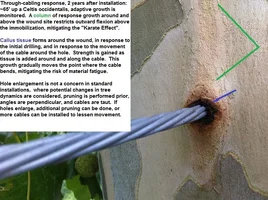
As for the rig guy wire stop method that introduces two points of entry on either side of the limb and allows cable movement and wear on the cambium and all, this has been feared a whole lot more than it has been seen. Rigguy sells ~20k of these a year; no reports of damage i know of--anybody else?

Trees deserve a little more faith than that--see attached of a tree that was not in high vitality. It's no coincidence that these fears are stoked by the same interests that have a lot of deadend grips and lag bolts on the shelf, and/or a lot of training material showing how to use them.
 

Attachments

  • 384174-Through-cablingresponsesycamore.webp
    384174-Through-cablingresponsesycamore.webp
    135.8 KB · Views: 26
o yea, genus scmenus the yard was full of hackberries...

oceans, you're tryin too hard to keep up with your homeboy: Callous means 'unfeeling'. Callus is tissue. Love U2!
laughing.gif


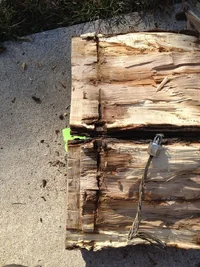
This dissection 6 years after install, courtesy of the Tree Machine of Indy fame.
 

Attachments

  • 384184-through-cabling2.webp
    384184-through-cabling2.webp
    269.7 KB · Views: 34
Just to be clear I love Rigguy! They are great and I much prefer the installation and the "pull proof" quality of them. The point I was making is that they are one of the newer advances that have not faced the test of time. They could be the best option we will ever see, but they too could have their faults and the standards will be changed again. Thanks for sharing that picture it's great to see recurring evidence that negates the common fears.

I'm confused what you are getting at Guy. Don't you agree that the harder a tree is cut back the more likely it is to rampant sprouting? What do you attribute the sprouting to? Isn't it the fact that the tree's size is ingrained in its 'memory' and its lower girth and size can't be whittled down to coincide with the reduction of the canopy. A tree grows in diameter and is always growing, pruning can slow down and train the growth, but the tree always growing.

The tree 'memory' is more of a real factor I think - as the respective roots below ground are unchanged the branches above are supplied and try to reach the status they where prior to pruning. As with a Topped tree - the tree tries to reach its original size by shooting up fast growth to respond to the loss. I think this has to do with the 'memory', as well as the other factors.

That's why I implied that the bigger the remaining lateral the more flow it can handle and put into growing that particular branch, rather than the flow backing up in the system and prompting new shoots throughout. I know it doesn't all come down to the 'flow' and 'plumbing', but couldn't this factor into the size of the lateral to cut back to? Guy and all, I am still learning and always will be. Thank you for giving me good stuff to make my experience worth while.

BTW, I have great faith in trees.
 

New threads New posts

Back
Top Bottom