Double Block Rigging

I recently removed a large Tulip Poplar where i had to rig wood down to a 10ft log, i had to rope large diameter wood with the 3' bar. I was wanting to take larger pieces but do it safely at the same time. I've heard of a double block rigging technique where you would place a rigging block on the piece that you are cutting and a block on the spar. I would create a 3 to 1 device within the system.... I think... Anyone have insight on this or a video. I didn't want to try it blindly without doing some research first. Thanks!
 
Never heard or seen that one, my first thought is that would consume a LOT of rope. The double blocking I've done and seen has been 2 blocks on the spar, 2 separate rigging lines, 2 separate lowering devices, 1 guy running both ropes together (either holding both together as one or tying the ends together so they pay out equally) I like to space the blocks to around 10 and 2 on the soar so the chunk comes down square on itself and won't twist so the lines don't cross.
 
I recently removed a large Tulip Poplar where i had to rig wood down to a 10ft log, i had to rope large diameter wood with the 3' bar. I was wanting to take larger pieces but do it safely at the same time. I've heard of a double block rigging technique where you would place a rigging block on the piece that you are cutting and a block on the spar. I would create a 3 to 1 device within the system.... I think... Anyone have insight on this or a video. I didn't want to try it blindly without doing some research first. Thanks!
so the rope goes up through the first block on the spar, then through the second block that's attached to the large piece your cutting, and then what? Back down and tied to the spar where the first block is placed with a running bowline?

Just trying to picture it...
 
Yes Mike, from what i understand the rope goes through the block on the spar then through block on the rigging piece the terminated to the spar with a running bowline. thanks for the comments, i will check that online article out.
 
Yes Mike, from what i understand the rope goes through the block on the spar then through block on the rigging piece the terminated to the spar with a running bowline. thanks for the comments, i will check that online article out.
I have never seen or tried anything like that. I imagine it would work nicely with some Beast Rings as they are all directional.
 
It's a technique I have learn from an older climber , it work really well, but don't forget to put your biggest block on the section you cut because this one will feel 100% of the charge. We use the DMM small block on top and a pinto rig on the sterm. It consume 3 times the rope we normaly need . You can rig way larger without having a bigger rope , and it also easier for the groundman to manage the load.
 
Iirc there are a few posts on the buzz that refer to it as "Double whip tackle". I actually just used it for the first time the other day to lift a 12' log horizontal to vertical that was over a house. Didn't have to put the MA on the porty just two groundsmen on the line. You end up getting a 2 to 1 pull factor this way. You use twice as much rope and really hard to let run when you're laying it down
 
Just picture a crane lifting a load with 2 part line (the crane boom being the tree, the boom tip sheave being the block on the tree, and the crane block that the hook is part of being the block you attached to the cut piece).

Or, look up "gun tackle", but instead of the end of the rigging line attaching to a becket on the block, it would just be tied to the spar itself.

If that made it more confusing, just ignore me. I need to draw a picture.
 
It's a technique I have learn from an older climber , it work really well, but don't forget to put your biggest block on the section you cut because this one will feel 100% of the charge. We use the DMM small block on top and a pinto rig on the sterm. It consume 3 times the rope we normaly need . You can rig way larger without having a bigger rope , and it also easier for the groundman to manage the load.
Does that small DMM block you have tied on the cutting piece take a beating?
 
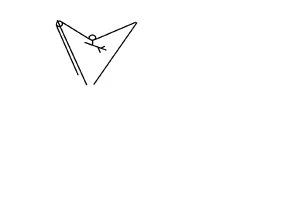
My coworker has been using this method and loves it. I hope to try it soon. Recently I tried and really liked the "v" rigging style. but that has a very different purpose/application.
 
I first saw it on a video here on the buzz. Y'know, "It's okay guys, I saw this on youtube!" It's great for spreading canopies in confined spaces, and you can lower or raise the side you're closest to in order to position the piece better once it's being lowered. Again, not helpful in this thread. (I'm bad for hijacking.)

For this thread, though, my coworker was blown away by the decreased forces on the in-tree rigging points. He was dumping much larger loads onto the line than he normally would feel comfortable, and claimed that the points didn't move. I've run rope for him once when picking a top out of an oak from another one near by, and you can add much more tension as mentioned above, and the lowering was more controlled and less stressful on the rigging tree.
 

Attachments

  • V rigging.webp
    V rigging.webp
    8.8 KB · Views: 227
Does that small DMM block you have tied on the cutting piece take a beating?
Not really because, the way you tie it, the log get catch by the rope ,the tip of the log smash the sterm but the pulley do not really get beat... So you put a block a little bit lower that you would normaly do under your notch , because you need room to attach the end of the rope after you pass it trought the block on the section you cut. This is not a technique I use every day , maybe 5 - 6 times last seasons , but there where no sign of abuse on the block I've used.
I think it easier to use this technique instead of putting , for exemple 2 x-rings on the sterm and using 2 differents ropes , for both the climber and the groundman.
 

New threads New posts

Back
Top Bottom