
Winchman
Carpal tunnel level member
- Location
- Southwest Georgia
There are a lot of pines around here with various amounts of damage from fusiform rust disease. I've removed several where the damage was so severe that I thought were a real danger. I've still got this one in my front yard.
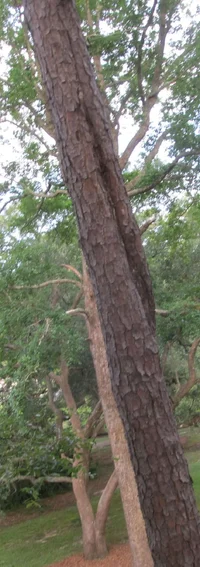
It seems to be doing OK, and it's not a threat to the house, so I've left it alone. However I'm wondering if it is spreading the disease to healthy trees. Would it be a good idea to take it out for that reason? Is that just a scar from the disease remaining after the tree has compartmentalized the damage, and there's no active fungal infection there?
It seems to be doing OK, and it's not a threat to the house, so I've left it alone. However I'm wondering if it is spreading the disease to healthy trees. Would it be a good idea to take it out for that reason? Is that just a scar from the disease remaining after the tree has compartmentalized the damage, and there's no active fungal infection there?


