Cold Pruning Response of Deciduous Trees

joe

New member
This is in reponse to a post which asked whether damage can occur to deciduous trees from pruning live tissue during cold weather. I'm finding websites which support this assertion as true. One needs to read the pages to see why I chose them to support the claim of damage occuring during cold winter months.

http://www.nfs.unl.edu/documents/communityforestry/NFS%20StormDamageSeries.pdf

The above website talks about pruning storm damaged trees and makes a comment about drying of tissue during cold weather.

http://www.utextension.utk.edu/publications/pbfiles/PB1619.pdf

There's a statement in the above website which supports the assertion that drying of tissue can occur when pruning below 20 degree temperatures.

http://extension.missouri.edu/explorepdf/agguides/hort/g06866.pdf

The above website makes a statement warning against late season pruning.

http://arnoldia.arboretum.harvard.edu/pdf/articles/624.pdf

The above website seems to steer away from what others say in general, but a statement is made about cold damage and pruning near the end of the article.

http://counties.cce.cornell.edu/essex/pdf/2007_June%20Final.pdf

The above website uses information from the previous webpage which also makes the author an authoritative source of information.

http://www.hgic.umd.edu/content/documents/March_Apr_09_newsletter_w_calendars_000.pdf

The above website talks of frost cracks. As one reads, they will find sometimes even proper cuts will not stop damage from occuring. I've seen this damage even with proper cuts made on 3 inch caliper trees.

http://www.ext.colostate.edu/mg/gardennotes/613-PruningCuts.html

The above website has some interesting information about timing of tree maintanence, essentially, pruning.

http://www.cleveland.com/insideout/index.ssf/2009/12/late_fall_is_not_the_time_to_p.html

The above is from an extension person who has some interesting things to say about fall pruning in the Cleveland Ohio area. He states plants need to experience 3 or 4 hard freezes before it's safe to prune.

The purpose of this particular post is not to state dormant pruning of deciduous trees is improper, but to state there is information being disseminated into the public that can influence their thinking.
Joe
 
Just to start with the first one, it did not seem to talk about drying of tissue, but of cuts. That happens all seasons. I've been pruning in all weather in Oregon since 1980 and have yet to see a problem from winter pruning.

Keep in mind what region we are in. That document, is from Nebraska. So I approach reading from looking at the regions. But more importantly, my own local observations.

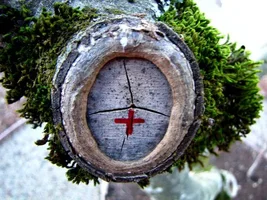
As for drying, here is a summer pruning cut from just a year ago. Plenty of drying, but excellent results so far. So winter drying of a cut is fine for my needs.

207100-magnolia_lower.jpg


The second document stated:

[ QUOTE ]
Late summer
and early fall are also bad times to prune because new
growth is encouraged that cannot mature enough to
withstand winter freezes or early fall frost. An old rule
is do not prune when the temperature is below 20 F.
Pruning in late fall or early winter will keep wounds
open until spring, inviting desiccation.

[/ QUOTE ]

My experience has found much of that to be partially a myth for most trees. The closest to that which I've seen is with roses which may possibly sprout tender stems quick enough. But not that I've seen from a pine, cedar and most hardwoods I've pruned like in early September. I tend to go with what Shigo wrote in A New Tree Biology about pruning being okay most any time of year.

I like the diagrams in the second doc.

Mid-teens is the coldest pruning I've done here, but that's also nice weather to work on tools and things.

One part of the landscape worth more attention might be turfgrass. I don't recall arborists talking about staying off grass when there is frost or sub-freezing weather. I still remember well from previous country club work, the black looking footprints from people walking on frozen grass. Pretty unsightly, although the color can recover weeks later.

In sub-freezing, focus on how to get around the better looking lawns when moving limbs from the area. Or just how to stay off the lawn, including heavy debris.

See #5 ...

University of Nebraska Extension Service

This is common knowledge among turf management. The damage is quick and as obvious as like does a finger bleed when a knife cuts it.
 

Attachments

  • 207100-magnolia_lower.webp
    207100-magnolia_lower.webp
    68.1 KB · Views: 41
when i learn about issues like this i start to gather info from what happens naturally. how did trees respond to ice/snow breakage? how did they respond to intentional pruning?

trees have had to adapt of course. if 'cold' pruning was harmful we would find evidence of the results along the 'ice line' where annual or regular ice storms followed by 'cold' weather.

start looking for the effect in a line roughly from kansas city and going east through kent/tenn

is this a big enough issue to change our practices?

define 'cold'
 
i've been reading the articles.

i got to see some of my old friends in the article from Tenn. there is a picture of pruning tools...mostlt mine, the rest belonged to peter bedcker who wrote a similar article for u of mn extension many years ago. look at the poulan 25...how far back does that go? i can remember the job where the pic was taken...i wish that i could remember more important things soetimes :)
 
is there a 'measure' of the 'damage' done by 'cold' pruning?

is the damage bad enough to change our practices?

it seems that more good can come from getting everyone to make target cuts and eliminate over-pruning.
 
I'd submit that actual pruning practices are far more important than the actual time of year; at least in my neck of the woods.
 
Thank you, Joe, for going to the trouble to research and post these.

Although, as I was reading I found myself thinking "it depends". There are so many variables that articles cannot address.

I'm not sure what pruning practices would be changing, Tom.

Here, we tend not to trim much in the winter...although this might be more related to the definition of cold you are looking for.
grin.gif


We will not trim maples or birches in the winter unless absolutely necessary. Every warm day they are going to bleed like crazy. So maples we prefer to wait until after leaves open. Birches have a narrow window of opportunity between no winter pruning and active flight time for BBB, but they generally do best left alone anyway.

And the exceptions and variations go on and on...

You need to know your area, know your species and pay attention to what works best for them where you are. But when a storm rolls through...you need to make the tree safe and then all bets are off.

Sylvia
 
Please, do not view posting the links in my initial entry as being troublesome to me. Like in school, research of any sort allows me to think about and retain the information being researched. Using the information in the field and observing the end results as correct should be the reward through better advice and practices for clients. People are welcome to the information at their discretion and are also welcome to criticize openly comments I may make.

The cut off temperature for pruning in the cold according to research I'm reading is 20 degrees fahrenheit. Below 20 degrees is bad, above 20 degrees at the time the cut is made is acceptable for removing live wood. If damage is occuring during low temperatures, to me it would appear as subtle damage underneath the cut as described by Dr. Shigo. I haven't "observed" any extensive damage to trees pruned during cold weather. If asked to make a judgement call as to prune live tissue during cold weather, I'd be consevative with the pruning.

http://ecommons.library.cornell.edu/bits...nd%20Shrubs.pdf

On page 5 of the above document, or page 7 of the pdf, states the potential for drying of tissue "around" pruning cuts. The document states some conifers are especially vulnerable to cold weather pruning. This is not a west coast institution stating the information.

Near the end of the article, however, this document states to thin mature trees and remove storm-damaged limbs after hard freezes while the plants are truly dormant.

These links give one much to think about.

Joe
 
[ QUOTE ]
are also welcome to criticize openly comments I may make.

The cut off temperature for pruning in the cold according to research I'm reading is 20 degrees fahrenheit. Below 20 degrees is bad, above 20 degrees at the time the cut is made is acceptable for removing live wood. If damage is occuring during low temperatures, to me it would appear as subtle damage underneath the cut as described by Dr. Shigo. I haven't "observed" any extensive damage to trees pruned during cold weather. If asked to make a judgement call as to prune live tissue during cold weather, I'd be consevative with the pruning.


[/ QUOTE ]

I cannot recall Shigo ever drawing a line at any temperature for pruning and I have all of his books and cd's and dvd's and been to a lot of his seminars from 1980 on. He did say that even "...proper pruning cuts can become infected, and the pathogens will spread in a small strip of wood below the cut. This is true for Dutch elm disease, oak wilt, and fire blight". (pg. 31 TP)

Almost always you will get die back above and below the cut on flush cuts as opposed to ntp cuts (don't cut into the branch collar....remove branch material and not stem tissue).

I think you may have just inadvertently associated Shigo with some of your assumptions you have made from other research you have read.... in that paragraph that mentions Shigo. If I am wrong pls. cite the study. Thanks.

Interesting food for thought this subject though. It would be a normal thought that a tree's defense is not as quick to respond when a tree is dormant or semi dormant or its metabolism is slow and opportunistic pathogens still have capabilities.

I couldn't download a lot of what you posted.
 
[ QUOTE ]
The cut off temperature for pruning in the cold according to research I'm reading is 20 degrees fahrenheit. Below 20 degrees is bad, above 20 degrees at the time the cut is made is acceptable for removing live wood.

[/ QUOTE ]

It's kind of nice to know our typical shutdown due to comfort and convenience also coincides with what is generally best for the trees.

I would think that most typical winter pruning days on the west coast would be above this temperature as well.


[ QUOTE ]
If asked to make a judgement call as to prune live tissue during cold weather, I'd be consevative with the pruning. Joe

[/ QUOTE ]

I agree, Joe. We are conservative about winter pruning and yet every winter we are called with questions about "isn't the only time to prune is when a tree is dormant?" And that simply isn't the case. Shigo and others have stated that trees can be pruned at other times....depending on the goal.

I need to correct my last sentence from my own previous post. David is reminding me to never say we make a tree "safe". You make a tree "less hazardous".
shocked.gif


Sylvia
 
since we live on the water planet making pruning decisions on how water factors into any decision is important.

there is a line, in north america anyway, that seems to divide a lot of tree issues

i have taken to call it the 'snow belt'...where a person can expect to see 'staying' snow for much of any winter...look at five year groupings...

just south of the snowbelt is the ice belt where ice storms, and tree damage, are routine not exceptional

if water is moving in trees there seems to be a
reduced chance of damage

i've read research about how wrapping trunk wounds with saran wrap reduced decay. the conclusion was that keeping the moisture in rather than organisms out.
 
I think my region has faded out of the snow belt and one of my observations involving that is that living in a city like I do with predominantly clay soil it is an important factor to have (slow release watering) snow in the spring. Otherwise you do not get very good penetration. Add that to a couple of recent droughts and we have had thousands of dead trees as a result in the last few years.

I mentioned that Shigo was not in favor of pruning "when leaves are forming.....". At this same time when circumference expands the bark actually MOVES. The bark cells are actually in a new spatial position in respect to the center of the trunk. Xylem cells have yet to lignify and damage can occur by climbing all over the tree to prune. Bark can "slip" and cause damage. I have seen this happen.

A third thought.....why are we pruning live tissue out of trees anyway if not for our own needs (protection from injury by falling parts of trees or aesthetics etc.)? Trees were moved out of the forest for us and became decurrent. Trees operate under a dynamic equilibrium where supply and demand constantly dictate growth, slowing of growth or shedding. Why do we even need to get involved? Removing deadwood removes a pathogen's food source so it is warranted of course, but removing live tissue?

And when we speak of "pruning live tissue" couldn't we substitute the word "wounding" in this discussion and be in the same place?

What is your crew doing today Jim?....We are climbing and "wounding" that tree over there to (reduce the sail, make it look cleaner, take some weight off one side....).
 
Treevet, I disagree that all we are doing is for our benefit. Much of the pruning (live and dead tissue) that I do is for the tree's benefit. Codominant stems, aggressive or poorly attached suckers/watersprouts, removing weight to compensate for other defects or to prevent limb failure and tearing... Trees are not perfect, and with some intervention by us arborists, they can be healthier and live longer. Which indirectly benefits us, I'll give you that!

I also don't go along with the contention that trees existing outside of a forest environment is an unnatural condition. The forest is just one of many types of terrain out there, and in many of them trees exist with much less competition. Even the trees in the forest WANT to be decurrent, that's what they do when they get to the top!

-Tom
 
Well, as usual I agree with what you are saying TTTM.

I also was going to point out that trees did not become decurrent only when they left the "true" forest situation. Giving Treevet the benefit of the doubt, perhaps this was just a miswording on his part. Even a pine tree will become decurrent IN THE FOREST given enough time.

The luxury a forest setting should have over an urban setting is the absence of human interaction that will allow that tree to thrive, or not, in its native habitat. (I could argue that there are few places left on this Earth where that actually happens...but that would become another thread.) Since our concern as arborists is, for the most part, the management of that interaction between trees and humans, we prune for many reasons. And in many of those scenarios the tree is going to have a longer life due to good management. (That is supposing the quality of arboriculture is good.)

It can also be argued that the very fact that trees can and do interact beneficially with people in the urban environment is in their own best interest. Without this desire to have trees around us, we would have far fewer trees, right?

A term I do not use is "wounding". We have run into too many people who have taken this term too literally and are therefore, paralyzed on doing anything with their trees. These trees may then have co-doms that are going to become structural issues, cross-overs...same, and limbs that may be hanging down interferring with traffic that they prefer to tie up rather than cut off or subordinate. You can't tell them that the tying up is going to become a problem in and of itself. All they can visualize is the "wounding" of the cut.

So No, I don't use the term "wounding". It gives a "needlessly negative" (to borrow a term) connotation to a necessary procedure.

Sylvia
 
I don't use the term "wounding". It gives a "needlessly negative" (to borrow a term) connotation to a necessary procedure.


good point

what words do you use when talking with clients?
 
Trimming and pruning are both perfectably acceptable to us. These are performed with a purpose.

Lawnmower damage, weedeaters, car attacks....those are wounding; damage which is created with no positive purpose or goal.

Sylvia
 
[ QUOTE ]


A term I do not use is "wounding". We have run into too many people who have taken this term too literally and are therefore, paralyzed on doing anything with their trees. These trees may then have co-doms that are going to become structural issues, cross-overs...same, and limbs that may be hanging down interferring with traffic that they prefer to tie up rather than cut off or subordinate. You can't tell them that the tying up is going to become a problem in and of itself. All they can visualize is the "wounding" of the cut.

So No, I don't use the term "wounding". It gives a "needlessly negative" (to borrow a term) connotation to a necessary procedure.

Sylvia

[/ QUOTE ]

Occassionally I use "wounding" like if a truck backs into a tree. But generally use a variety of words that fits the moment. If pruning, then "cutting" or a "cut". If damage, then tear, scrape, peeled-back, cracked, etc..

Likewise I never use "bleeding" anymore.

And about the dripping, in spring, I teach customers about the Point A - Point B lesson.

Before a cut, water or sap was moving up from the stem or Point A, out into the limb, Point B, which needs water, otherwise it dries and shrivels.

After the cut, water is still flowing from point A to point B, except that Point B is not the branch. Then in a few days or a couple of weeks, the dripping stops. For me it does anyway.

So before the cut, the water was still moving out of the main stem.
 
[ QUOTE ]
Treevet, I disagree that all we are doing is for our benefit. Much of the pruning (live and dead tissue) that I do is for the tree's benefit. Codominant stems, aggressive or poorly attached suckers/watersprouts, removing weight to compensate for other defects or to prevent limb failure and tearing... Trees are not perfect, and with some intervention by us arborists, they can be healthier and live longer. Which indirectly benefits us, I'll give you that!

I also don't go along with the contention that trees existing outside of a forest environment is an unnatural condition. The forest is just one of many types of terrain out there, and in many of them trees exist with much less competition. Even the trees in the forest WANT to be decurrent, that's what they do when they get to the top!

-Tom

[/ QUOTE ]

Tom, I did not mean that we changed the genetics of the tree and made it tend towards a decurrent form I simply meant that we would not be doing much of the pruning we do if the tree was left in the forest in an excurrent state. So we are not doing the tree a big favor by pruning but rather ourselves to "civilize" these trees.

Much of the pruning involves conjecture and likely much of this has to do with finances during a slow season (winter) when bills are due and, "damn lady, that tree really needs a good pruning". Esoteric terms are used and eyebrows are furrowed and discerning selections at amputations are made.

I do think that trees existing outside of the forest is an unnatural condition.

Shigo..."I believe that included bark forms when the branch and trunk grow at the same time. In the forest, the branch usually grows before the trunk. When we bring trees into our world, we change their pattern of growth and the entire tree grows at the same time." pg. 163 TP

Sprouting is often related to "human intervention" as well.

Shigo...."We must remember that trees became trees in the natural forests. Their genetic programs come from the forest." pg 42 MA

and..."We must understand forest trees. When we plant a tree so far removed from its natural site, the tree will have problems. Yes, the tree may tolerate the site, but it will exist in a weakened state".

Golf courses all over Scottsdale Az come to mind.

Shigo..."Trees in natural forests grew in groups. They had group defense and group protection (also group nutrition I might add). When we take them out of the group,, we take away these features."

On a different note... while a branch is shedding it moves its stores of nitrogen reserves,and carbs. and other essential substances, back to the parent stem. This is generally done at the end of the growing season." pg. 266 MA. This would lead one to let the branch die back to the stem prior to removing in a best case scenario in the winter if safety is not a concern.

Sylvia, I agree that wounding is a harsh term and certainly a ntp pruning cut causes minimal "wounding" but it is wounding nonetheless and, if cuts are made with no reason that is beneficial to the tree then we are just talking semantics, or public relations or even propaganda by calling these cuts pruning. The same chain of events that I could type a page about here called "wound response" potentially occur regardless of designation.

For the most part I am just playing devil's advocate to generate some discussion. But I do believe over pruning is abundant and pruning should be handled much more judiciously. It would probably amaze us what 10 arborists that thought they were the best pruners in the world would intend to do to the same tree, when quite possibly it needed nothing at all.
 

New threads New posts

Back
Top Bottom