Climber killled in Eastern Shore of MD

So Treehumper, are you saying basically that the notch isn't deep enough to be safe, if it were deeper then it would be safe to rapell off of?
 
I agree that it is the responsibility of the employer to provide a safe work place. I will not argue that in this case but we have to recognize that employee's have to use this training and also good judgement when they are on a job site without an employer. All the best training in the world is useless when people try to take short cuts, get tired, or stop paying attention to detail. It is up to everyone to make the work place safe, but you are correct it does start at the top.
 
Not just deep enough. Consider the slope of the sides of the notch. If It's a half-v vs. a full v is the rope applying the lateral force against the right part of the notch. All of this is in relation to the lean of the stem.

It's not that you will roll out of the notch more often than not but that the potential is high for it to happen.
 
[ QUOTE ]
I agree that it is the responsibility of the employer to provide a safe work place. I will not argue that in this case but we have to recognize that employee's have to use this training and also good judgement when they are on a job site without an employer. All the best training in the world is useless when people try to take short cuts, get tired, or stop paying attention to detail. It is up to everyone to make the work place safe, but you are correct it does start at the top.

[/ QUOTE ]

Absolutely! The employer can demonstrate the employee's culpability by providing the evidence that shows the employee was in fact provided the safety training and that the employer enforced OSHA regs. Produce any reprimands for breaches of safe work practices. In essence, show that they did what they were supposed to and the employee disregarded it.

 
Are you saying the greatest likelihood of the rope coming out of the groove would be at the beginning of the rappel when the lateral forces would be greatest it seems, and the further below the groove the rapeller is, the lower the likelihood of the rope coming out?

Rapelling off a spar is always safer with lanyard deployed, btw.
 
No, it's not quite as simple as that. One thing is when we are in close, we're watchful at the beginning. As the rope moves through the notch there is a dynamic interaction which can increase the likelihood of the rope becoming dislodged. The force is also proportional to the length of the rope. And yes, having your lanyard deployed and walking down vs. a classic rappel (think short leaps leading to sudden stops).
 
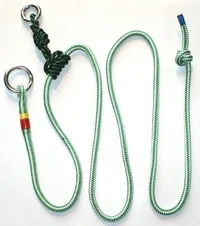
This (as many here) is what I use on a spar.
Choke it around the trunk so the two rings nearly touch each other. Climbing line trough both of the rings and you have a fail safe (escape) route down.

291642-adjustableFS.jpg
 

Attachments

  • 291642-adjustableFS.webp
    291642-adjustableFS.webp
    44.1 KB · Views: 35
[ QUOTE ]
This (as many here) is what I use on a spar.
Choke it around the trunk so the two rings nearly touch each other. Climbing line trough both of the rings and you have a fail safe (escape) route down.

291642-adjustableFS.jpg


[/ QUOTE ]

Agreed.
Can't beat a system that most are familiar with in case of an emergency.
I have a 6 foot adjustable, and a 20 foot adjustable.

Cutting notches for a climbing line to fit into is insane.
Sorry someone had a horrible accident to find this out.
There are much, much safer techniques, with absolute no risk of failure.
 

New threads New posts

Back
Top Bottom