Cavities and honeybees online on June 20th, 11AM-1PM Eastern US time.

KTSmith

Branched out member
Attached is a flyer for enthusiasts of free-living honeybees. I'll be talking about cavity formation and two other presenters will be discussing bee biology and the woodworking to produce "natural" settings to encourage honeybee hives. The latter is more controversial than one might think, but check it out: honeybeewatch.com/events . I believe the session requires registration, but with no fee.

Yes a bit off-topic for this thread, but such is my professional life. Thanks for reading!
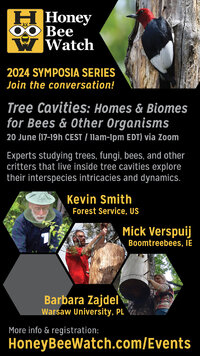
 

Attachments

  • KTSmith Honeybee cavity flyer 2024.jpg
    KTSmith Honeybee cavity flyer 2024.jpg
    387.9 KB · Views: 16
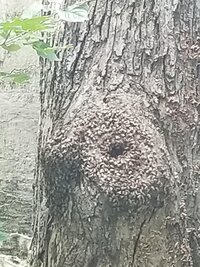
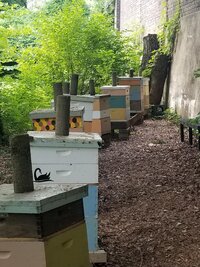
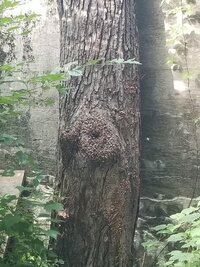
That sounds good to me too. Any advice on getting a give to move out of a cavity in a log and into a new home? We removed a tree in March with a sluggish hive, now thriving, that I was hoping to transfer to a hive box.
 
A year ago we had our outside contractor remove a tree that I knew had a hive in it. I got to the jobsite before the cutter got close to the hive and warned him of its location. He said ok, no problem, "I have a bee suit" . He apparently did not use it and when he got to the other side of the tree he got swarmed. He wound up jumping out of the lift, shattering g both ankles, and fracturing a lower leg bone and cracking his pelvis. I believe these bees were africanized.
 
A year ago we had our outside contractor remove a tree that I knew had a hive in it. I got to the jobsite before the cutter got close to the hive and warned him of its location. He said ok, no problem, "I have a bee suit" . He apparently did not use it and when he got to the other side of the tree he got swarmed. He wound up jumping out of the lift, shattering g both ankles, and fracturing a lower leg bone and cracking his pelvis. I believe these bees were africanized.
Thanks OOM, yes, honey bee colonies can pose a serious threat! The Honey Bee Watch program is a citizen observer advocacy group for free-living honeybees (which are not native to North American). The challenge is that feral or free-loving honey bees have been shown in some studies to drive out native, solitary (rather than colonial) bees. And the latter can also be more effective pollinators than the generalist honey bee. No, I don't have a dog in that fight, but they are interested in tree cavities, so that is where I come in.
 
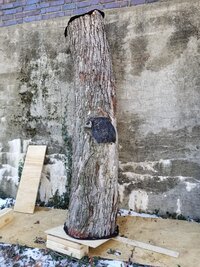
Beautiful! Just out of curiosity, what happened next? I see the log with the cavity openings covered in mesh. Did you move the log to a "safe" place and let the little rascals free or ?
 
That log, is in its permanent resting place, mesh (roofing paper) removed. I'm going to take a photo of it today with activity. We are hot and muggy today. The log is oriented in the same position it was in the tree
 
Thanks all and especially Roger M for your participation here. The session was way fun for me! None of my stuff would have been new to you folks, to be sure, but there is a place for missionary work.
 

New threads New posts

Kask Stihl NORTHEASTERN Arborists Wesspur TreeStuff.com Teufelberger Westminster X-Rigging Teufelberger
Back
Top Bottom