Brain Teaser

evo

Been here much more than a while
Location
My Island, WA
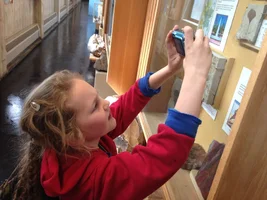
My son and I went to a Earth Science building at one of the local college's for one of his schools projects.. We were both blown away, the halls are set up just like a museum of sorts. Checking out Dawn Redwood (leaves and cones) fossils, and ginkgo, only to take a short walk back to our car and find ginkgo and a sequoia crossing campus. Never thought I'd be cruising a college campus with my 8 yr old son.. It was the best time I had in quite a while!

Any guesses?
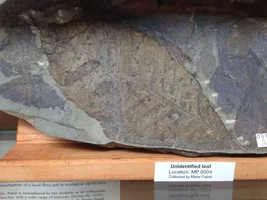
IMG_0713.webp

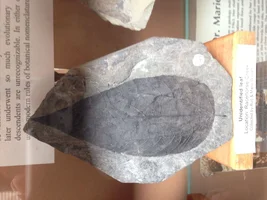
Sorry the photo is off, it was taken from behind glass.IMG_0712.webp
 
What a great place.

These may not be true fossils as they appear to be imprints formed in a mud whereas fossils would be formed by the replacement of tissue with minerals.

And why do I see a magnolia leaf?
 
The first sample, has a serrated margin and opposite venation.. It's hard to tell in the photos, and there was a lot of glare and scratches in the glass.
The second photo has me guessing, and clueless. These are from the Eocene (post dinosaurs, and pre mastodon ~50 million BC) period in NW Washington.

@mrtree You are right, the Chuckanut formation is in the NW corner of WA. The area was a giant flood plane/ river delta. This is before the Olympic mountians, and the Cascades. There was a large river flowing off the rockies to the Pacific.. Most of the rock is sandstone, with a thin layer of mudstone for the impressions/fossils...

I went expecting to learn, but mostly just to hang out with the kid. However we were both dragging each other around with excited "library" voices as class was in session.

It was amazing to see how little some of these plants have changed. The gingko is self evident, as it appears to be identical (venation and leaf shape. However, some of the pines, magnolias, sassafras, alder, sycamore and others blew me away. They have literally been doing what they are doing for MILLIONS of years, virtually unchanged! I knew that this area in this time period was warmer (much like Hawaii) but had no idea about Alder, and cinnamon...

What are the thoughts on the second photo
 
Last edited:
It's close for sure. The key may be in the vein pattern of pic 2. The central one splits into 3 primary or more likely 1 primary with 2 significant secondary. Doesnt ring a bell for me at the moment
 
There are a couple of books on fossil plants/trees that you can likely find in the museum library
Ha, This was the Earth Science department of Western Washington University, if they cannot figure it out doubt I could. It would be cool to take some classes though!

I thought I'd bring the subject to Arborist's as well we are somewhat unique in the botany world
 

New threads New posts

Back
Top Bottom