armillaria sign

Location
BC.
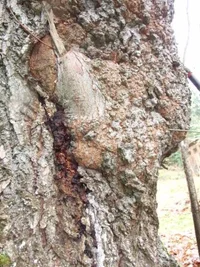
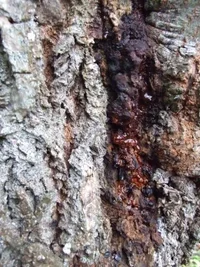
check it out - old Acer macrophyllum, declining stems from top down, cavities at base, some kind of root disease happening. Some old mushrooms that could be armillaria of some kind, some white material under some flaking bark that could be mycelial fans, hard to tell without looking closer. But these resinosus cankers around burls and stem swellings - I've seen them before but not known exactly what they are. Anyone see this type of thing on maples in the PNW or elsewhere?

 

Attachments

  • 201793-DSCF2309.webp
    201793-DSCF2309.webp
    63.6 KB · Views: 152
Thanks cervi

jeff maybe if you removed dead material you could learn more about it. trees like that i usually first probe roots to check support then if ok sanitize deadwood clean infections and monitor.

the black bumps look more like hypoxylon than armillaria attached
 

Attachments

I was thinking Hypoxylon as well, but maples are not listed as susceptible species here in BC. I don't want to spend too much time on these trees at this point, but will clean them up and set up to monitor if they want. Client wanted to know if it was worth it to build a major tree house in the tree, and I'm saying no. Just want to make a more qualified 'no'.
 
Better check that list again, or ask the list-maker why it was left out. Blinky who posts here is the guy in the story who came down with a hypoxylon-rotted maple--ask him if maples are susceptible!

After you clean it out you will know better how qualified that 'NO!" should be. I'm not a bigleaf expert, but rot is rot.
 
you guys are great - thanks for the input. If not hypoxylon, I don't know what else it could be. I'm referring to a BC forestry publication, so they may not look at maples as much. I'll look closer for sure, but I want to get paid for it! Rot is rot indeed - some protocols just look identifying decay as a 'heart rot', that's it. Doesn't matter what it is exactly, the risk is treated the same. Mainly us tree geeks that get picky about it I think. . .
 
[ QUOTE ]
I'll look closer for sure, but I want to get paid for it!

[/ QUOTE ]Amen; if they seek your opinion as qualified, it should be worth something, especially since you own some liability after offering it. [ QUOTE ]
Rot is rot indeed - some protocols just look identifying decay as a 'heart rot', that's it. Doesn't matter what it is exactly, the risk is treated the same. Mainly us tree geeks that get picky about it I think. . .

[/ QUOTE ]yeah sometimes it is an academic exercise, but sometimes it matters a lot re treatment and prognosis. In the story the tree was just as fecked whether it was hypoxylon or inonotus, but if the infection was newer and the tree in better condition then assessment and possible treatment would differ.
 

New threads New posts

Back
Top Bottom