Any Advice For My First Year In Business?

Location
Boise
Hey everyone! I Just joined Treebuzz although I have known what a great resource it is for quite a while. I am a 27 y/o with about 6 years in the industry. I decided to take the leap and start my own business last year. So far so good! Part of my motivation to quit drinking, I just hit my 1 year of sobriety. Currently, I employ 3 people and contract my best friend/mentor out for sales and occasional climbing.

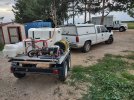
My town has had crazy growth over the last couple years and a supplemental economic boom was reason enough to monetize my passion. I have been a Certified Arborist and TRAQ Arborist for a little over two years. I have an old copy of the TCIA Tailgate Safety Book and we do weekly safety meetings when I take the team out to lunch. I Just purchased my first chip truck and spray rig and currently rent a chipper from another business owner in my area.

I was hoping my first post would get some notoriety as a place to get some advice from the owners who could share the things that they wish someone told them in their first year of business! Would you mind sharing some TRUTH BOMBS for new business owners? Leadership? Business Management? Pricing Hazardous Work? Effective Communication?

Thanks in advance and any input you have is highly appreciated!

- Nik from Holy Grove Tree Care

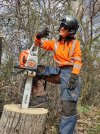
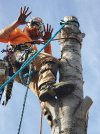
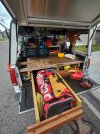
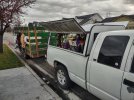
IMG_20220628_100416679_HDR.jpg173530028_204887541104413_479373196433676590_n.jpgIMG_20220330_115742552_HDR.jpg20201014_111324.jpg0ewNZV2Q.jpegIMG_20211208_105443257_HDR.jpgIMG_20211208_105515438_HDR.jpgIMG_20220617_201626125_HDR.jpg
 
1) keep having fun and being safe
2) try to say "yes" to anything...but don't take on anything you can't do safely. Maybe you underbid a job here or there trying something new...but in the process you learn something about yourself, your capabilities, and what you want the company to look like in the long term. Maybe you make a lot of money on a project but realize, that is not what you want for the long-term.
3) part of #2 is learning when to say "no" and realizing it is OK. Figure out what you can do best, what you enjoy doing (which takes the trial and error of #2).

For example: we don't even get storm damage calls any more because that is not what we do. Apparently word has spread. We don't advertise that. Sure...we pass up good money but we do well with pruning and pest management. Scheduling is a lot smoother too not needing to figure out how I'm rearranging my entire week because a storm blew through town. Others thrive in that environment. Nothing wrong either way...just find your groove. Lots of other examples within the industry:
*Utility line work
*Big commercial vs. small residential vs. municipal contracting
*Full blown IPM/PHC program vs. responding to pests as they show up
*Consulting away from home or stay near
*etc...
 
I agree with ATH said.

Be professional in everything you do on a property (doesn't mean you can't have fun), and leave a property better than you found it. Keeping your actions and attitudes professional goes a long way, and word will spread. ). Look at every job as a repeat customer, which means do every job to the utmost of your ability...don't short change your work if you see the job is going long (don't rush it either).

As to more specific business things.

Find out what you are good at, and what you aren't. For things you are not good at, hire someone to do that....or marry someone who is, like I did lol. I was great and doing the actual tree work, and estimating, but the office work was not my stong suit. Thankfully when I got married it was my wife's strong area, and with the combination of the two of us we been able to grow stronger.

Along with that is finding your niche, what seperated you from other companies. I see that you are a CA and TRAQ, which helps greatly in my opinion. We started off specializing in proper thinning and climbing removals, but now that I am 45 we are starting to focus more on grapple saw crane removals. Another thing we recently did was get our TCIA accreditation.

Start thinking about an exit plan, or long term goals. These don't need to be set in stone, but it is important to think about because it can affect how you structure your company (family business to pass down, large company vs small, sell out to another etc).

One specific thing that I have done, since almost the start of my company, is we have our work schedule online. So custimers can stay update to when their job is scheduled...no calls from them checking in and no calls from us saying tomorrow is the day. We do this through Google calendar. Here is the link to our schedule page: http://climbhightree.com/work-schedule/

Another is, we use quickbooks mobile which allows me to print a proposal before I leave the estimating appointment (via a portable printer). Along with the proposal they get a copy of our terms and conditions and a generic copy of our liabilty/workers comp insurance.
 
Last edited:
I found a few key things that I feel really makes us stand out in our area. For starters we bid everything in person, no bids over the phone or with pictures or whatever. I like to give people a realistic time frame no matter how far out we are scheduled. Very thorough clean up every time. Even on no clean up jobs we still usually partially stage debris.

Like the guys above have stated, don't be afraid to turn down work if it is something that you don't want to do... or don't agree with engaging in. A good example would be property disputes such as a neighbors tree hanging over the property. We don't engage in such situations what-so-ever. Liontailing, topping, and so on and so forth.

I like to keep a set amount in the account as well and try to buy equipment with cash.
 
I found a few key things that I feel really makes us stand out in our area. For starters we bid everything in person, no bids over the phone or with pictures or whatever. I like to give people a realistic time frame no matter how far out we are scheduled. Very thorough clean up every time. Even on no clean up jobs we still usually partially stage debris.

Like the guys above have stated, don't be afraid to turn down work if it is something that you don't want to do... or don't agree with engaging in. A good example would be property disputes such as a neighbors tree hanging over the property. We don't engage in such situations what-so-ever. Liontailing, topping, and so on and so forth.

I like to keep a set amount in the account as well and try to buy equipment with cash.
I would be somewhat careful of always buying equipment in cash. I think it is good to have the money to do so, but it often takes paying off loans to increase your credit score...and to look good for banks. Especially if you eventually have to go get a big loan for a grapple saw crane ($500k). Or even property.
 
Consider different options when looking at financing equipment. It's not for everyone, but I am still running my business as a sole proprietor which recently allowed me to buy a grapple truck with a HELOC loan (Home Equity Line Of Credit) This comes with some pretty serious advantages including only being charged interest payments as my monthly bill for the first 10 years of the loan, then you have an additional 20 years after the first ten to make the full payments.

I plan to have it paid off long before that 30 years, but it makes the payments stress free.

My first monthly bill just came in for $38 and change. At that price point I can still afford to stay home on the really cold days of winter instead of stressing over a payment that's due.
 
Biggest single piece of advice I give to everyone starting out - hire a good business coach to guide you. A good accountant, lawyer, and insurance agent are real important too, but a coach can make a tremendous difference.

Also, don’t be afraid to spend on equipment, and don’t hesitate to spend on advertising - but don’t handle that yourself. Hire a marketing company that knows what they’re doing, not a national firm, or a one man shop, but a good local company.
 
I would be somewhat careful of always buying equipment in cash. I think it is good to have the money to do so, but it often takes paying off loans to increase your credit score...and to look good for banks. Especially if you eventually have to go get a big loan for a grapple saw crane ($500k). Or even property.
There’s always a time and a place for cash, but keeping cash liquid is most important
 
Consider different options when looking at financing equipment. It's not for everyone, but I am still running my business as a sole proprietor which recently allowed me to buy a grapple truck with a HELOC loan (Home Equity Line Of Credit) This comes with some pretty serious advantages including only being charged interest payments as my monthly bill for the first 10 years of the loan, then you have an additional 20 years after the first ten to make the full payments.

I plan to have it paid off long before that 30 years, but it makes the payments stress free.

My first monthly bill just came in for $38 and change. At that price point I can still afford to stay home on the really cold days of winter instead of stressing over a payment that's due.
That’s always been my goal. Longer loans and if possible lower interest rates, and much lower payments. Out of three business loans I’ve paid two off in half the time, and one of in 2/3rds, but this is little fish at 5 years. Also I make it a point of biz to only take on one loan at a time.
 
That’s always been my goal. Longer loans and if possible lower interest rates, and much lower payments. Out of three business loans I’ve paid two off in half the time, and one of in 2/3rds, but this is little fish at 5 years. Also I make it a point of biz to only take on one loan at a time.
This is the first loan that I've taken, all equipment up until now has been cash purchases. It took me far to long to buy a mini skid, and seeing its production and less fatigue on my part is was what pushed me to take out this loan.

I'd definitely agree to the one loan at a time, at least for my business model. If your a company smashing out a full weeks worth of trees each week and months of backlog, then maybe upgrading multiple pieces of equipment make sense. Me however, I like taking days off. ;)
 
This is the first loan that I've taken, all equipment up until now has been cash purchases. It took me far to long to buy a mini skid, and seeing its production and less fatigue on my part is was what pushed me to take out this loan.

I'd definitely agree to the one loan at a time, at least for my business model. If your a company smashing out a full weeks worth of trees each week and months of backlog, then maybe upgrading multiple pieces of equipment make sense. Me however, I like taking days off. ;)
I took out a loan for my mini, 250 hours on it and came with a butt load of attachments. (All but a grapple!).. it wasn’t the best price at 22k but about 6-12k off a new with one bucket price.. payments were about 400 per month, and that was a price I could absorb if I were working as a employee.. I never made a payment less than $750 on it and the machine allowed me to bill more than half what I was paying for it per month per use, I still only use it about 1/3-1/2 of the working month and only has 450 hours on it, long paid off..
 
Last edited:
Keep that caribiner gate out of contact with the wood. Locking caribiners can unlock much easier in that orientation.
That stuck out to me as well! And assuming this is a tag for a fell or free dropping a large sections, your carabiner will crash to the ground under a giant piece of wood. I got yelled at early on for using carabiners in such a scenario as opposed to tying a knot.
 

New threads New posts

Kask Stihl NORTHEASTERN Arborists Wesspur TreeStuff.com Teufelberger Westminster X-Rigging Teufelberger
Back
Top Bottom