












Navigation
Install the app
How to install the app on iOS
Follow along with the video below to see how to install our site as a web app on your home screen.
Note: This feature may not be available in some browsers.
More options
You are using an out of date browser. It may not display this or other websites correctly.
You should upgrade or use an alternative browser.
You should upgrade or use an alternative browser.
Advise for straightening leaning trees
- Thread starter Wrangler
- Start date

VenasNursery
Been here much more than a while
- Location
- Michigan
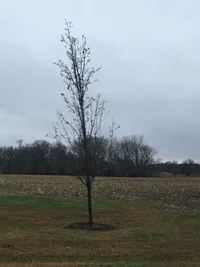
Either a tree spade which looks like you need a 60” maybe a 48” depends on what size they were B&B they look like about 4”-5” diameter treesAny thoughts on streightening up some Callery pears that have been planted too deep and leaning.Soil is heavy clay and trees were delivered balled and burlapped.They were planted sping of 2017.
Or a whole lot of digging and pruning roots to re plant straight
If root ball is in good condition try removing what B&B you can while exposed

Jackjcc
Participating member
- Location
- Twin Cities
Probably best to try a different species all together. Callery pears have some unique issues and have caused chaos in many parts of the west coast.
Sent from my iPhone using Tapatalk
Sent from my iPhone using Tapatalk
VenasNursery
Been here much more than a while
- Location
- Michigan
Terrible treee but hot sellersProbably best to try a different species all together. Callery pears have some unique issues and have caused chaos in many parts of the west coast.
Sent from my iPhone using Tapatalk
Installs
Pruning
Removal


cerviarborist
Very stable member
- Location
- Florida, USA
The trees will over time grow vertical and correct the lean on their own. Callery Pears are definitely crap, but unless you were going to plant something else to replace them, I wouldn't chase losses to perform excavation work to accomplish a task that the trees will handle on their own, all too soon.
I excavated with my fingers on this one, I am a couple inches below grade and haven’t felt a lateral root yet .Some are planted higher. There are about 25 of them.That lean is totally insignificant and could be mitigated by pruning. Planted too deep in clay soil however is a problem. How deep are you talking about?

evo
Been here much more than a while
- Location
- My Island, WA
Sounds like classic poor stock and planting. Holes could have been dug too deep and then filled prior to planting. The trees could have settled.I excavated with my fingers on this one, I am a couple inches below grade and haven’t felt a lateral root yet .Some are planted higher. There are about 25 of them.
IF these trees warrant the time and cost of correction. It would be worthwhile to replant them at proper depth. I agree if it’s just the lean the trees will work it out themselves in time.
Do you know what cultivar they are. Not all are as problematic as the 'Bradford'. The P. callerana tends to be adaptable to a variety of soil types, but trees in clay should be planted high not low. Best "fix" would be to tree spade up and reset, as has been already suggested. An alternative would be to just scoop out the excess soil from around the trunk creating a tree well. This however may not work if the clay soil prevents drainage of the well.
Do you know what cultivar they are. Not all are as problematic as the 'Bradford'. The P. callerana tends to be adaptable to a variety of soil types, but trees in clay should be planted high not low. Best "fix" would be to tree spade up and reset, as has been already suggested. An alternative would be to just scoop out the excess soil from around the trunk creating a tree well. This however may not work if the clay soil prevents drainage of the well.
I think they are Aristocrats, I am trying to post some more picks . I excavated a few more, same thing,top of root flare is about ground level but first lateral roots are 3” or more below grade. A lot of deadwood just above scaffold limbs and epicormic sprouts. They are struggling! Here is one I pruned,most of what I took off was dead.I excavated with my fingers on this one, I am a couple inches below grade and haven’t felt a lateral root yet .Some are planted higher. There are about 25 of them.
Attachments
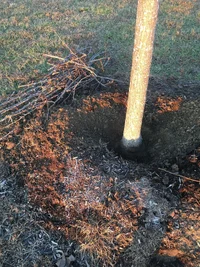
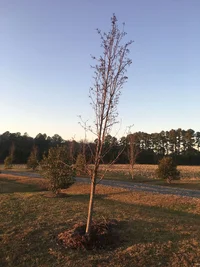
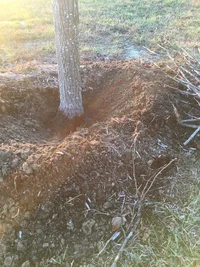
If worst ones were replaced by different genus it would have to be something that would look right in this scenario . It’s a long driveway lined with hollies that are not in stellar condition either
Attachments
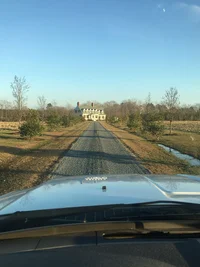
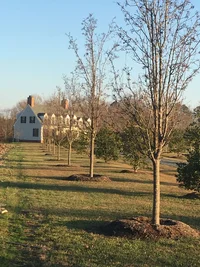
Trees take one year pre caliper inch after transplanting before resuming a normal growth rate. What is their caliper?
I would just continue with exposing the root buttress flair as you have shown, maybe a bit farther out. Getting air circulation on that area is the most important. I have seen trees in similar situations do well. Make sure that something else is not complicating their survival.
I would just continue with exposing the root buttress flair as you have shown, maybe a bit farther out. Getting air circulation on that area is the most important. I have seen trees in similar situations do well. Make sure that something else is not complicating their survival.
3”, this is my Dads property I hope to get down there again right after Christmas, I was just there for the weekend. If ground is not frozen I’ll work on exposing root collars . It really sucks, he paid local landscape co to do planting. I’m no fan of Callery pears but health Aristocrats can be beautiful, I hope this helps! What about soil test kits,are reliable,like the ones from garden centers?Trees take one year pre caliper inch after transplanting before resuming a normal growth rate. What is their caliper?
I would just continue with exposing the root buttress flair as you have shown, maybe a bit farther out. Getting air circulation on that area is the most important. I have seen trees in similar situations do well. Make sure that something else is not complicating their survival.
... What about soil test kits,are reliable,like the ones from garden centers?
Don't waste your time with that stuff. Call a lab in your area, such as Cornell, get instructions from them on taking a soil sample and do that.
Don't fixate on just the soil though. Diagnostics of tree problems requires a broad view. Was the wire cage and burlap removed? Water, either too much or too little, cultural practices in the vicinity, such as field, lawn, and driveway maintenance. Remember also that these trees should be just coming out of their root system redevelopment stage, a time of slowed above ground activity.
Thanks for the education, I did not know growth would be slowed for that long. I’ll send out some soil samples as well.Fields adjacent to trees are leased to a farmer that alternates corn and soybeans every other year. I’m not sure if there are any pesticides or frertilizer applied but I’ll try to find out.Don't waste your time with that stuff. Call a lab in your area, such as Cornell, get instructions from them on taking a soil sample and do that.
Don't fixate on just the soil though. Diagnostics of tree problems requires a broad view. Was the wire cage and burlap removed? Water, either too much or too little, cultural practices in the vicinity, such as field, lawn, and driveway maintenance. Remember also that these trees should be just coming out of their root system redevelopment stage, a time of slowed above ground activity.

southsoundtree
Been here much more than a while
- Location
- Olympia, WA
If I had to bet my life one way or the other, pesticides or fertilizers were applied to the crops.
"Callery pear is tolerant of a wide range of growing conditions, including tough, disturbed urban sites, pollution, dry to heavy clay soils, and sun to part shade" UN-L
Yeah, the base conditions are most likely not a problem for this particular planting, but it doesn't hurt to check anyway. I thought those looked like crop residues on each side, so farming practices need to be looked at, and if the house was built on reclaimed ag land, try to get some history.
Yeah, the base conditions are most likely not a problem for this particular planting, but it doesn't hurt to check anyway. I thought those looked like crop residues on each side, so farming practices need to be looked at, and if the house was built on reclaimed ag land, try to get some history.
Im sureIf I had to bet my life one way or the other, pesticides or fertilizers were applied to the crops.
"Callery pear is tolerant of a wide range of growing conditions, including tough, disturbed urban sites, pollution, dry to heavy clay soils, and sun to part shade" UN-L
Yeah, the base conditions are most likely not a problem for this particular planting, but it doesn't hurt to check anyway. I thought those looked like crop residues on each side, so farming practices need to be looked at, and if the house was built on reclaimed ag land, try to get some history.
Driveway was cut in about 3years ago while house was being built. About a foot or so of top layers of soil was removed and replaced with DGA im guessing(I was not there,I live three hrs away) My father has owned property for 25 years and always leased to local farmers.The thing that makes me think planting depth is reason for poor condition of some of these trees is we have planted literally hundreds of trees on this property over the years and they alway thrive. An offshoot of Miles River runs through property so in order to get permits Md Watershed people required planting of hundreds of trees before they would let Dad build. We did most plantings ourselves but everyone was busy when pears were delivered so Dad hired a local outfit to put them in. I have strong suspicion Evo is right about holes being dug too deep and backfill added to bring balls up to elevation compacted resulting in trees being suffocated.
Thanks for the further details. You are no doubt correct in that the primary issue is the improper planting. Having planted many other trees that are thriving, confirms that the soil and site conditions are favorable for trees.
Trees planted in ag land can sometimes show stress from what is called plow pan. This is where tillage can create an almost impenetrable layer of compacted soil just below where the tiller tines reached. This barrier can definitely cause a "wet feet" symptom.
Also, many farmers have gone to reduced tillage practices. In order to do this they use more pesticides, like Roundup and others. Obviously detrimental when used in close proximity to trees.
Just some other tidbits to consider.
Trees planted in ag land can sometimes show stress from what is called plow pan. This is where tillage can create an almost impenetrable layer of compacted soil just below where the tiller tines reached. This barrier can definitely cause a "wet feet" symptom.
Also, many farmers have gone to reduced tillage practices. In order to do this they use more pesticides, like Roundup and others. Obviously detrimental when used in close proximity to trees.
Just some other tidbits to consider.












New threads New posts
-
test
-

-
-
-
-
 Light 14 or 16" narrow kerf bar for 200t or 201t
- Started by southsoundtree
- Replies: 9
-








