
One throw weight would be more than generous in my book.How much of a cut do you want? Lol

Navigation
Install the app
How to install the app on iOS
Follow along with the video below to see how to install our site as a web app on your home screen.
Note: This feature may not be available in some browsers.
More options
You are using an out of date browser. It may not display this or other websites correctly.
You should upgrade or use an alternative browser.
You should upgrade or use an alternative browser.
3D printed throw weights
- Thread starter Whisper
- Start date
If we/I can ever get it figured out so it works then it’s a deal. I’m going to be looking for people to test this anyway.One throw weight would be more than generous in my book.

Evo
Been here much more than a while
- Location
- My Island, WA
Sounds like you have a direction you are going.. is the green part squishy? Is this the forward end of the bag/ball?This is a real R&D project.
Please feel free to offer suggestions and input. Its more difficult to do this without experts in the field weighing in.
Remember those rubber popper things that got banned? Grade school stuff.. basically a domed shaped rubber thing that you invert, there lip around the edge so it would slowly try to move back into shape, when it did it would pop up into the air quite a surprising distance. Maybe something like that as a bumper, so a hard direct trunk shot would be greatly cushioned.
We are trying to help you develop a bag, but there is a disconnect, as it at least seems like you don’t have much working experience as a arborist.
Maybe refine the idea you have a little more, make up half a dozen different tweaks and send them out to us for feild testing and feedback. We can pass them around from member to member. A slow process but real world and well rounded results/feedback!
Things like that have been done in the past on treebuzz.. you can even name them ‘Buzz Balls’
Last edited:
Evo
Been here much more than a while
- Location
- My Island, WA
Try tying your bag with a slippery 8. Leave little tail. It’s secure, but in the event of a crotched bag, some hard tugging can get the knot to spill with relatively mediumish to newish slippery throw line. Works for me about 50% of the timeThat's right. Where either the bare line pulls out of the weight, or a thingamajig on the end of the throw line that pulls out, which is too small and streamlined to have appreciable snag potential.
Evo
Been here much more than a while
- Location
- My Island, WA
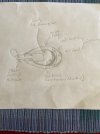
@WhisperI'm picturing tabs or arms more so than hairs. Like the tabs that fasten the halves of many plastic goods together. But don't have the holding surfaces exactly perpendicular to the axis of insertion so the tabs don't break off during extraction.
View attachment 82663
If the ‘pin’ rides in a hollow channel with enough play this could behave as the ‘dead blow’ and dampen the energy on a direct impact.. it would take quite a bit of playing with..
Dan's got the engineer trademarks of all caps lettering, arrows and cross hatch fill in the diagrams. Busted!
You could pilfer some of that snap in design from the plastic buckle folks. ? Ought to be some depth there.
You could also use a sharpish edge that with abusive pulling would cut the throw line free, rather than the traditional plain-break or friction/rub/heat/weaken/break methodology. Frayed throw line ends are a sort of disposable commodity anyway.
You could pilfer some of that snap in design from the plastic buckle folks. ? Ought to be some depth there.
You could also use a sharpish edge that with abusive pulling would cut the throw line free, rather than the traditional plain-break or friction/rub/heat/weaken/break methodology. Frayed throw line ends are a sort of disposable commodity anyway.
I pictured the pin as a little thing, not much over an inch long, that would be securely held. Not enough mass to provide any dampening. Inserted into a hole on the centerline axis, in the end of the weight. Don't want to infringe too much on the space for the steel shot.@Whisper
If the ‘pin’ rides in a hollow channel with enough play this could behave as the ‘dead blow’ and dampen the energy on a direct impact.. it would take quite a bit of playing with..
If the pin is very big, it can get hung like the weight.
@Bart_ may be onto something with the cutter idea. I do want to be able to remove the line without cutting it. (BTW, my degree is in chemistry, but I did have a couple of engineer positions with the power company. I never heard of anyone else having an engineer title without an engineering degree. I must be special! Haha.)
If I think I might need to pull the line off a weight, I currently use a cow hitch with a short tail. Seems like Dynaglide works best for that, out of my throwlines.
Evo
Been here much more than a while
- Location
- My Island, WA
Seriously try a slippery 8.. with a enough tugs (throw line wrapped around a stick for a handle) you can get it to spill, unless you break the branch it’s stuck on, or it takes wraps around something (but your screwed in that case).I pictured the pin as a little thing, not much over an inch long, that would be securely held. Not enough mass to provide any dampening. Inserted into a hole on the centerline axis, in the end of the weight. Don't want to infringe too much on the space for the steel shot.
If the pin is very big, it can get hung like the weight.
@Bart_ may be onto something with the cutter idea. I do want to be able to remove the line without cutting it. (BTW, my degree is in chemistry, but I did have a couple of engineer positions with the power company. I never heard of anyone else having an engineer title without an engineering degree. I must be special! Haha.)
If I think I might need to pull the line off a weight, I currently use a cow hitch with a short tail. Seems like Dynaglide works best for that, out of my throwlines.
I think this is would be WAY over the engineered.. but your pull out plug could be steel and act as a plunger/piston at the same time deadening direct impacts.
The unknown would be weights and mass
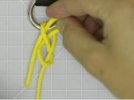
@evo do you tie your slippery 8s like this (from Weaver)?
I'm not a fan of a substantial pin for this type design. I think it greatly increases the likelihood of the line getting tangled, stuck, wrapped around twigs, etc. when pulled hard enough to effect release. I think @Bart_ has a better idea with a hard enough tug just cutting the line free. I can picture a design to provide that functionality, but not an easy way to load and remove the line Just my opinion.
Also, the pin release design may not even be workable in actual usage. How often will the throwline be pulling along the long axis of the pin if the weight gets stuck? If your pull is mostly side loading the pin, it's not likely to pull out. Especially if it's long.
I'm not a fan of a substantial pin for this type design. I think it greatly increases the likelihood of the line getting tangled, stuck, wrapped around twigs, etc. when pulled hard enough to effect release. I think @Bart_ has a better idea with a hard enough tug just cutting the line free. I can picture a design to provide that functionality, but not an easy way to load and remove the line Just my opinion.
Also, the pin release design may not even be workable in actual usage. How often will the throwline be pulling along the long axis of the pin if the weight gets stuck? If your pull is mostly side loading the pin, it's not likely to pull out. Especially if it's long.
Evo
Been here much more than a while
- Location
- My Island, WA
I’ve used key rings as break a ways before.@evo do you tie your slippery 8s like this (from Weaver)?
View attachment 82666
I'm not a fan of a substantial pin for this type design. I think it greatly increases the likelihood of the line getting tangled, stuck, wrapped around twigs, etc. when pulled hard enough to effect release. I think @Bart_ has a better idea with a hard enough tug just cutting the line free. I can picture a design to provide that functionality, but not an easy way to load and remove the line Just my opinion.
Also, the pin release design may not even be workable in actual usage. How often will the throwline be pulling along the long axis of the pin if the weight gets stuck? If your pull is mostly side loading the pin, it's not likely to pull out. Especially if it's long.
And yes that’s how I tie it but with a tiny tail and small loop
That’s interesting i was about to make a sheath for cloth throw bags but someone beat me to it. C’est la vie ( such is life)You guys may be interested in this thing: quickee.us
Seems like a nice way to improve shot bags without having to replace all of your shot bags.
- Location
- OH
You guys may be interested in this thing: quickee.us
Seems like a nice way to improve shot bags without having to replace all of your shot bags.
Seems like a nice way to improve shot bags without having to replace all of your shot bags.
Looks neat except for the pricing.You guys may be interested in this thing: quickee.us
Seems like a nice way to improve shot bags without having to replace all of your shot bags.
I'd be looking for a better manufacturing deal and/or reducing my profit margin to lower the price, boost sales and increase total profit. For me, a reasonable price point is no more than half the asking price.
Unless it has DMM molded on it.
In which case it should be priced at $20/gram.

Reach
Been here much more than a while
- Location
- Atglen, PA
I would agree with that, it looks interesting, but not at that price. I would want to see it below $10 before I would be interested in buying it. I realize manufacturing with a 3D printer is expensive, it may be necessary to keep margins razor thin until there are sufficient sales to justify having a mold made and making them that way.Looks neat except for the pricing.
I'd be looking for a better manufacturing deal and/or reducing my profit margin to lower the price, boost sales and increase total profit. For me, a reasonable price point is no more than half the asking price.
Unless it has DMM molded on it.
In which case it should be priced at $20/gram.
Hey thanks for your insight. You are right I am not an arborist. I’m a rec climber.Sounds like you have a direction you are going.. is the green part squishy? Is this the forward end of the bag/ball?
Remember those rubber popper things that got banned? Grade school stuff.. basically a domed shaped rubber thing that you invert, there lip around the edge so it would slowly try to move back into shape, when it did it would pop up into the air quite a surprising distance. Maybe something like that as a bumper, so a hard direct trunk shot would be greatly cushioned.
We are trying to help you develop a bag, but there is a disconnect, as it at least seems like you don’t have much working experience as a arborist.
Maybe refine the idea you have a little more, make up half a dozen different tweaks and send them out to us for feild testing and feedback. We can pass them around from member to member. A slow process but real world and well rounded results/feedback!
Things like that have been done in the past on treebuzz.. you can even name them ‘Buzz Balls’
I do remember those rubber springy things. I have tried making the base which is flexible with thicker material However the rebound effect is very pronounced as it is in those items that you mentioned that are now up anHowever the rebound effect is very pronounced as it is in those items that you mentioned that are now banned. I found the thinner the wall Better the energy dissipations is.
Hey thanks for your insight. You are right I am not an arborist. I’m a 60 year old rec climber. That’s why I want as much information as possible from true arborists. The guys that are grinding it out every day doing this amazing job.Sounds like you have a direction you are going.. is the green part squishy? Is this the forward end of the bag/ball?
Remember those rubber popper things that got banned? Grade school stuff.. basically a domed shaped rubber thing that you invert, there lip around the edge so it would slowly try to move back into shape, when it did it would pop up into the air quite a surprising distance. Maybe something like that as a bumper, so a hard direct trunk shot would be greatly cushioned.
We are trying to help you develop a bag, but there is a disconnect, as it at least seems like you don’t have much working experience as a arborist.
Maybe refine the idea you have a little more, make up half a dozen different tweaks and send them out to us for feild testing and feedback. We can pass them around from member to member. A slow process but real world and well rounded results/feedback!
Things like that have been done in the past on treebuzz.. you can even name them ‘Buzz Balls’
I do remember those rubber springy things. I have tried making the base, which is flexible, with thicker material However the rebound effect is very pronounced as it is with those items that you mentioned. So the rebound effect is counterproductive. I found the thinner the wall Better with the energy dissipations.
I would like to send out samples to working Arborists when I have a solid design. It’s all so preliminary right now. Make a small adjustment see if that will work which takes about four hours to print. And there’s a lot of assembly followed by Time for adhesives to dry only to find out it may be a dead end. I’m stubborn though so I’ll keep at it. Lol
You’re not kidding it would. I can see many hours with my 3-D modelling software trying to come up with a viable design.@Whisper
If the ‘pin’ rides in a hollow channel with enough play this could behave as the ‘dead blow’ and dampen the energy on a direct impact.. it would take quite a bit of playing with..
Dan's got the engineer trademarks of all caps lettering, arrows and cross hatch fill in the diagrams. Busted!
You could pilfer some of that snap in design from the plastic buckle folks. ? Ought to be some depth there.
You could also use a sharpish edge that with abusive pulling would cut the throw line free, rather than the traditional plain-break or friction/rub/heat/weaken/break methodology. Frayed throw line ends are a sort of disposable commodity anyway.
Dan's got the engineer trademarks of all caps lettering, arrows and cross hatch fill in the diagrams. Busted!
You could pilfer some of that snap in design from the plastic buckle folks. ? Ought to be some depth there.
You could also use a sharpish edge that with abusive pulling would cut the throw line free, rather than the traditional plain-break or friction/rub/heat/weaken/break methodology. Frayed throw line ends are a sort of disposable commodity anyway.
That’s a damn good idea about the buckles. No sense reinventing the wheel.
Keep thinking Dan we’ll figure it out someday.I pictured the pin as a little thing, not much over an inch long, that would be securely held. Not enough mass to provide any dampening. Inserted into a hole on the centerline axis, in the end of the weight. Don't want to infringe too much on the space for the steel shot.
If the pin is very big, it can get hung like the weight.
@Bart_ may be onto something with the cutter idea. I do want to be able to remove the line without cutting it. (BTW, my degree is in chemistry, but I did have a couple of engineer positions with the power company. I never heard of anyone else having an engineer title without an engineering degree. I must be special! Haha.)
If I think I might need to pull the line off a weight, I currently use a cow hitch with a short tail. Seems like Dynaglide works best for that, out of my throwlines.
I’m loving the drawings guys thanks. You all draw better than me. Thank the gods for my 3-D modelling software Blender. LolSeriously try a slippery 8.. with a enough tugs (throw line wrapped around a stick for a handle) you can get it to spill, unless you break the branch it’s stuck on, or it takes wraps around something (but your screwed in that case).
I think this is would be WAY over the engineered.. but your pull out plug could be steel and act as a plunger/piston at the same time deadening direct impacts.
The unknown would be weights and massView attachment 82664
In your drawing were you have the air void i used springy polyester fill. Foam rubber would’ve worked too, I just didn’t have any so I tore apart one of my kids old stuff animals.
 You don’t want it to bounce like an Indian rubber ball you want to dampen the inertia. You need to get the weight to move away from the bottom where the centripetal force wants to place it when swinging the weight. Once it’s in flight it basically weightless so something to push the weight up forward in preparation for the dead blow effect is required. The ever present need to dissipated energy is the hardest part. So no rubbery bouncy bottoms.
What about if the throw line threaded through the centre of the weight to be tied to the bottom. That would leave no knots at the smooth nose cone section of the throw weight. Next is trying to incorporate a breakaway function for the throw line using that design element.@evo do you tie your slippery 8s like this (from Weaver)?
View attachment 82666
I'm not a fan of a substantial pin for this type design. I think it greatly increases the likelihood of the line getting tangled, stuck, wrapped around twigs, etc. when pulled hard enough to effect release. I think @Bart_ has a better idea with a hard enough tug just cutting the line free. I can picture a design to provide that functionality, but not an easy way to load and remove the line Just my opinion.
Also, the pin release design may not even be workable in actual usage. How often will the throwline be pulling along the long axis of the pin if the weight gets stuck? If your pull is mostly side loading the pin, it's not likely to pull out. Especially if it's long.
New threads New posts
-
test
-

-

-
Renesters -- how do wildlife rescue orgs work with you?
- Started by BurOakTom
- Replies: 0
-
-

-
-
test2
-

-
-
-
KBNest -Midline Attachable SRS Canopy Anchor.
- Latest: southsoundtree
-
-