20% Thin?(embedded pics)

Hi fellow treeworkers,

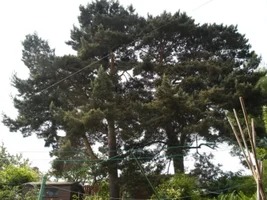
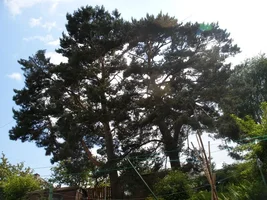
This a job we did recently, the idea was to open up the canopy to allow more light through.

It was suppose to be a 20% thin.

The trees are Scots Pine(Pinus sylvestris).

How did we do?

Scroll down on the thread to see the embedded pics, thanks.
 
Ignore this attachment and see pics below!
grin.gif
sorry!
 

Attachments

  • 89757-after.webp
    89757-after.webp
    134.8 KB · Views: 50
[ QUOTE ]
Can certainly see the difference, a good one to show potential clients.


[/ QUOTE ]

Thanks guys, these are my favourite kind of pruning jobs, when you can stand back at the end of the day and look at what you've achieved.

More satisfying than removals.

We priced it for a days work for two guys, so we took our time.

We did a tree each. All in all, with tidy up about 6 hours.

All handsaw work, apart from 2 dead stubs on the tree on the right.
 
tockmal, it could be the lighting but the very top of both trees, especially the one on the right, look really dense. If no light gets through the top then the green on the middle starts to fade and you begin to get a liontail effect.

In retrospect would you have worked that part a bit more and the middle a bit less?

I am not an expert on the species, but the physiology is pretty universal. Thanks for starting the thread.
 
[ QUOTE ]
tockmal, it could be the lighting but the very top of both trees, especially the one on the right, look really dense. If no light gets through the top then the green on the middle starts to fade and you begin to get a liontail effect.

In retrospect would you have worked that part a bit more and the middle a bit less?

I am not an expert on the species, but the physiology is pretty universal. Thanks for starting the thread.

[/ QUOTE ]

I agree with you that the tops especially the tree on the right, could have been broken up more to let more light through.

But, it is important to remember......as the tree grows taller the tops you are seeing now will spread out and become thinner naturally, in turn, leaving the tops with the ability to sustain vigourous apical dominance which is very important to the health of the tree, I reckon.

We pruned the tops less with this in mind.

It does give the the thin an uneven look though.

As far as using percentage values of foliage removed, for work instructions for crew and recommendations for client.... I have never really understood how, exactly you work out how to remove 5% 10% 15% or 20% of the foliage.

In the pictures we just went with what seemed right, using tree biology knowledge combined with experience.

Thanks for your comments. I appreciate them.

 
I wonder how much apical dominance matters with mature pines that are naturally transitioning from excurrent to decurrent form.

I wonder like you about that % thing; it is a wild guess, but we do need some sort of guideline. I do think it is important to generally to spread the thinning over the crown, including the apex. This work is made easier/possible with a pole pruner.
wink.gif


Glad the client likes your "dappling" work; should be interesting to watch the tree respond over tree time.
 
[ QUOTE ]
I wonder how much apical dominance matters with mature pines that are naturally transitioning from excurrent to decurrent form.


[/ QUOTE ]

None.

It seems that those trees are well beyond the stage when you might try to hold them in excurrent form for as long as possible. Now, instead, I like to think of each of those trees as being a bunch of little trees all bunched up. You are at a point where co-dominant stems can exist happily. Apical dominance isn't important any more.

The tops should've been opened up a little. But don't take my opinion to harshly. You've done those trees quite nicely. Many a tree-guy would've happily taked 50-75% MORE out of those trees!

Nice work!

love
nick
 
[ QUOTE ]
I like to think of each of those trees as being a bunch of little trees all bunched up. You are at a point where co-dominant stems can exist happily.


[/ QUOTE ]

When dealing with 2 trees growing closely together, I always try to treat the canopy as if it were 1 tree.

I think this is a common practice, sometimes even 3 or more trees of the same vigour and species growing very close together can be pruned as if they were one tree.
I've never done more than two.
 

New threads New posts

Back
Top Bottom