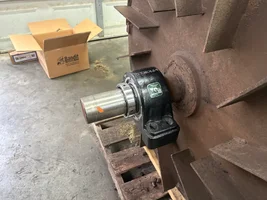
Bandit Chipper Chute Removal, Pocket Welding, and Bearing Replacement

Check for any lip that has developed from wear.

My first tree boss had something like that affect chip-throw on his bc1000, I believe.
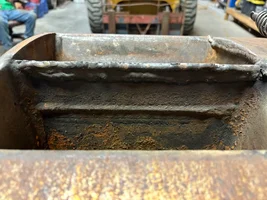
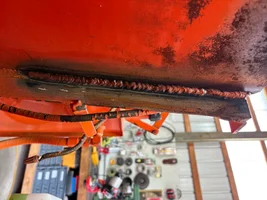
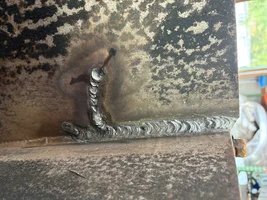
That’s what we had, basically a gulley that developed from wear, right at the base of each knife. I’m filling them with hard surfacing material and will grind them flat to restore the pockets to factory shape.
 
That’s what we had, basically a gulley that developed from wear, right at the base of each knife. I’m filling them with hard surfacing material and will grind them flat to restore the pockets to factory shape.
Careful with the hard facing, I’ve noted it doesn’t take impacts well and it will chip or dislodge. Old boss man limped his morbark disk anvil by applying hard facing that did work for many years but eventually cracked and wrecked a set of knives. Also caused more damage to the anvil but the machine faired well overall
 
Careful with the hard facing, I’ve noted it doesn’t take impacts well and it will chip or dislodge. Old boss man limped his morbark disk anvil by applying hard facing that did work for many years but eventually cracked and wrecked a set of knives. Also caused more damage to the anvil but the machine faired well overall
Thank you, I will definitely keep an eye on it. This stuff is supposed to be reasonably impactful resistant, but time will tell if it is. I don’t plan to keep this machine a whole lot longer either, if things go well it will be replaced in a year or so. I’m definitely not putting hardfacing on an anvil or anything that takes any hard hits, this will just be hit by wood chips coming off the knife. Definitely a hit, but hopefully not that hard a hit?
 
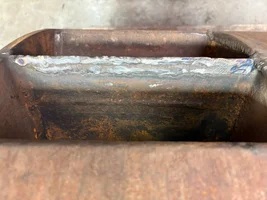
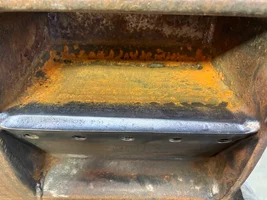
Welding the pockets is now complete, though as grinding is finished I may find a few spots that need touched up. Grinding is going slowly, as this material is so hard it is dulling my hardest grinding wheels… A neighbor who used to weld quarry equipment thinks he has a diamond wheel for this purpose, if so I’ll get that tomorrow morning. If not, I shall keep grinding slowly.

Photos are one pocket before welding, after welding, and after grinding.
 

Attachments

  • IMG_8645.webp
    IMG_8645.webp
    175.2 KB · Views: 17
  • IMG_8651.webp
    IMG_8651.webp
    131.9 KB · Views: 17
  • IMG_8639.webp
    IMG_8639.webp
    191.3 KB · Views: 16
Lmk how the diamond wheel works. I've got some repairs to do this winter and have been eyeing those for a while. Price seems steep but not if they kick ass.
If I get one, I will definitely let you know. If my neighbor doesn’t have one, I’ll just stick to regular wheels since diamond is so expensive and I only need it for this one project.
 
Welding the pockets is now complete, though as grinding is finished I may find a few spots that need touched up. Grinding is going slowly, as this material is so hard it is dulling my hardest grinding wheels… A neighbor who used to weld quarry equipment thinks he has a diamond wheel for this purpose, if so I’ll get that tomorrow morning. If not, I shall keep grinding slowly.

Photos are one pocket before welding, after welding, and after grinding.
Looks great
 
One could do like an engine rebuilder, number the knives and pockets, weigh the knives plus bolts for consistency and then accordingly balance the drum w/wout the knives installed. w installed accounts for any inconsistency in the location of the knife mount holes. ought to be small but you never know - if you're gonna balance might as well get the best outcome. A presumption is that the worn pocket drum state was still reasonably balanced due to even-ness of quantity of pocket wear.
 
One could do like an engine rebuilder, number the knives and pockets, weigh the knives plus bolts for consistency and then accordingly balance the drum w/wout the knives installed. w installed accounts for any inconsistency in the location of the knife mount holes. ought to be small but you never know - if you're gonna balance might as well get the best outcome. A presumption is that the worn pocket drum state was still reasonably balanced due to even-ness of quantity of pocket wear.
That could be done, but seems like a lot of extra work, and if knives aren’t all perfectly the same after the balancing, it will never again be balanced with knives on since knives are often changed.
 
How many hours are on the machine? Not something I'd thought to inspect for.
That machine has 8500 hours, so it has developed a few stress cracks here and there. A few have been welded over the years, but those have not.

The place that seems to crack the most is the mounts for the hydraulic chute rotator, probably because the chute seems to be the most forgotten grease point on the machine, so the drive motor has to work too hard to spin the chute.
 
For thought. I was watching an engine machine shop vid and they made the comment that an out of balance crank they were working on, at the small radius of a typical small block, was going to generate 1000 lbs force at say 5000(?) rpm in its state of imbalance.

There's an "App Note" science to bearings where you plug in rpm, static load, dynamic load etc to see how much you shorten their life. I suppose you could rough in drum static weight, rpm but out of balance load is ? and so is the vibration/impact load of making a chip a ?. Mfr's probably know this stuff. I surmise the chip force spike is not all transmitted to the bearings, but some version of it because its an inertial collision with the mass of the drum "anchoring" the position of the drum against the chip reaction force. be that whatever as it may, you've at least got control of reducing rotational imbalance forces that tend to shake, crack and wear out everything. Guessing the knives would prove to be consistent, hole mount locations were ok and haven't moved, just leaves executing some kind of balance check while it's still easy to add weld. I propose belly heavy test where if the drum bearings are too stiff to see it roll to heavy down, do a perpendicular spring force "torque to spin" test like for setting wheel bearing pre-load and see if any position is different, indicating you're raising or lowering the heavy belly spot. just for thought.


don't you love welding janky old metal, always comes out so pretty like a shiny stack of dimes ;) special sizzle too
 
For thought. I was watching an engine machine shop vid and they made the comment that an out of balance crank they were working on, at the small radius of a typical small block, was going to generate 1000 lbs force at say 5000(?) rpm in its state of imbalance.

There's an "App Note" science to bearings where you plug in rpm, static load, dynamic load etc to see how much you shorten their life. I suppose you could rough in drum static weight, rpm but out of balance load is ? and so is the vibration/impact load of making a chip a ?. Mfr's probably know this stuff. I surmise the chip force spike is not all transmitted to the bearings, but some version of it because its an inertial collision with the mass of the drum "anchoring" the position of the drum against the chip reaction force. be that whatever as it may, you've at least got control of reducing rotational imbalance forces that tend to shake, crack and wear out everything. Guessing the knives would prove to be consistent, hole mount locations were ok and haven't moved, just leaves executing some kind of balance check while it's still easy to add weld. I propose belly heavy test where if the drum bearings are too stiff to see it roll to heavy down, do a perpendicular spring force "torque to spin" test like for setting wheel bearing pre-load and see if any position is different, indicating you're raising or lowering the heavy belly spot. just for thought.


don't you love welding janky old metal, always comes out so pretty like a shiny stack of dimes ;) special sizzle too
I also watched a few videos on YouTube to get some thoughts about balancing this wheel. From everything I could do in my shop, it seemed to be perfectly in balance after welding. Or at least as close to perfectly imbalance as I can tell. I got it put back together today, or at least mostly, ran it, ran a little bit of material through it. At every RPM that I can check it seems to be running, smooth as glass, I can feel no vibration whatsoever.

Yes, welding, dirty old steel is something. It annoys me though because I cannot make my normal smooth, pretty looking welds. I am stuck using 6011 rods, I am more accustomed to using far smoother rods than that. I am very happy to have 6011 rods, though, nice to not need perfectly clean surfaces to work with! And it does make quite a sizzle, never mind the amount of spatter to burn me everywhere it can!
 
I was going to add that if you can't detect a belly low/heavy condition just sitting in the new bearings you're probably good to go. Glad to hear it all went well. :)


I gleaned an interesting tidbit from the crank balancing - there's static, dynamic and single/multi axis - thank goodness someone else worked all that out and turned it into automatic machines.

cheesy batman-like quote "symmetry is your friend" :)
 

New threads New posts

Kask Stihl NORTHEASTERN Arborists Wesspur TreeStuff.com Teufelberger Westminster X-Rigging Teufelberger
Back
Top Bottom