Coronet Pruning and other Wildlife Habitat Incorporation

Basswood

Carpal tunnel level member
Location
Long island
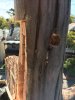
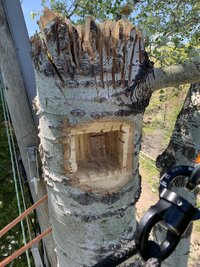
Was curious what others have found with utilizing coronet cuts, tree monoliths, snags and other wildlife habitat creation in tree care. I know this somewhat goes against the rigid scientific approach to our industries involvement with trees, and perfectly clean cuts. But conversely I think we are in a unique situation to incorporate wildlife considerations in certain applications. As well as the fact that nature has gotten along very well since it’s emergence without clean pruning cuts to the branch collar and the capitalization of those ragged edges. Obviously this hinges pretty significantly on hazard potential, but I’ve been pondering ways to do this beyond the odd bat box installation.

I did do a search on this and I know it wasn’t met with open arms.

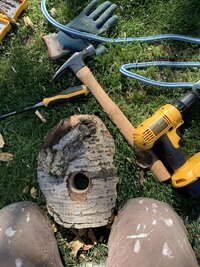
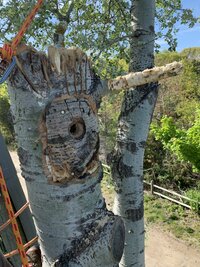
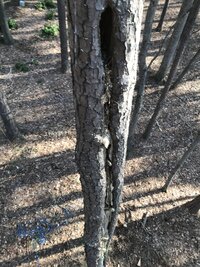
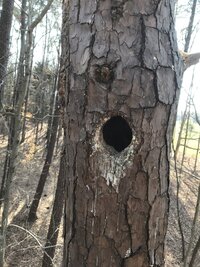
My parents actually have a poplar I had to remove a decent leader that had died and essentially topped one side unfortunately. I wasn’t able to fully remove and we wanted to preserve the line of trees between the two houses. So it was a compromise that may be addressed again later. While it’s right next to the driveway I think it’s at a safe height to experiment with. Personally I find a more natural broken top more appealing than a flat topped tree. Was thinking of recreating the look of a broken top with slits and even boring a birdhouse into it.

Horrifying I know, but trying to think outside the box!

ECC1060A-B7AF-4850-AFF0-E02B5713BF86.png2C292A8C-B109-4FF6-B902-097F19A7CD57.png70E76E83-0E69-4575-9BFF-A479EB547961.jpeg
 
In several sessions taught by Dr Alex Shigo someone would ask:

Is it better to leave a little stub or cut inside the branch collar?

Dr Shigo would not give permission to make a non collar cut.

His reply was to turn the question back to get us students to think

“If your goal is to create a sound tree with little decay, make collar cuts. If your goal is to create decay pockets for future wildlife habitat make flush cuts.”

That made sense to me right away.

It sounds like you understand what’s ahead of you and the tree. Make sure that the tree owner understands that you’re creating a ‘hazard’ and that the tree needs to be monitored
 
Looking forward to this discussion. Looked up coronet cuts a few months ago and some good results come up on some of the other older tree forums. Very popular in England in areas like parks that have had the deadwood removed for many many years in order to attract the organisms that rely on deadwood but still have a level of control over the potential hazard i.e “where do we place the decay strategically.” heard it’s good to use when making large pruning cuts on species that don’t compartmentalism well (silver maple was the example used, very relevant to me in MN) then come back later for second cut. Hard sell in my market, I have left less than ten snags and the idea of leaving stubs doesn’t go over well. I may be totally in the dark, but the cut seems to be becoming more popular here.
 
Bump,
those are interesting photos @Basswood

I agree , the flat top is not as nice to me either. I saw some video recently of climbers performing a bunch of plunge cuts, then ripping bits off with MA
Leaving snags is routine in this area across different companies, easy to sell and even often requested, probably have left hundreds.. I’ve only done the coronet cut a couple times though. I think it’s a neat hat trick but wildlife is incredibly adept at making their own houses. I left a particularly tall silver maple snag (about 25’, maybe 32” DBH) that I can spy on from my relative’s house, and I was shocked at how quickly it was populated with woodpeckers, without making any special cuts for them. The invasive swifts took over quickly thereafter though. The animals know what to do.
 
There are many debatable aspects in the ifs or whens too produce coronet cuts, but beyond those, aesthetically, they look really good in natural woodland settings.
It all matters on dosage and scale. I agree in a forested type setting ‘proper’ pruning cuts stick out like a sore thumb yet in an urban park they can be perceived as well managed care and pleasing.
The new ANSI pruning standards kinda touches on this as ‘natural pruning’ should be considered or something along those lines.
Also comes down to goal, is it aesthetic pruning or prescriptive pruning? My favorite is ‘leave no trace’ pruning to make it look like I was never there and never altered the tree.
Another consideration is can the tree compartmentalized the pruning wound? If I question if it can I’m more inclined to do a cornett cut
 
That looks fun, makes me want to be more informed of various bird specie preferences.

I’ve heard bluebirds prefer a house that faces east(anecdotal?) . I don’t know. Maybe someone on here has some insight

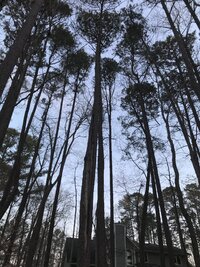
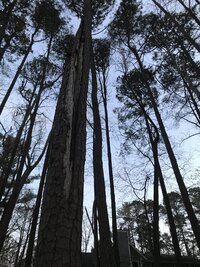
Awhile back I “pruned” a leaning pine that had a preexisting pileated woodpecker nest. The client loved the bird and wanted to ensure the tree wasn’t going to fail- it certainly had a higher likelihood with the nest and decay well below the top. Hey I found some photos of it. Hopefully the bird continued to use the nest after the work. The client relayed that it did return that night at least
 

Attachments

  • IMG_6033.jpeg
    IMG_6033.jpeg
    839.5 KB · Views: 10
  • IMG_6028.jpeg
    IMG_6028.jpeg
    670.6 KB · Views: 9
  • IMG_6027.jpeg
    IMG_6027.jpeg
    1,001.9 KB · Views: 10
  • IMG_6025.jpeg
    IMG_6025.jpeg
    969.6 KB · Views: 10
Last edited:
That looks fun, makes me want to be more informed of various bird specie preferences.

I’ve heard bluebirds prefer a house that faces east(anecdotal?) . I don’t know. Maybe someone on here has some insight

Awhile back I “pruned” a leaning pine that had a preexisting pileated woodpecker nest. The client loved the bird and wanted to ensure the tree wasn’t going to fail- it certainly had a higher likelihood with the nest and decay well below the top. Hey I found some photos of it. Hopefully the bird continued to use the nest after the work. The client relayed that it did return that night at least

The Complete Book of Birdhouse Construction for Woodworkers (Dover Crafts: Woodworking) Paperback – March 1, 1984​

by Scott D. Campbell (Author)

This book details exactly what each species prefers.
 
Leaving snags is routine in this area across different companies, easy to sell and even often requested, probably have left hundreds.. I’ve only done the coronet cut a couple times though. I think it’s a neat hat trick but wildlife is incredibly adept at making their own houses. I left a particularly tall silver maple snag (about 25’, maybe 32” DBH) that I can spy on from my relative’s house, and I was shocked at how quickly it was populated with woodpeckers, without making any special cuts for them. The invasive swifts took over quickly thereafter though. The animals know what to do.
Invasive swifts? Eastern and central U.S. we have native Chimney Swifts that roost communally in big hollow trees. They are more frequently seen roosting in unused house chimneys on up to massive roosts in abandoned factory chimneys. Very cool bird, super beneficial.

Not enough big deciduous hollowed out old-growth in New England to support swifts, they mainly use man-made structures now.

Anyway... curious as to what you're referring to.

Photo is a chimney swift fledgling that got stuck in the flue above my fireplace.

54264340088_99334d1c60_b.jpg


-AJ
 
Invasive swifts? Eastern and central U.S. we have native Chimney Swifts that roost communally in big hollow trees. They are more frequently seen roosting in unused house chimneys on up to massive roosts in abandoned factory chimneys. Very cool bird, super beneficial.

Not enough big deciduous hollowed out old-growth in New England to support swifts, they mainly use man-made structures now.

Anyway... curious as to what you're referring to.

Photo is a chimney swift fledgling that got stuck in the flue above my fireplace.

54264340088_99334d1c60_b.jpg


-AJ

Common swift- European swift. My local birder friends don’t like them because they take over local habitats, just like this silver maple stump, from the native birds.. Might be common to our area and not yours.

That
Is
A
Cute
Bird
 
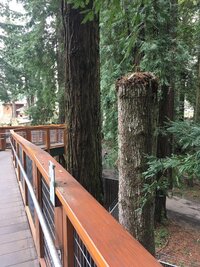
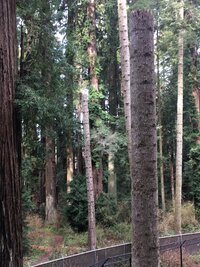
From the Eureka zoo last yr. The second pic has a bird house installed lower on the stem (it’s a square), and I liked they put moss and ferns ontop too. The folks who did the design and install of the sky walk were impressively good!View attachment 97026View attachment 97027
I went for christmas last year, and the walk at night with the lights is magical af
 
Common swift- European swift. My local birder friends don’t like them because they take over local habitats, just like this silver maple stump, from the native birds.. Might be common to our area and not yours.

That
Is
A
Cute
Bird
Not to digress too far from this thread but there are zero breeding Apus apus aka Common Swift or European Swift in North America. Please point me to sources for "invasive Common Swift" in North America if you know them. It is considered an extreme rarity, one record I know of a single Apus apus blown by an Atlantic storm to NC outer banks during migration from western Europe to Africa. It likely did not survive its stay, was seen briefly as I understand it.

Assuming you're in Asheville, NC by your 'Buzz profile info is that where you're reporting invasive swifts?

It's just weird to me but... please fill me in, PM is fine, don't want f up this excellent discussion.
-AJ
 

New threads New posts

Kask Stihl NORTHEASTERN Arborists Wesspur TreeStuff.com Teufelberger Westminster X-Rigging Teufelberger
Back
Top Bottom