The necessity/importance of your primary rope contacting the ground?

Potentially quickly, potentially deadly.


I cut 95%+ of the time on SRS. If I'm MRSing down from a high point, I'll commonly take my MRS termination biner and clove hitch it to the other leg, forming an SRS that reaches the ground without the rope moving.

I used to climb regularly on a 120' rope, giving a 60' pruning base- tie, or 120' trunk-choke for removals that handled the bulk of trees that I want pre-setting a trunk-choke climbing line over 60'.
Once, solo, I recall getting to 120', going down to cleanup, and bring up a longer rope to get to 140' to top the tree.
 
As mentioned for very tall trees it is not practical and even potentially dangerous to have line all the way to the ground all the time. It is very easy to get the tail of your rope hung up in tall and complicated trees.

Not sure that I agree with you on this, AJ. Working in redwood and eucalyptus trees we would regularly work at heights of 150' to 200' and always had enough climbing line to reach the ground in one shot. Wasn't a problem and that was with heavy 1/2" lines and old school MRS not the nice light lines and the slick SRS tools we have now. Being aware of your rope tail and taking the time to reset it when necessary, just became second nature.
 
I climb MRS 90% of the time, and one of my ropes is always on the ground.
However..... If I were working with a crew and a chipper (which I never do) I would probably be one who makes sure my lines were off the ground all the time. I don't trust anybody, no matter how well I know them and like them, or how experienced they are when it comes to my safety.
You have to work like you need to work in order to be comfortable and feel safe. We each have different ideas on where, when and how that is.
 
Not sure that I agree with you on this, AJ. Working in redwood and eucalyptus trees we would regularly work at heights of 150' to 200' and always had enough climbing line to reach the ground in one shot. Wasn't a problem and that was with heavy 1/2" lines and old school MRS not the nice light lines and the slick SRS tools we have now. Being aware of your rope tail and taking the time to reset it when necessary, just became second nature.
Yep, that makes sense. When I'm running chain saws always a direct line to the ground. Northeast U.S trees where tree work is happening are typically in the 60-85' range so no issues keeping a line on the ground.

For rec climbing I'll use the "2-staging" access technique for exceptionally tall trees east or west coast.
-AJ

 
Not sure that I agree with you on this, AJ. Working in redwood and eucalyptus trees we would regularly work at heights of 150' to 200' and always had enough climbing line to reach the ground in one shot. Wasn't a problem and that was with heavy 1/2" lines and old school MRS not the nice light lines and the slick SRS tools we have now. Being aware of your rope tail and taking the time to reset it when necessary, just became second nature.
100% agree with this. Proper rope management is always a good idea, but when climbing tall timber it is essential. Ditto for always having enough rope to hit the ground ASAP..
 
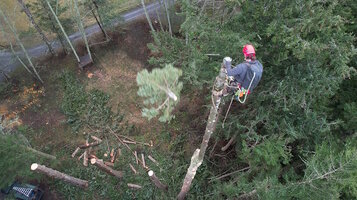
When I'm just smashing out firs, where there is no cleanup or a machine will clean up afterwards, I usually don't have a rope out at all, all 200' are in my backpack. That way I can bomb brush and logs all I want with no worries of messing up my system, can spin around any way I want without wrapping up the trunk, and still be able to bail to the ground at any point since I'm already tied in and just advance that along with my flip line. It is a good bit of 'extra' weight, but much of my work is solo and in deep woods, so I usually don't have ground help, it's just my normal way to do a lot of work.

140 top thumb.jpg
 
I can relate as I also work alone most of the time and have buried my lines under branches and chunks. Makes for a bit of a pickle, especially if you are MRS and you can't free up your line to get down. Been there a few times. I am going to try your backpack method.
 
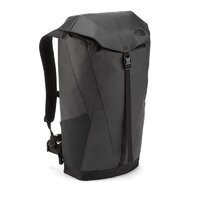
It takes the right kind of backpack, one big pouch with a top flap, the more simple the better. I have two of these North Face Cinder 28 packs which are made for mountain/rock climbers with a stiff durable material and good straps. I can rap to the ground and it just pays out of the bag as I go down, or more smoothly if I take it off my back and hold it below my waist.

Unfortunately they don't make them anymore, and I'm always looking for used ones to show up so I can buy extras...

The-North-Face-Cinder-28-Pack.jpg
 
Last edited:
Yah, that Cinder 28 fits 200' of line perfectly, and serves as the rope bag it lives in. It's actually my most used system, as that tends to be the most common work I do.

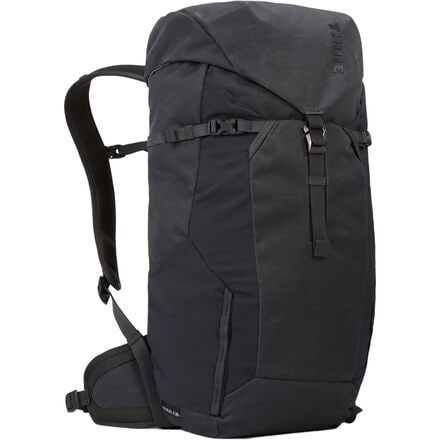
Digging around, the Thule AllTrail X 25L seems to be the closest thing to it I can find, but there are probably some others out there that are similar.

 
Oh, that one looks like it would do. Thanks. Going to give it a go with the 30L one I have first. If it seems to work out for me, I will upgrade to a better pack. I'm excited to give it a go. Tomorrow is all planned out!
 
When I'm just smashing out firs, where there is no cleanup or a machine will clean up afterwards, I usually don't have a rope out at all, all 200' are in my backpack. That way I can bomb brush and logs all I want with no worries of messing up my system, can spin around any way I want without wrapping up the trunk, and still be able to bail to the ground at any point since I'm already tied in and just advance that along with my flip line. It is a good bit of 'extra' weight, but much of my work is solo and in deep woods, so I usually don't have ground help, it's just my normal way to do a lot of work.

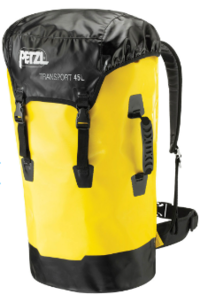
View attachment 89483
Yep, with “no cleanup” ground conditions a rope tail can get hung up fast.
-AJ
 
When I'm just smashing out firs, where there is no cleanup or a machine will clean up afterwards, I usually don't have a rope out at all, all 200' are in my backpack. That way I can bomb brush and logs all I want with no worries of messing up my system, can spin around any way I want without wrapping up the trunk, and still be able to bail to the ground at any point since I'm already tied in and just advance that along with my flip line. It is a good bit of 'extra' weight, but much of my work is solo and in deep woods, so I usually don't have ground help, it's just my normal way to do a lot of work.

View attachment 89483
You only need as much length as your topping height. You might save a pound and a half or 2 by a shorter rope.

Backpacks raise the center of gravity of the climber.
I prefer a lightweight rope bag on my saddle.

Shorter rope and a lighter, smaller bag might save 3-4 pounds of weight, up high in the body. That backpack is 2.1 pounds. I'm guessing a small ropebag is 0.5 to 0.75 pounds.

Some big firs that I wreck solo, already have me carrying a 2511t/12" and 200t/16", or one saw with a tank's worth of extra gas and oil, plus a small ax (should use a heavy hatchet) and a couple wedges. That leaves me able to double-cut logs to 30-32" without extra chasing, generally getting me to wildlife spar or felling height.


$0.02.
 
Last edited:
When wrecking, it's commonly standing in spurs or tossing a steel- biner terminated climbing line one or several whorls higher, allowing sitting for cutting between climbing.


A combo srs/mrs device works well.
 
When wrecking, it's commonly standing in spurs or tossing a steel- biner terminated climbing line one or several whorls higher, allowing sitting for cutting between climbing.


A combo srs/mrs device works well.
Obviously you are regularly doing bigger/taller single stem conifers than we do here.
But I’m always telling my apprentice not to put the line higher when he’s stripping on the way up, just flip line and lifeline in tandem as he moves up.
Keeps rhythm and momentum going, plus reduces/eliminates the chance of brainfart (cutting your lifeline)
 
I work with 200' ropes all the time because, 1) I work MRS all the time. 2) I often redirect with my MRS system and want to be able to bomb down to the ground wherever I happen to be if something goes wrong.
It is not practical to flip 200' of lose rope over a nearby limb or stub. @27RMT0N idea of the backpack seems to be the most logical solution, and I am kicking myself for not having thought of it myself a long time ago. The weight is not an issue to me. I don't balk at hauling a 72cc saw up there, and balanced well on my back with good shoulder pads... No brainer.
 
Obviously you are regularly doing bigger/taller single stem conifers than we do here.
But I’m always telling my apprentice not to put the line higher when he’s stripping on the way up, just flip line and lifeline in tandem as he moves up.
Keeps rhythm and momentum going, plus reduces/eliminates the chance of brainfart (cutting your lifeline)
Standing in spurs all day is hard on the body.

I tell my apprentices that staying uninjured is non-negotiable, and sitting in your saddle is ergonomic.

If you're using a lanyard, you're tied in twice, so it's not life or death if you cut your rope.
That being said, don't cut your rope, obviously.
If cutting a rope that is extending from your bridge to the tree is that much of a consideration, maybe they are not ready to be climbing.

Hanging from a rope reduces steps on spurs to reach the back side of the stem for limbing..ergonomic and productive, IME.


I basically started SRS (F8 revolver/ wooden rope wrench, pre-ZK1) choked below a steel core lanyard about 14-15 years ago. Way harder on the body than hanging. I've utilized the overhead TIP for a long time.


Pacing is important. My body needs to last for my entire life.

$0.02
 

New threads New posts

Kask Stihl NORTHEASTERN Arborists Wesspur TreeStuff.com Teufelberger Westminster X-Rigging Teufelberger
Back
Top Bottom