












Navigation
Install the app
How to install the app on iOS
Follow along with the video below to see how to install our site as a web app on your home screen.
Note: This feature may not be available in some browsers.
More options
You are using an out of date browser. It may not display this or other websites correctly.
You should upgrade or use an alternative browser.
You should upgrade or use an alternative browser.
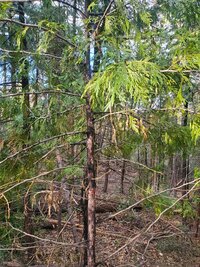
What's turning these cedars black.
- Thread starter Vicente
- Start date

- Location
- Nevada County, CA
I was told it's a fungus by someone who has it on his trees after I asked about it.
I thought it might be that it's tearing the cedars up around here.I was told it's a fungus by someone who has it on his trees after I asked about it.

ATH
Been here much more than a while
- Location
- Findlay, Ohio
cannot be fireblight. that is isolated to Roseaceae family...
Do you know what species cedar?
Botryosphaeria canker? is the first that comes to mind...but I'm in the Midwest, not CA so things change pretty drastically!
Look through these and see if anything stands out:
Do you know what species cedar?
Botryosphaeria canker? is the first that comes to mind...but I'm in the Midwest, not CA so things change pretty drastically!
Look through these and see if anything stands out:
Managing Pests in Gardens: Diseases: Canker Table—UC IPM
Information about managing pests of gardens and landscapes, from UC IPM.
ipm.ucanr.edu
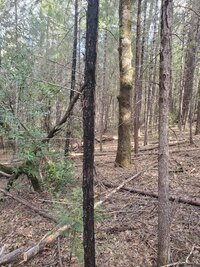
I believe they're incense cedars, it could be botryosphaeria canker I didn't see any images that showed the same sort of discoloration though, they're black black like they've been burned.cannot be fireblight. that is isolated to Roseaceae family...
Do you know what species cedar?
Botryosphaeria canker? is the first that comes to mind...but I'm in the Midwest, not CA so things change pretty drastically!
Look through these and see if anything stands out:
Managing Pests in Gardens: Diseases: Canker Table—UC IPM
Information about managing pests of gardens and landscapes, from UC IPM.ipm.ucanr.edu
Attachments
- Location
- Nevada County, CA
Might be Sooty mold(fungus) that grows on honeydew droppings. Can be associated with resin and sap supposedly.
I looked at that, so far it seems the most likely.Might be Sooty mold(fungus) that grows on honeydew droppings. Can be associated with resin and sap supposedly.

Matias
Been here much more than a while
- Location
- Butte County
I have been told that it's a fungus, though I don't know which one, and that it's more common in dense thickets, and on specimens not receiving enough sunlight to stop it.
Yes this particular property is thick, we're actually going to be back early next week before the storm rolls in to try to get a bunch of the smaller stuff run through the track chipper and get some more space and sunshine in there.I have been told that it's a fungus, though I don't know which one, and that it's more common in dense thickets, and on specimens not receiving enough sunlight to stop it.
Matias
Been here much more than a while
- Location
- Butte County
I'll bet dimes to dollars that the remaining trees won't have problems.Yes this particular property is thick, we're actually going to be back early next week before the storm rolls in to try to get a bunch of the smaller stuff run through the track chipper and get some more space and sunshine in there.
I see that fungus all over the forests
- Location
- Nevada County, CA
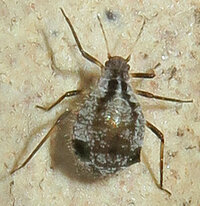
Giant Conifer aphid might be the Cedar aphid, 175 conifer aphid species worldwide..... Aphids are nuts, damn things clone themselves are and born pregnant. Need something to feed all those hungry lady bugs we have in our Sierras. I wonder if Conifer Aphid butt juice tastes like Mountain Dew?

TreeCo
Carpal tunnel level member
Seiridium canker.
Zoom in and you can see the cankers on the trunk.
Just a guess.
Zoom in and you can see the cankers on the trunk.
Just a guess.
Last edited:
- Location
- Nevada County, CA
Okay this case looks like it's from scales and not aphids.
''Sooty mold is commonly found on the trunks of small trees. This is because incense cedar scale prefers the underside of loose flaky bark typically found on the smaller cedars or, sometimes, the limbs of larger ones. White waxy threads surround the scale under the bark. Since fungi thrive in dark, moist places, the growth of sooty mold is predominant in areas that receive minimal amounts of sunlight. As a result, small cedars in dense stands exhibit a greater abundance of ‘black bark’ than those in isolation. Also, growth of the mold typically occurs on lower portions of trees that are shaded compared to upper portions that are exposed to sunlight. Interestingly, infestations of scale are more commonly found in native groupings of cedars than those found in urban areas.''
''Sooty mold is commonly found on the trunks of small trees. This is because incense cedar scale prefers the underside of loose flaky bark typically found on the smaller cedars or, sometimes, the limbs of larger ones. White waxy threads surround the scale under the bark. Since fungi thrive in dark, moist places, the growth of sooty mold is predominant in areas that receive minimal amounts of sunlight. As a result, small cedars in dense stands exhibit a greater abundance of ‘black bark’ than those in isolation. Also, growth of the mold typically occurs on lower portions of trees that are shaded compared to upper portions that are exposed to sunlight. Interestingly, infestations of scale are more commonly found in native groupings of cedars than those found in urban areas.''

Does this happen to various hardwoods in the northeast? I'm in New york and see this black stuff on hard woods too. I've got a customer that says it's spreading and is asking me how to handle it.
Should I look to get more sunlight on the trees in question or is there some other way to treat it?
Should I look to get more sunlight on the trees in question or is there some other way to treat it?

Reach
Been here much more than a while
- Location
- Atglen, PA
Here in PA we have a lot of Sooty Mold, almost exclusively growing on/caused by the excrement of the Spotted Lanternfly. Have they made it up to you yet? Might be something to look into.Does this happen to various hardwoods in the northeast? I'm in New york and see this black stuff on hard woods too. I've got a customer that says it's spreading and is asking me how to handle it.
Should I look to get more sunlight on the trees in question or is there some other way to treat it?
ATH
Been here much more than a while
- Location
- Findlay, Ohio
Pics of the hardwoods you are seeing???...lots of things can leave black spots of various shapes, sizes, or formations on the trunk. First few that come to mind:
Sooty mold (as @Reach said)
bacterial wetwood
hypoxylon canker
Oak wilt pressure plates
Lichen
Kretzschmaria
etc...
Sooty mold (as @Reach said)
bacterial wetwood
hypoxylon canker
Oak wilt pressure plates
Lichen
Kretzschmaria
etc...












New threads New posts
-
test
-

-
-
-
-
 Light 14 or 16" narrow kerf bar for 200t or 201t
- Started by southsoundtree
- Replies: 9
-








