












Navigation
Install the app
How to install the app on iOS
Follow along with the video below to see how to install our site as a web app on your home screen.
Note: This feature may not be available in some browsers.
More options
You are using an out of date browser. It may not display this or other websites correctly.
You should upgrade or use an alternative browser.
You should upgrade or use an alternative browser.
Documenting my hand-sewn eye process
- Thread starter moss
- Start date


FreeFallin
Branched out member
- Location
- Wisconsin
Coincidentally that is how I like to finish my ...
First of all, stop using my ideas before I tell you what they are...

Those look great, you are definitely taking hand sewing to the ultimate level of safety it can reach, I will be surprised if all these small enhancements along with your particular skills of execution don't perform equal or better than machine eyes.
FreeFallin
Branched out member
- Location
- Wisconsin
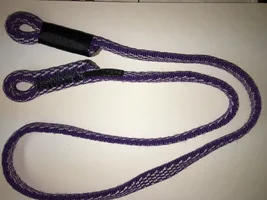
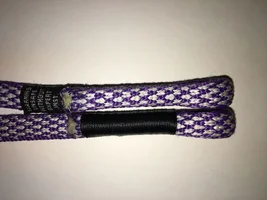
A couple pictures of the purple eyes to give the full story
Nice! They look really solid.

SomethingWitty
Arkansawyer
- Location
- LR


bonner1040
Branched out member
- Location
- Boston
It is the opinion of respected industry experts that stitching rope together by hand without the use of CNC sewing machines, 3 sigma testing with calibrated test beds, and many other precautions is reckless.
Sewing isn't like splicing, there is very little data on hand sewn pieces, and with respect to the efforts of few what data there is isn't really a drop in the bucket compared to machine sewn terminations and hand splicing.
Sewing isn't like splicing, there is very little data on hand sewn pieces, and with respect to the efforts of few what data there is isn't really a drop in the bucket compared to machine sewn terminations and hand splicing.

Richard Mumford-yoyoman
Been here a while
- Location
- Atlanta GA
So let's start getting some documentation otherwise we'll just keep slamming the concept.It is the opinion of respected industry experts that stitching rope together by hand without the use of CNC sewing machines, 3 sigma testing with calibrated test beds, and many other precautions is reckless.
Sewing isn't like splicing, there is very little data on hand sewn pieces, and with respect to the efforts of few what data there is isn't really a drop in the bucket compared to machine sewn terminations and hand splicing.
bonner1040
Branched out member
- Location
- Boston
The process isn't reliable. There is no easy way to provide instructions and make sure it's done correctly.
Sent from my iPhone using Tapatalk
Sent from my iPhone using Tapatalk

moss
Been here much more than a while
- Location
- Carlisle, Massachusetts, U.S.
I finally have enough of a collection of retired cordage with sewn eyes to send to Richard Mumford for pull testing. It will be interesting since they're all very well used. As mentioned earlier all my sewn eyes well outlast the cordage and appear to have zero degradation.
I have no incentive to break my new sewn eyes, they're hard work to make and I want to use them. Personally I have nothing to prove, I have complete confidence in them.
-AJ
moss
Been here much more than a while
- Location
- Carlisle, Massachusetts, U.S.
The process isn't reliable. There is no easy way to provide instructions and make sure it's done correctly.
Sent from my iPhone using Tapatalk
If the technique was taught in a workshop/class similar to the splicing workshops run by treeStuff and Fids and Fibers I think excellent testable results could happen. As I've said before, I believe there's only a handful of people who have the patience and persistence to do it. Not a big market when thinking about an economically viable workshop scenario ;-) I think we've already agreed to disagree.
-AJ

Worthaug
Carpal tunnel level member
- Location
- North Cakilaki
If the technique was taught in a workshop environment similar to the splicing workshops run by treeStuff and Fids and Fibers I think excellent testable results could happen. As I've said before, I believe there's only a handful of people who have the patience and persistence to do it. Not a big market when thinking about an economically viable workshop scenario ;-) I think we've already agreed to disagree.
-AJ
Plus, it takes people to program, design, and build the robots/ machines that do work for us. Don't ever underestimate the quality and precision of a craftsman, EVER!!!!!
Reed Wortley
CA# SO-6953A
CTSP# 01739
moss
Been here much more than a while
- Location
- Carlisle, Massachusetts, U.S.
It is the opinion of respected industry experts that stitching rope together by hand without the use of CNC sewing machines, 3 sigma testing with calibrated test beds, and many other precautions is reckless.
Sewing isn't like splicing, there is very little data on hand sewn pieces, and with respect to the efforts of few what data there is isn't really a drop in the bucket compared to machine sewn terminations and hand splicing.
I'm curious though, why is it so difficult to find test results for machine eyes? There seems to be a fair amount of variability in machine eyes from different sources. I don't doubt their strength (too much) but if you could point to test data it would be very helpful. Thanks.
-AJ
Worthaug
Carpal tunnel level member
- Location
- North Cakilaki
It is the opinion of respected industry experts that stitching rope together by hand without the use of CNC sewing machines, 3 sigma testing with calibrated test beds, and many other precautions is reckless.
Sewing isn't like splicing, there is very little data on hand sewn pieces, and with respect to the efforts of few what data there is isn't really a drop in the bucket compared to machine sewn terminations and hand splicing.
Why is it that I trust my own splices but will not trust Petzl's rope bridge (an industry example of poor quality sewn eye construction)?
Reed Wortley
CA# SO-6953A
CTSP# 01739
Worthaug
Carpal tunnel level member
- Location
- North Cakilaki
Machines do t have the ability to care... even their sewn eyes need to be inspected and tested by humans...
Reed Wortley
CA# SO-6953A
CTSP# 01739
Reed Wortley
CA# SO-6953A
CTSP# 01739
SomethingWitty
Arkansawyer
- Location
- LR
I wonder if the respected industry experts have tried hand sewing or are just rejecting it because it is beyond their abilities.
We could also throw out there that splicing and machine stitching were both safe, even before there was much data from testing them.
The nature of the beast is not affected by how much it is studied.
Thank you, moss. I get that it takes forever to make a pile of eyes and you don't want to build them just to destroy them.
TimBr
Official Well Known Greeter
- Location
- Northern Virginia
I finally have enough of a collection of retired cordage with sewn eyes to send to Richard Mumford for pull testing. It will be interesting since they're all very well used. As mentioned earlier all my sewn eyes well outlast the cordage and appear to have zero degradation.
I have no incentive to break my new sewn eyes, they're hard work to make and I want to use them. Personally I have nothing to prove, I have complete confidence in them.
-AJ
Moss, I'd climb on one of your sewn eyes any day of the week.
Tim

shankenstein
New member
- Location
- Twin Cities
Have I missed discussion on terminating the stitching twine? Any good pictures or videos on how to finish the stitch? I am going to practice with some non life support pieces first.
Thanks!
Thanks!












New threads New posts
-
test
-
-

-
-
 Free CEUs: February 05 & March 05 - 'Urban Forestry Today' Webcasts @ Noon (Eastern)
- Started by UFT
- Replies: 0
-

-








