- Location
- Hobart, Tasmania, Australia
Here is my submission for the WIERDO TREE competition.
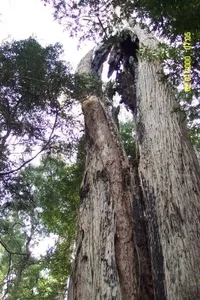
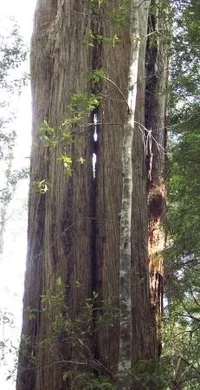
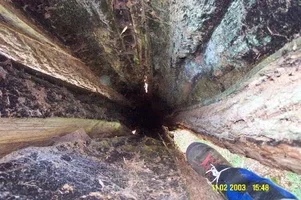
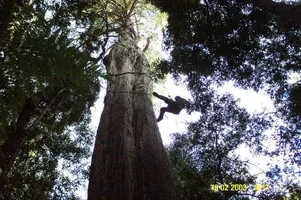
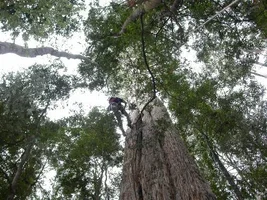
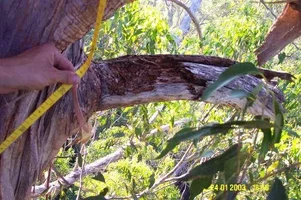
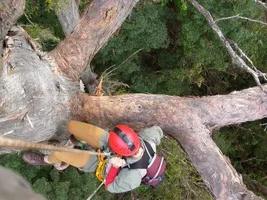
It is a 70m old growth Eucalyptus obliqua stringybark in southern Tasmania, Australia, perhaps 300 years old. I've been regularly climbing its mates nearby. This is the advanced end stages of the buttressing process...the Eucs are the masters of resprout and regeneration, despite being rotted out from the core. As far as we can tell, the buttresses, or "ridges" keep getting fatter (reaction wood?) with age, while the "valleys," or "invaginations" (hehe) rot through, sometimes completely and forming a gap into the hollow tree..... Perhaps the buttresses add the strength as "legs" which can flex a bit in the wind, as compared to a simple cylinder?
Any ideas on this growth pattern?
It is a 70m old growth Eucalyptus obliqua stringybark in southern Tasmania, Australia, perhaps 300 years old. I've been regularly climbing its mates nearby. This is the advanced end stages of the buttressing process...the Eucs are the masters of resprout and regeneration, despite being rotted out from the core. As far as we can tell, the buttresses, or "ridges" keep getting fatter (reaction wood?) with age, while the "valleys," or "invaginations" (hehe) rot through, sometimes completely and forming a gap into the hollow tree..... Perhaps the buttresses add the strength as "legs" which can flex a bit in the wind, as compared to a simple cylinder?
Any ideas on this growth pattern?