this is a few years old
SOUTHERN TREES GO TO COURT
Hundreds of court cases involving trees are described in Arboriculture & The Law, by Victor Merullo, and Tree Law Cases in the USA, by Lew Bloch,. They are useful for reference when legal issues arise, but neither book refers to a single case in North Carolina. In the next editions, that will change.
As reported earlier, a billboard owner was fined $86,000 for illegal clearcutting. More recently, several tree cases went to court, and other cases were settled. Most involved the removal of trees near boundary lines.
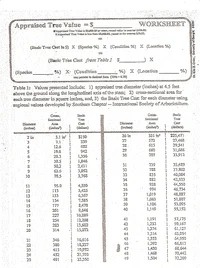
In the first, a man cut down a sweetgum tree that was hanging over his driveway. A survey located it one foot into his neighbor’s property, so the neighbor pressed charges. Criminal complaints for malicious trespassing and destruction of property were dropped, so the neighbors hired an arborist to do an appraisal. They then sued in civil court for $3009 plus punitive damages.
The man who cut the tree hired an arborist, whose first proposal was a “Cost of Cure” approach, planting four trees elsewhere in the yard to “cure” the loss. That offer was rejected. Since the sweetgum had severely suppressed a maple and an ironwood, both less than two feet away, his appraisal of the sweetgum’s value was far less than the other appraiser’s. This appraisal was explained to the magistrate, and the suit was dismissed.
A 12” loblolly pine, through which a property line ran, was cut down in the course of clearing. The adjacent property owner got an appraisal of $1175. This time a Cost of Cure settlement was reached, as the tree-cutting party agreed to plant trees and shrubs elsewhere along the property line.
A bulldozer clearied a road to reach a new development. The machine strayed onto a homestead, removing trees and part of a vegetable garden. During a deposition, the appraiser documented not only the lost value of the trees, but also the lost value of the soil. The developer settled after the appraiser’s deposition.
Another bulldozer cleared a stand of thirty-foot trees near a sewer easement. The contractor offered to plant 3-foot trees in their place, but that was rejected. The Superior Court judge referred the case for mediation.
Recently a tree crew from a national company was assigned to prune a large pecan tree away from a house. Not wanting to make what might be called heading cuts to smaller lateral branches, they entered the neighbor’s land to remove an entire stem to a fork four feet above the ground. The wound had 98 growth rings and the remaining crown was greatly imbalanced, so the tree was declared a total loss. After being reminded that any loss from a trespass can be doubled in court, the contractor’s insurance company settled for the full appraised loss of $8900.
In Chatham County one autumn day a man was outside burning leaves and went inside for a beer. The fire spread to his neighbor’s land, which was the site of an old wood mill. The highly organic soil burned for days, killing a mature beech-hickory forest. The leaf-burner’s insurance company evaded full responsibility because the man who burnt the leaves was not the owner but a common-law resident. The loss was appraised at over $80,000 but the settlement was close to $20,000. After paying fees, burnt tree removal and other expenses, the injured party got nothing.
On a lakefront property a new owner cleared vegetation in their side yard, including 2000 square feet of their neighbor’s land. What was weeds to one owner was a privacy buffer, nursery, shademaker, windbreaker, aesthetic amenity, perfume factory and wildlife
border to the other. Replacement cost was appraised at $7600; negotiations are underway.
If you know of a tree law case, please send a note about it to
info@bettertreecare.com for possible inclusion in future editions. These books and the 9th edition of the Guide for Plant Appraisal are available from
www.ISA-arbor.com. The more cases in our region are documented, the more the value of trees will be recognized.