Hey all, I'm new here. I'm not an arborist. I do industrial rescue (confined space and high angle), and recently picked up a rope walking setup and unicender. There's a lot of value in being able to have a medic climb out of a hole while the team is hauling the patient. The issue I've encountered with the unicender is that while going up on sterling 1/2" rope is easy, coming down is not. I can't use the "normal" technique with wrapping the top and bottom bars, and I can't use the "advanced" technique. Both leave me in the same spot, which is no closer to the ground. Instead, I have to pull down on just the top of the unicender and control my speed with the running end of my rope. I am on belay with an ASAP on a second rope while doing this, so my safety is not in jeapordy, but it just doesn't feel controlled. I'd rather not have to switch to one of my other friction devices while suspended. Will the unicender "loosen up" continued use?

Navigation
Install the app
How to install the app on iOS
Follow along with the video below to see how to install our site as a web app on your home screen.
Note: This feature may not be available in some browsers.
More options
You are using an out of date browser. It may not display this or other websites correctly.
You should upgrade or use an alternative browser.
You should upgrade or use an alternative browser.
Unicender with 1/2" rope
- Thread starter Mattk522
- Start date

- Location
- Retired in Minneapolis
It should. When new it works
Best with sub-half inch rope
The faces of the clutches will wear some
Can you use any other rope? Sometimes a different rope runs better
Best with sub-half inch rope
The faces of the clutches will wear some
Can you use any other rope? Sometimes a different rope runs better
I can use any rope I want in my free time and while playing, but our rescue rig, trucks, and engines all carry the 1/2" sterling. A rescuer can easily descend into a hole on a scarab (our preferred friction device) and transition to the unicender for self extrication, but that could easily be done with a much cheaper chest ascender. I'm really looking for speed here. We have to deal with life over limb situations, hazardous atmospheres, and entry/rescue/egress while on fresh air packs. I obviously want to minimize the exposure my team has to this stuff.
I understand this is not a rescue forum. I'm on those too, and I'm on a technical rescue competition team with exposure to a lot of techniques and experts. We use ropes to bridge the gap between life and death where as you guys make your living on them. There's an obvious expertise you guys can bring to my world. I'm just trying to tap into.
I understand this is not a rescue forum. I'm on those too, and I'm on a technical rescue competition team with exposure to a lot of techniques and experts. We use ropes to bridge the gap between life and death where as you guys make your living on them. There's an obvious expertise you guys can bring to my world. I'm just trying to tap into.

monkeylove
Been here much more than a while
- Location
- Roslyn, Pa.
I can use any rope I want in my free time and while playing, but our rescue rig, trucks, and engines all carry the 1/2" sterling. A rescuer can easily descend into a hole on a scarab (our preferred friction device) and transition to the unicender for self extrication, but that could easily be done with a much cheaper chest ascender. I'm really looking for speed here. We have to deal with life over limb situations, hazardous atmospheres, and entry/rescue/egress while on fresh air packs. I obviously want to minimize the exposure my team has to this stuff.
I understand this is not a rescue forum. I'm on those too, and I'm on a technical rescue competition team with exposure to a lot of techniques and experts. We use ropes to bridge the gap between life and death where as you guys make your living on them. There's an obvious expertise you guys can bring to my world. I'm just trying to tap into.
Matt, while it will cost you a couple more bucks the best advice I can give you would be to get a hold of Richard @yoyoman. The drum that he makes is priceless in my opinion for the Uni. It make decent much smoother, in fact with 1/2 Vortex it was finger tip control. Also saves a lot of the wear you will see on the Uni and the rope. He should get notified that I included him so hopefully he will reach out also. Trust me when I say the difference is night and day.

Magnum783
Participating member
- Location
- Cheyenne WY
- Location
- Retired in Minneapolis
I'll second the kudos for Richards drum! I've been
Climbing on the Uni since the first day that Morgan debuted it to the industry. Adding the Drum makes it perfect. For me anyway
Glad to have you on Treebuzz. Rope work/access/rescue, etc. Should learn more from each other. You'll find that arborists have a lot of knowledge about how rope on rope friction works. Arbo s are learning a lot about various pieces of hardware that can make our lives better too
Tom
Climbing on the Uni since the first day that Morgan debuted it to the industry. Adding the Drum makes it perfect. For me anyway
Glad to have you on Treebuzz. Rope work/access/rescue, etc. Should learn more from each other. You'll find that arborists have a lot of knowledge about how rope on rope friction works. Arbo s are learning a lot about various pieces of hardware that can make our lives better too
Tom

SomethingWitty
Arkansawyer
- Location
- LR
"Technical rescue competition team"
I need to know more about this. It sounds (from that list of buzzwords) really intense.
I need to know more about this. It sounds (from that list of buzzwords) really intense.

.... I have to pull down on just the top of the unicender and control my speed with the running end of my rope....
One of the most common complaints from climbers using a new Unicender is the difficulty in finding the sweet spot on the descent. Both the bedding-in of the rope and time using the tool will improve this. A stiff rescue line can be challenging for the wrap method.
Last edited:

Richard Mumford-yoyoman
Been here a while
- Location
- Atlanta GA
Thanks all.
I did lots of videos on my study of the Uni. Good news, I will soon have a very ample supply of Drums on www.climbinginnovations.com
I'll get to a computer and make a link.
I did lots of videos on my study of the Uni. Good news, I will soon have a very ample supply of Drums on www.climbinginnovations.com
I'll get to a computer and make a link.

I just replaced my unicender and bought some 7/16 rope specifically for this reason. 1/2" is a bit thick and doesn't flow through it very well. Once the uni wears some I will switch to thicker rope.
http://www.allgearinc.com/arborist-lines/neopro-glo.html
http://www.allgearinc.com/arborist-lines/neopro-glo.html
Richard Mumford-yoyoman
Been here a while
- Location
- Atlanta GA
Here is a bunch of my Drum videos. Probably have to copy and past to view.
https://www.youtube.com/my_videos?o=U&sq=drum
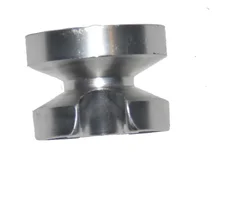
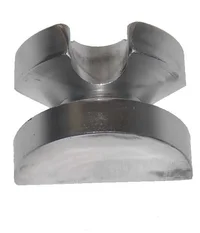
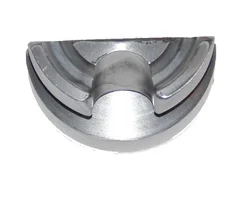
New supply has arrived and will go for sale on www.ClimbingInnovatons.com soon.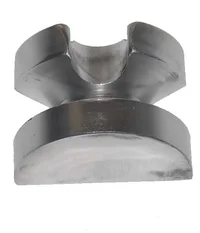
https://www.youtube.com/my_videos?o=U&sq=drum
New supply has arrived and will go for sale on www.ClimbingInnovatons.com soon.
Attachments
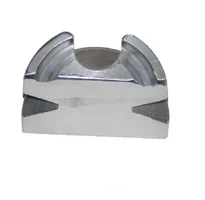
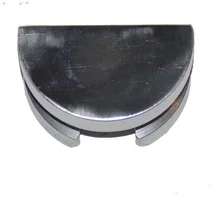
Richard Mumford-yoyoman
Been here a while
- Location
- Atlanta GA
The Drum is now listed on www.climbinginnovations.com. Price is 45.00 USD and shipping is free.
I agree with Oroboros, when new it's suited more for a 7/16 inch rope. Mines now worn so it works on 1/2 inch well in SRT although by using the drum I still use 7/16 as well.
Matt it you play around outside of work and do fast descents over and over it will eat away the metal, not what most people would want but it will make it so it will be smoother with 1/2 inch rope.
Matt it you play around outside of work and do fast descents over and over it will eat away the metal, not what most people would want but it will make it so it will be smoother with 1/2 inch rope.
Sorry, been busy."Technical rescue competition team"
I need to know more about this. It sounds (from that list of buzzwords) really intense.
The Technical Rescue Team (TRT) in my department (there's 14 of us on it out of 80 firefighters) goes to the International Rescue and Emergency Care Association (IRECA) annual conference. There's a 4-man first response challenge, a 3-man basic life support challenge, and 7-man technical rescue challenge. Each challenge is on a separate day, and consists of 5 scenarios. Essentially, the team lines up and the judge hands the captain a piece of paper and starts a clock. The paper will say something to the effect of:
you were called to "a site" where there was a worker heard screaming for help. Find and access the worker(s), assess and treat accordingly, package and lower/raise/transport to the first aid station. You have 45 minutes.
Points are awarded in a bunch of categories like safety, rigging, medical care, etc, and there's normally a specific skill written on the paper that they want to see like tripod, high line, horizontal/vertical raise/lower, pick-off, etc. It's a ton of work crammed into 45 minutes. Then you get a 15 minute break and do it again. It can get sketchy because of the clock, but it's so much fun.
I'll be ordering one of those drums. Thanks for the input everyone.
SomethingWitty
Arkansawyer
- Location
- LR
Sorry, been busy.
The Technical Rescue Team (TRT) in my department (there's 14 of us on it out of 80 firefighters) goes to the International Rescue and Emergency Care Association (IRECA) annual conference. There's a 4-man first response challenge, a 3-man basic life support challenge, and 7-man technical rescue challenge. Each challenge is on a separate day, and consists of 5 scenarios. Essentially, the team lines up and the judge hands the captain a piece of paper and starts a clock. The paper will say something to the effect of:
you were called to "a site" where there was a worker heard screaming for help. Find and access the worker(s), assess and treat accordingly, package and lower/raise/transport to the first aid station. You have 45 minutes.
Points are awarded in a bunch of categories like safety, rigging, medical care, etc, and there's normally a specific skill written on the paper that they want to see like tripod, high line, horizontal/vertical raise/lower, pick-off, etc. It's a ton of work crammed into 45 minutes. Then you get a 15 minute break and do it again. It can get sketchy because of the clock, but it's so much fun.
I'll be ordering one of those drums. Thanks for the input everyone.
Thank you. That sounds really cool.
And now I can look up more.
I can't believe that I didn't know about those competitions!
I'm going to end up ordering some 7/16". I need something closer to 10k# MBS to support a 2 person shock load though. Watching the youtube videos of you guys climbing with a single rope (SRT or DDRT) is crazy to me. LOL. My industry requires a second rope on an independent bomb proof anchor. I run a petzl ASAP on it currently. If I'm not using that, I'm in tandem prussik.I just replaced my unicender and bought some 7/16 rope specifically for this reason. 1/2" is a bit thick and doesn't flow through it very well. Once the uni wears some I will switch to thicker rope.
http://www.allgearinc.com/arborist-lines/neopro-glo.html
SomethingWitty
Arkansawyer
- Location
- LR
I'm going to end up ordering some 7/16". I need something closer to 10k# MBS to support a 2 person shock load though. Watching the youtube videos of you guys climbing with a single rope (SRT or DDRT) is crazy to me. LOL. My industry requires a second rope on an independent bomb proof anchor. I run a petzl ASAP on it currently. If I'm not using that, I'm in tandem prussik.
There is some discussion on that topic around here somewhere but the big issues are that it's often difficult to keep organized, not all systems play nicely when you're trying to keep multiple ones tidy, and the frequent lack of a worthwhile second anchor point would mean that it is often quite seriously more trouble than it is worth.
If you can't trust your anchor, your line or your positioning device, you should not climb on it. That school of thought seems to almost always work out. Tie in twice when cutting, and be sure that rigging lines do not cross your primary.
I have to work within the rescue criteria set forth by the NFPA. Not sure how much that comes into play outside of the fire industry, but essentially my gear has to be able to withstand a 2 person shock load. 450 pounds falling 6' is just shy of a 10,000 pound fall arrest. That limits our options as far as equipment. I wouldn't use the uni in 2-person service as a single device, but it is another tool in the tool box. Especially when hazardous atmospheres are involved. I really like the fact that it passes the "swarm of bees" test all by itself.There is some discussion on that topic around here somewhere but the big issues are that it's often difficult to keep organized, not all systems play nicely when you're trying to keep multiple ones tidy, and the frequent lack of a worthwhile second anchor point would mean that it is often quite seriously more trouble than it is worth.
If you can't trust your anchor, your line or your positioning device, you should not climb on it. That school of thought seems to almost always work out. Tie in twice when cutting, and be sure that rigging lines do not cross your primary.
Something that must be considered is the fact that most FD members have limited rope experience (like they can tie a couple of knots). The odds are that there will only be a couple of rescue trained people on scene when everything goes bad at 2am (which is when it always goes bad). I'm going to arrive on a platform with a group of people that can tie a bowline and a clove hitch, and they're going to say "we're ready to go." Yeah...why don't you go ahead and tie me another line. LOL
New threads New posts
-
test
-

-

-

-

-
 Free CEUs: Mar 05 & April 09 - 'Urban Forestry Today’ Webcasts @ Noon (Eastern)
- Started by UFT
- Replies: 0
-


