Structurally Compromised Leaders

Jemco

Branched out member
Location
San Diego
Having removed so many trees of varying species, particularly very old trees, I've seen quite a few instances of structurally compromised leaders with longitudinal fractures, not actually repairing themselves, but engulfing the fractured spot over time with callous growth n sealing things up again n carrying on.

This is a fairly common trait in pines.

But from a pruning point of view becomes a head scratcher when the wounds old n well n its way to closing.

I'm giving serious consideration to just reducing these fractured but intact n green leaders very substantially, but not entirely, and letting the wounds continue closing.

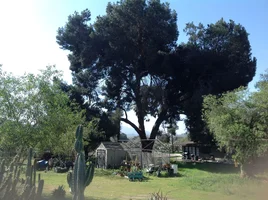
I'm working an ancient Stone pine with dozens of structurally compromised leaders, and while most of em must go, there are a few big ones I want to just reduce substantially n leave in place.

Were I to cut every compromised leader out, there'd be very little left that looks like a tree.

Stone's don't sucker out at all once butchered, so yu gotta make do with what you've got.
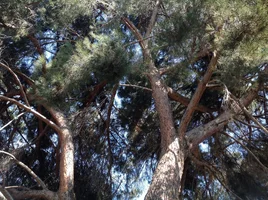
image.webpimage.webp

Jemco
 
The leader on the left. I can bury four fingers in the longitudinal split on top. But It's healing and comprises an awful lot of the tree's midsection.

You can see it better in this pic mid right.

image.webp

Jemco
 
I say go for it and save the leaders; if they’ve been sealing themselves well, and they are not over anything critical I would leave them too. I’ve left similar leaders in place that were sealed entirely, or heading that way, and never had a problem that I am aware of.
 
Since it's a midsection leader, and not the one over the house, it may be worth attempting, in that removing it entirely would pop a huge hole in the mid canopy.

This thread'll drag on a bit since it'll take me a while to sort this ole Stone out.

I did something sorta similar cablin n roddin a split out Torrey pine leader about a decade or more ago.

Jemco
 
I don't have any experience with these trees(or much experience with that sort of damage), but my gut says that bolting through the split branches in addition to light to moderate reduction would help ensure that the wound doesn't spread farther and the failure point would move back to the trunk.
Is there something wrong with this thinking?
 
I'll let the two clients make the final decision of course, but suspect they'll follow my advice.

It'd be pretty embarrassing for me to get all elaborate tryin to save this ancient ole Stone, only to have it wind up a dead beetle kill by summer's end.

Another day or two spent in it should clear matters up a bit.

If the tree wasn't so old n ancient I'd prolly recommend removin it.

Jemco

 
Can't judge potential for beetle kill, but I've spent the last few years EHS cabling with stops and bolting split/ busted up spruces and pines. I always say to the owners that I'm all for trying to save the tree if they like it and it's in reasonable shape and age. Kinda just giving it a helping hand. The reduction/ pruning is a help too, but I haven't always done this if the trees are drought stressed or have root/ soil compaction problems. So maybe have a look at the bottom of the tree too if you're trying to help our buddies out. Sort of diagnosing the whole patient? That's a beautifull tree.
 
Yeah, my gut instinct's to do a bare minimum to it now, then revisit in the winter.

I may just utilize a towing strap to keep the compromised leader in place this summer, then cable it proper this coming winter.

If I buzz the snot out of it now, the chances of a beetle kill go way up.

Jemco
 

New threads New posts

Kask Stihl NORTHEASTERN Arborists Wesspur TreeStuff.com Teufelberger Westminster X-Rigging Teufelberger
Back
Top Bottom