Squirrel Damage

Greg_L

Participating member
Location
Bloomington, IN
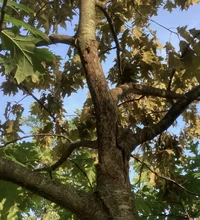
I'm dealing with what's becoming a massive problem on a college campus. We have fox squirrels *everywhere* out here, and they have, over the past three years or so, begun chewing on the bark of trees. They have now fully girdled hundreds of limbs and outright killed dozens of trees. One of my co-workers likened it to a disease, saying "If we had a fungus or a bug that was doing this kind of damage this fast, we'd be in full panic mode."

...but since they're squirrels, and the students on campus have made them an Instagram page with over 14k followers, we have to approach the situation carefully.

We have over 15,000 inventoried trees on campus, with many dating from the 1800s and a few pushing 200 years. We've got to do something, but pulling out pellet rifles isn't just bad PR, it's illegal within our city limits.

So what I need from you, the hive mind, here is information. I'm open to mitigation suggestions too, but is anyone else seeing damage like this? Has anyone had any success with dealing with the root issue? If we're going to pitch any of our mitigation solutions higher up the chain, we're going to have to be able to explain why they're chewing on the trees. Anyone know anything? This is in the midwestern United States, and their chief targets seem to be Oaks, Locusts, Beeches, and Hackberry. I've got Oaks that are pushing 15 years old/10" dbh that are suddenly dead from ten feet high all the way up through the tips.IMG_1932.webp
 

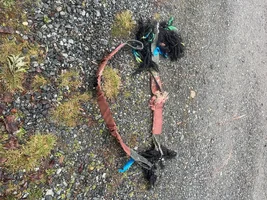
No projectile, no poison. Just a dead squirrel. I’m going to get one of their models for ground squirrels next year.

In our area this year we saw a lot of squirrel damage on the oak trees. They looked splotchy with orange leaves in sections throughout the canopy from small limbs and twigs being girdled. One yard we were in I had to take out a significant number of dead limbs from a Japanese maple that had really bad damage from squirrels.

For those that don’t want to kill squirrels what I encourage them to do is hang bones in trees so the squirrels have something to chew on other than the trees. Since their teeth are always growing they need to be chewing on something and they need to get minerals that the bones have to help keep them healthy.
 
Last edited:

No projectile, no poison. Just a dead squirrel. I’m going to get one of their models for ground squirrels next year.

In our area this year we saw a lot of squirrel damage on the oak trees. They looked splotchy with orange leaves in sections throughout the canopy from small limbs and twigs being girdled. One yard we were in I had to take out a significant number of dead limbs from a Japanese maple that had really bad damage from squirrels.

For those that don’t want to kill squirrels what I encourage them to do is hang bones in trees so the squirrels have something to chew on other than the trees. Since their teeth are always growing they need to be chewing on something and they need to get minerals that the bones have to help keep them healthy.
A) that's a great trap design.

B) might I suggest deer bones? Yes, you'll need to kill more deer, but I thought we were talking about protecting trees so win-win! ;)

As to the OP, would Repellex work on bigger trees???

Why are the chewing? Like @RyanCafferky said, they have to. Is this year worse than others? Maybe because of drought - they are looking to get water out of the trees??? Maybe talk with wildlife biologists about that. Would putting water out help? Certainly a Catch 22...you don't want to improve their habitat, but if providing something useful to them changes behavior that's at least a step. But long term, maybe a step in the wrong direction???

The city here has what I think is a dumb plan to deal with ferrill cats: catch, neuter, and release. (They will still continue to kill lots of birds and poop in flowerbeds and pee on patio furniture of unwilling hosts). But anyway... would that work as a more humane way to reduce squirrel populations??? I don't know... another wildlife biologist question.
 

No projectile, no poison. Just a dead squirrel. I’m going to get one of their models for ground squirrels next year.
That IS a pretty brilliant trap design...but I can't have piles of dead squirrels accumulating at the base of trees. We're having to tread very lightly on the situation for PR reasons. Thanks for the input, though...I'll tuck that one away for later.
 
That’s terrible news, regarding the damage and death wrought upon important landscape trees.
I worked on a retirement community campus for awhile where a lot of people had bird feeders, which in turn fed the squirrels. Because they gorged themselves on bird seed and suet bricks they did not grind their teeth down like they should have. And of course that led to them chewing on a lot of things they would not have normally been doing like aluminum landscape lights, siding, even getting into vehicles and chewing on wiring! And yes, occasionally damaging some tree and shrub bark too.
I ask, are those squirrels eating a typical diet or have they been accustomed to eating garbage or other “non-traditional” squirrel food?
In my above scenario, when a specific squirrel was identified as being a particular nuisance we trapped them and relocated them.
 
I can't say for sure what their diets are like...they're on a college campus, but I doubt they're eating much fast food, etc. It's very much a Woodland campus, with lots of acorns and wild nuts available, which we see them collecting. Yours was my initial theory as well, that they were needing to wear their teeth down in nonstandard ways...but we haven't been able to confirm or deny it at all.

The problem with identifying nuisance squirrels, is that we're talking about hundreds if not thousands of squirrels on a 2,000 acre campus.
 
Install a shit ton of dynamic cabling and hang a sign on it in squirrel that says ‘free nesting material’

They are either nawing for nesting material, as a food source or to wear their teeth.

What departments does the school have? Can the biology students turn it in to a class project to come up with the solution for you with their own PR flair?

One of the best lectures I attended was about a new college remodel, expansion, or new campus (I can’t recall). Point is they decisively waited to figure out the foot paths between the building. The lessons learned is the students cut across making their own alternative route that were not in the most straight path from a-b but followed the larger trees. So the school after charging a class department to study student behavior designed the network of walking paths to follow the chosen route vs trying to guess.IMG_4229.webp
 
Squirrel damage has been a huge problem here for the entirety of my time working with trees. They get elms, locusts, hackberry, mulberry, etc. It can be really really bad at times.

Hanging deer bones/antlers does something for sure, I've definitely seen them chewing on those instead of branches.

A company I once worked for would spray trees with what they described as a diluted kind of pepper spray, they said it worked pretty well but needed frequent application.

Other arbs I know suggest offering other alternative food beyond bones/antlers or maybe build an altar with appropriate offerings for squirrels on the campus and attract them all to one area, away form the trees?
 
We have tons of squirrels here in Detroit but this seems like a weird behavior. Does the university treat their trees with some kind of fertilizer or something that would attract the squirrels as a nutrient? We occasionally see this kind of damage but it is very isolated. Take some of those spayed/neutered feral cats and loose them on campus along with coyotes and support a healthy Red-tailed Hawk population. The root cause is what I'm really curious about as well. Having lots of Black Walnut trees seems like it would feed them and wear down their teeth at the same time. My guess is that there is some human-created cause at the root of this problem.
 
Last edited:
On my original reply I was thinking that there has to be a birth control option. Even just live traps, and a carefully placed rubber band on the males would make a difference. A few less nuts might make a few less squirrels?
 
maybe introduce cane toads? (what could go wrong :)) natural predator action, native, is probably ok

There used to be a member avatar involving precarious squirrel nuts :)
I jest.

One year I had a squirrel nip off 50 6 to 8" sprigs off my austrian pine, 2nd day another 25. Never happened before or since. I chalked it up to an idiot squirrel who kept trying to build a nest where it couldn't work, a pure guess. neighbour had a sap/moisture theory. Only affected the one of 4 pines, not the locust or maple. probably not helpful to your case
 
I worked for a client one time who was an engineer. He built an amazing mousetrap which was a pipe aimed at a plate of steel. Inside the pipe was a photocell that released a burst of compressed air launching the mouse into the steel plate. Maybe what these squirrels need is a cannon that launches them off campus?
 
I worked for a client one time who was an engineer. He built an amazing mousetrap which was a pipe aimed at a plate of steel. Inside the pipe was a photocell that released a burst of compressed air launching the mouse into the steel plate. Maybe what these squirrels need is a cannon that launches them off campus?
Is this a whole new take of using (training) a squirrel to set your throwline?
1762577556513.webp
 
This devolved quickly :ROFLMAO:
I can't say for sure what their diets are like...they're on a college campus, but I doubt they're eating much fast food, etc. It's very much a Woodland campus, with lots of acorns and wild nuts available, which we see them collecting. Yours was my initial theory as well, that they were needing to wear their teeth down in nonstandard ways...but we haven't been able to confirm or deny it at all.

The problem with identifying nuisance squirrels, is that we're talking about hundreds if not thousands of squirrels on a 2,000 acre campus.
yikes that does create quite a challenge.
The ones we trapped often took a few tries , and this was on a 120a campus.

The squirrel cannon is an entertaining thought.

Maybe some owl/hawk decoys in some of the most important trees could be used?
It’s not a fix but it could be something to do
 

New threads New posts

Kask Stihl NORTHEASTERN Arborists Wesspur TreeStuff.com Teufelberger Westminster X-Rigging Teufelberger
Back
Top Bottom