Sigh

Tuebor

Been here a while
Location
Here
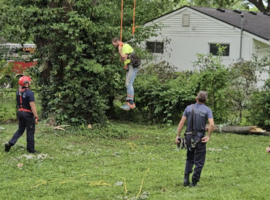
Kansas City FD rescues tree trimmer trapped around 65 feet in air in Raytown

A tree trimmer lost his rope while in a tree and was unable to get down, per KCFD.

Fire crews used a drone to raise a rope and harness system to the man. The rescue team instructed the tree trimmer how to secure the ropes and he was lowered to safety.

Bonus rescue at the end of the article:

Kansas City, Missouri firefighters rescue dangling tree trimmer

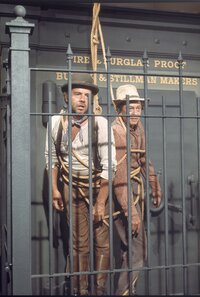
A tree trimmer was rescued Tuesday night after his foot became tangled in a tree.

Crews found a man suspended upside down by his foot about 15 feet up in the air.

Firefighters used ladders and ropes to help free the man and lower him to the ground.
 
How the hell does someone loose their rope in the first Place? Yep.....green.

This brings me to a quick story. In my beginnings, I went with a buddy to help set a rope for a pull over. He was using a natural fiber rope. I have no idea where this rope came from. He was about 50' up and the ropes own weight snapped itself. He had to spur back down. Good thing the rope gave out prior.
 
How the hell does someone loose their rope in the first Place? Yep.....green.

This brings me to a quick story. In my beginnings, I went with a buddy to help set a rope for a pull over. He was using a natural fiber rope. I have no idea where this rope came from. He was about 50' up and the ropes own weight snapped itself. He had to spur back down. Good thing the rope gave out prior.
An old time tree climber was telling me about his hemp ropes. He said they came new soaked in molasses to keep them from rotting. They would always use the new ropes for rigging first to break them in and reduce splinters. Also they would often drag a new rope down a gravel road as part of the breaking in process.
 
An old time tree climber was telling me about his hemp ropes. He said they came new soaked in molasses to keep them from rotting. They would always use the new ropes for rigging first to break them in and reduce splinters. Also they would often drag a new rope down a gravel road as part of the breaking in process.
I still do some old school rigging and sometimes climbing, but that's OLD school.
 
What is that hanging by his right foot in the tree. It looks like a cut/frayed rope. Also, what's around the trunk? Old pole strap like we had at the phone company?
 
I still do some old school rigging and sometimes climbing, but that's OLD school.

I was in that school for about the last two years of it's existence. Fortunately it has gotten shut down. Too bad there were some climbers that attended, but quit, but didn't graduate. That school is the beginning and end of their education.
 
Actually, I've seen 3 "world-class" climbers run out of rope length at competitions.
One each: Set-up; Actual comp; Tear-down.
(I've volunteered for more than 80 comps.; so that is a very large number of competitors & volunteers.)

Each recognized the problem; climbed back up to reset; & descended fine.

Still a little surprising.
 
Last edited:
Actually, I've seen 3 "world-class" climbers run out of rope length at competitions.
One each: Set-up; Actual comp; Tear-down.
(I've volunteered for more than 80 comps.; so that is a very large number of competitors & volunteers.)

Each recognized the problem; climbed back up to reset; & descended fine.

Still a little surprising.
I also had an competition climber show up for his Foot Locking event with a rope that was 12 ft too short ! ! ! - -
Ontario, Canada chapter.
(he was also an ITTC judge)
He actually asked if he could "jump up" to start the climb !

All of the climbers had been told what rope length would be required ! ! !
 
Last edited:
There's a little extra benefit of having a long lanyard - main line out of commission, you can lower your self in stages DRT. Like controlled return from an "out" position.
 
An old time tree climber was telling me about his hemp ropes. He said they came new soaked in molasses to keep them from rotting. They would always use the new ropes for rigging first to break them in and reduce splinters. Also they would often drag a new rope down a gravel road as part of the breaking in process.
Wait, you mean to tell me that new rope protocol has been phased out of fashion? With the price of diesel, that’s great I guess….!
 
An old time tree climber was telling me about his hemp ropes. He said they came new soaked in molasses to keep them from rotting. They would always use the new ropes for rigging first to break them in and reduce splinters. Also they would often drag a new rope down a gravel road as part of the breaking in process.
I bet that rope smelled sweet after lowering a big chunk!
 

New threads New posts

Kask Stihl NORTHEASTERN Arborists Wesspur TreeStuff.com Teufelberger Westminster X-Rigging Teufelberger
Back
Top Bottom