seattle freezes - thoughts on pruning?

hey guys, we're in a bit of a cold snap (for us) meaning it's gonna be below freezing for a week. i have a customer who heard on tv that pruning trees below freezing is bad for them, which i think is probably untrue. i know where you get real freezes, pruning continues all winter. my question is, our (deciduous) trees aren't maybe totally shut down in the same way, since the freeze is atypical, and i can't think why it would matter but thought i'd throw it out there. anyone with scientific info on this query?

much appreciated..

 
All I can add is that I've been pruning an awful lot of trees since 1980. And I've pruned plenty of times, during some of our coldest months. Even when the temps were in the high teens once. I've been able to do followup on the better part of most properties I've worked on, and never really saw any evidence of problems. Cut closure looks fine.

I know the cheeks can get cold this week. I was getting a price on stone delivery today from Oregon Decorative Rock not far away, and the guys there were all bundled with caps and hoods, but their cheeks were rosy.

First hand experience myself. You get home, pull off your hat and shirts and it looks like a pink bowl is painted on your face.

We should have low 20s or high teens here too.

Speaking of Washington, I'm sitting here tonaight pondering whether to go up to Olympic National Park this month, or wait a couple of months. Thinking about the Lake Quinault area just to keep it streamlined.
 
Kathy,

Entirely anecdotal, but this is the advice that I got from one of the most knowledgable plantspersons I've ever met, a graduate of the 4 year hort program at U of Guelph, 2 year forestry program at Lakehead, and lived most of his life in the rainshadow of the Olympic Mountains on Vancouver Island:

It's a bloody crying shame, but it's become trendy for people to plant material that is on the very edge of it's hardiness for our climate, like some sort of challenge to nature. But I can't fight that, so if it's there, I give it care.

So in a cold snap if these exotics haven't been pruned and prepped beforehand, leave them alone, let the winter kill happen. We'll take care of that remedial pruning when the climate more generally reflects their hardiness zone. Right now it would be like thinning a drought stressed tree.

But there's plenty we can do with the natives and imports that are well within their zone, so let's get to work on those.

----------------------------

I miss working with that man...


Northwind
 
It didn't seem that she was curious about exotics, but the majority of species in general.

But if we look at our plant material as being imports, most are very hardy here. In fact, some like Giant sequoia do better in my zone than many native species.

"native" does not mean more hardy. Some folks even say "plant native" for drought tolerance. "Native" does not equate with drought tolerance either. Take skunk cabbage for example - it needs a bog.

The reason some plants don't grow outside zones naturally can be as simple as the needs of seeds. Mountain ash for example, the seeds, need to be below freezing for 30 days - twice.

Unless we are talking about some borderline palm tree, New Zealand flax or evergreen fig, 95% of the trees around here are not only ready for this zone, but some are tougher than our zone. For example, maples from zones much colder than ours.

In general, I say have at pruning and just keep an eye out for the borderline exceptions. It is sort of odd that some people plant stuff that's on "the edge". Escallonia might be one of those "on the edge plants". Seems that the "edge" scenerio is more common with perennials and some shrubs.
 
One can reference Shigos' works. He speaks of freezing temps and damage caused by low temperatures. I quickly referenced frost damage in a New Tree Biology Dictionary and he states damage from cold or frost is mostly caused by wounds or dying branches and roots. I also remember reading some material written by Dr. Shigo, I can't state which publication, that damage occurs on pruning wounds made in winter. It's been some time since I've read this, and it has stuck with me, but noticed it shows up on the bottom of the cut making it look similar to a teardrop. I found in Modern Arboriculture that the dieback underneath a cut can occur in winter. I've also heard an extension agent say during a talk to a group of people who attended a community seminar that tissue damage can occur on trees from live pruning wounds at temperatures below 20 degrees. I can't see damage occuring on trees when the pruning is deadwood only, the trees' boundries are already established.


Joe
 
As I live in Hardiness Zone 2B I get to see a lot of things that effect trees that are both weather related and man-made.

In our hardiness zone the trees start a neat biological and chemical change. They actually desicate their cells to prevent them from exploding during the hard freeze -40 puts on them. Some of the introduced species do not have this ability.

There was a good article on this process in the ISA Arborist News. I think it can be found on the ISA web site. It is Volume 13, Number 6, December 2004

I hope this helps!
 
[ QUOTE ]
I've also heard an extension agent say during a talk to a group of people who attended a community seminar state that tissue damage can occur on trees from live pruning wounds at temperatures below 20 degrees.

[/ QUOTE ]

Thanks for that input Joe. Let's say the high temperature is 30° and the overnight low is 15°; is that going to do damage? Or, is it a matter of what the outside temperature is when the cut is made? (I don't see how, but I'm just asking).

Because there are many days which I'll trim a tree above 20° in the day, but the over night low will fall below that...
 
I interpreted that statement to mean if I prune live tissue in a plant when it's dormant, the temperature then goes below 20 degrees, damage will occur.

Joe
 
[ QUOTE ]
There was a good article on this process in the ISA Arborist News. I think it can be found on the ISA web site. It is Volume 13, Number 6, December 2004

I hope this helps!

[/ QUOTE ]

thanks for that - i'll try to find it. the issue doesn't come up much here, but i'd like to understand it anyway. intentional dessication of cells so they don't explode is something i can wrap my brain around..

thanks!
 
Hey Kathy,

It would be very interesting to know which trees, if any specifically, your client was concerned about. I think it is true that the vast majority of our naturalized plantings have adapted to our climatic irregularities. I am thinking of our many broad-leaved evergreens...they hardly ever show any damage from either pruning before a sudden freeze, or the sudden freeze itself, especially since our freezes are short-lived, and our day time temps usually are 50+.
I have however seen some surprising damage to citrus (particularly limes), and would probably withhold any major prunings from these species until later in winter.
Perhaps your client was referencing a source that was directed at the temperate zone (although I have never understood why the NorthEast is called "temperate"!) where major pruning is discouraged right before the trees go dormant so as not to activate new, freeze-prone growth...
 
If we don't work 3 months, we have to raise prices a huge percentage. Then less people can afford pruning, even less trees get cared for.

Maybe that's why I like the practical statement Shigo wrote in A New Tree Biology. That we can prune any time of year, with a note about the leaves forming / falling thing.

If I was back on a university campus or golf course again, the application of knowledge would be different: just prune a few months year. Arborists work year round. So I adhere to the any time of year part.

I have not seen problems to date. But I don't sheath a micrometer on my belt.

With many arborists, if they have lots of local experience and knowledge, they may well become a better expert for their own zone since we can't all do things the same way for everything.

I know exactly what I'm going to do tomorrow. Go outside, prune a branch of my magnolia, beech, and maple, and photograph, then photograph it next summer to show the results.

Reminds me of the video I posted after putting a blow torch to twigs on 4 species of my trees in southern Oregon to see what's really too flammable around a building. Myth-busted the Madrone on that one easily. This helps me know for certain sometimes, these experiments.
 
Kathy ...

Got my pruning cuts done the morning ...

The local weather stations in Beaverton are averaging between 12 and 14 degrees this morning on this side of town.

Cut a limb off Japanese maple, apple, magnolia and beech. Young limb too, like little "children" - lol. Thin bark.

Will take photos later today and caption notes on them. Then wait for next summer. I've got pruning cuts on my vine maple from just two weeks ago. May as well photograph those too.

Neighbors going to work had that "what's he doing in shorts and down vest with saw in hand" look on their face.
 
We prune all winter long here. No problem.

Also, joe said [ QUOTE ]
I quickly referenced frost damage in a New Tree Biology Dictionary and he states damage from cold or frost is mostly caused by wounds or dying branches and roots.

[/ QUOTE ]

...what Shigo was refering to here is what people think is frost damage or cold damage (cracks, shake lines) is actually precipitated by prior events (pruning wounds, dying limbs/roots, mechanical damage, etc.). He is not speaking about pruning in cold temperatures. See "A New Tree Biology Dictionary", pg. 48, frost injury. "Tree Pruning" pg 44,45,46. "A New Tree Biology" pg 476,477.

In "Modern Arboriculture", pg 145 deals with wounds and timing, but this is trunk wounding, not branch pruning and also says nothing regarding temperature. "Modern Arboriculture" pg 100,109 deal with cambial dieback below pruning wounds. This can occur at any time. However, Shigo does state that, "...cuts made in winter may lead to this problem.".
 
It was interesting taking photos of today's pruning cuts, to look close at other cuts from last year during summer, and I think spring.

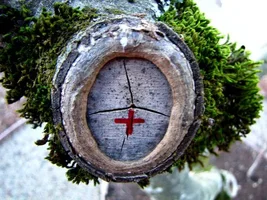
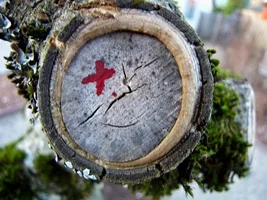
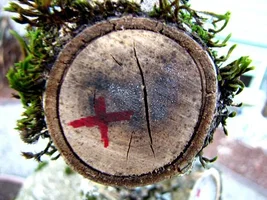
These three images, are limbs spaced about 8" above one another. A magnolia I needed to gain headroom with for a path. So I removed them over the space of about one year, starting with the lowest one. All about 2.5" cuts.

1st image, pruning cut from about July of 2008.

205268-magnolia_lower.jpg
 

Attachments

  • 205268-magnolia_lower.webp
    205268-magnolia_lower.webp
    68.1 KB · Views: 46
The last one was interesting. I pruned this one off around early August. It already shows some tissue growth peeking.

Still surprising that the top photo was close to this look, just July before last, since we moved here June of 2008.

205270-magnolia_upper.jpg
 

Attachments

  • 205270-magnolia_upper.webp
    205270-magnolia_upper.webp
    64.8 KB · Views: 45

New threads New posts

Kask Stihl NORTHEASTERN Arborists Wesspur TreeStuff.com Teufelberger Westminster X-Rigging Teufelberger
Back
Top Bottom