Rigging and Felling A Hung Tree

chris_girard

Branched out member
Location
Gilmanton, N.H.
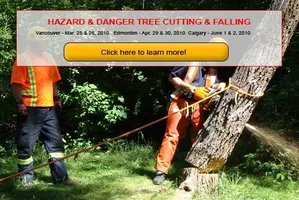
The attached .jpg photo comes from the Arboriculture Canada Training and Education site and shows a picture of a faller cutting a hung tree.

Any guesses as to what the plan is to fell this tree? I know the photo doesn’t show a lot of the tree, but it looks to me like they may be planning on putting a side notch in the tree and then a back (side) cut, followed by breaking the piece out by pulling with some kind of MA.

I’ve removed many hung trees, but never cutting it this way. Am I missing something? This does seem like a safe way to keep the faller in the clear. It also seems like, with that nice open face notch and sound hinge wood that you could do a hard side pull and the lower piece would hold as the new hinge above folds over.

What do you guys think?
 

Attachments

  • 205857-treerigging.webp
    205857-treerigging.webp
    62.1 KB · Views: 595
Chris,

I believe what you are seeing in that photo are two seperate things.

The lower felling cut was just to hang the tree up. What the saywer is doing with the saw is most likely the first cut of a mis-match cut.

The pull line will act as a remote trigger once the second cut is finished and the saywer has left the cutting area.

Make sense?

Tony
 
I see what you're saying as far as the mismatch cut is concerned, but are you saying that the tree was hung intentionally? That doesn't make sense to me.

I still think a side face notch and back cut would give better control than a mismatch (bypass) cut would, unless there was the potential for the tree to fall before the cutter is clear.

Hard to say from that picture.
 
I think the guy is about to make a face cut, and then a back cut on the side the pic was taken. When the rope is pulled the butt will fold over toward the pulling implement. But it's just a guess. Though I have done it just the way I described it.

I'll bet it's Dwayne Neustater behind the training program.
 
[ QUOTE ]
Chris,

I believe what you are seeing in that photo are two seperate things.

The lower felling cut was just to hang the tree up. What the saywer is doing with the saw is most likely the first cut of a mis-match cut.

The pull line will act as a remote trigger once the second cut is finished and the saywer has left the cutting area.


Tony

[/ QUOTE ]

Sounds about right.
 
Seems like a face and backcut, then pull.

A mismatch (snap) cut would probably collapse when the overlap happens in the kerfs (seems like the word should be kerves) pinching the saw, and maybe breaking free unexpectedly.
 
Being a former full time faller I've dealt with a few hangers( good fallers don't have hangers do they?!) . I don't think the snap would work very well too much risk of getting your saw stuck the hinge idea looks like the most logical thing in the picture. What i used to do is one of three things. Plan A drop another tree on it (and build teepees if it didn't work) Plan B wait for the skidder to pull it down (not good it the hinge is still holding) Plan C which is for when you dont have equipment and you aren't worried about the log. Cut down vertical (but not always) until the kerf closes then trip from the bottom. Used this plan lots with good sucess. You can also cut more at a 90 to the wood and leave a corner to control which way it will come off but with more risk of getting hung up.
 
Yes, the tree was hung intentionally. That is a picture from an actual training course. You can sit around and discuss theory all day, but the real learning happens when a saw is in your hands and the chips are flying. Arbor Canada and North American training solutions try to use real world situations in training whenever possible. Which means intentionally hanging trees. (end of shameless plug!)

As for the cut to dislodge, I agree with all the above responses. Jerry's idea of a face cut on the opposite side of pull with a corresponding back cut may be right on the money for this picture. I've always heard that technique called a "Knee Notch."
Please be aware that often these training course are developed for industries other than arborists. While many of the techniques listed above are excellent and valid they require a level of experience and knowledge not possessed by other trades. Therefore, simpler techniques like the "mismatch cut" and "knee notch" are often the best tool.

As for the saw getting stuck in a mismatch cut that is defiantly possible. The mis-match cut will work well on smaller logs that are relatively solid and the sawyer does not over cut.

And no this is not a technique for the logging industry, but just the ticket for a lone lineman, with limited saw experience and tools, deep in the canadian night removing small firs or spruces from a low line.

Tony
 
[ QUOTE ]

Yes, the tree was hung intentionally. That is a picture from an actual training course. You can sit around and discuss theory all day, but the real learning happens when a saw is in your hands and the chips are flying. Arbor Canada and North American training solutions try to use real world situations in training whenever possible. Which means intentionally hanging trees. (end of shameless plug!)
Tony

[/ QUOTE ]

Now it makes sense to me Tony. I didn't put two and two together and think that it was hung on purpose for the training course.

Don't worry about the shamelss plug. I think that their programs are a great idea and would love to see some closer to our area too.

You're right, the real learning happens when the saw is in your hands, but its still a good idea to discuss the theory behind certain practices. Anything that we can do to make our jobs safer is worth it.

Just curious, have you been to one of their classes and if so, what did you think?
 
Chris,

I have had the pleasure and honor of being associated with North American Training Solutions and Arbor Canada Training and Education for a few years now. I have been to Canada to help out with some courses in the great white north.

I know I am a bit biased, but before my involvement with NATS/ACTE I had some experience with other training companies. So I have a basis for comparison.

What NATS/ACTE offer is hands down the best, most comprehensive training courses conducted by knowledgeable, concerned, well trained instructors. Both organizations invest in their instructors and arm them with the best instruction techniques available. This is key. Even the best info is useless if it is not conveyed well.

Please attend a course as soon as one becomes available. You will not regret it and perchance you'll see me there.

Tony
 
Dieselcutter's plan C is universal for working small hangups down. But it almost always comes to the point where the hangup is going to stand near vertical and fall out of its confines. Often back towards the stump,, or to one side or another. All depending on how you cut it of course.

But that's where the technique shown in the photo will give you some control over what side the hangup falls over to. Though it doesn't have to be employed right at the very start. But repeating the technique can work the butt of the hangup around to a desired side much sooner than by using the cut alone.

It all depends on the situation of course. Lots of fixes possible.
 
Another shameless plug whould be for Olds College. Same small Alberta town Arboriculture Canada is based. They offer an Arboriculture Diploma so the climbing and rigging instruction is possibly the best. I of coarse challenged them a bit because all I cared about xylem and phloem were that they were completely severed. But a good hort. education if your into that kind of thing. Takes the mystery out of the work. A little flowers, a little turf, irrigation, and landscaping. I really enjoyed it.
 
I've employed the mismatch cut with remote trigger several times with great success. To me, it is the safest way to dislodge a hung tree from the ground (besides hooking it to a skidder) because you are away when the tree is dislodged. A notch and back-cut doesn't always work because it requires at least one end of the tree to move in order for the hinge to close. This isn't always possible.

Saying that, I dislodged a hung log the other day by climbing the tree it was hung in and cutting the branch the log was resting on. It worked out well.

Stay alert, stay alive!
 
in my estimation, there is little in tree work or felling that is more fun than facing up several trees all leaning the wrong way and then knocking them down like dominoes with another tree.

make sure it goes like you think it should... mess up and you might buy the farm.
 
[ QUOTE ]
1910.266(h)(1)(ix)

Domino felling of trees is prohibited.

Note to paragraph (h)(1)(ix): The definition of domino felling does not include the felling of a single danger tree by felling another single tree into it.

[/ QUOTE ]
 
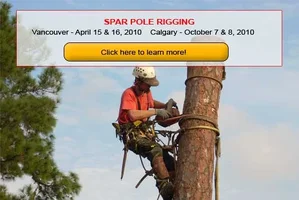
Does anyone know what this guy has got on the front of his Petzl ecrin roc climbing helmet? looks like a removable peak to keep the sun out and rain off his face? Where would you buy one?

206388-hat.jpg
 

Attachments

  • 206388-hat.webp
    206388-hat.webp
    29 KB · Views: 91

New threads New posts

Back
Top Bottom