












Navigation
Install the app
How to install the app on iOS
Follow along with the video below to see how to install our site as a web app on your home screen.
Note: This feature may not be available in some browsers.
More options
You are using an out of date browser. It may not display this or other websites correctly.
You should upgrade or use an alternative browser.
You should upgrade or use an alternative browser.
Removing EAB trees
- Thread starter seedy j
- Start date

Reach
Been here much more than a while
- Location
- Atglen, PA
I think they are dangerous! Be careful, they’re very unpredictable and quite brittle, even when they look solid. It is very rare that we will climb one at all, we fell them if at all possible, or use a lift or crane if necessary.
When they hit the ground, they shatter to the point we call them self-chipping trees. Be prepared to clean up more of the tree with a dustpan and broom than you will with a loader and a rake.
When they hit the ground, they shatter to the point we call them self-chipping trees. Be prepared to clean up more of the tree with a dustpan and broom than you will with a loader and a rake.

I’m still climbing a lot of them, refused twice though because I couldn’t trust them to all stay together with the rigging plan I would’ve needed to do.
They were accessible with a bucket truck anyways, someone else can have em.
It’s a shame really. Changed the look of a lot of the small forests around here, it’s sad.
They were accessible with a bucket truck anyways, someone else can have em.
It’s a shame really. Changed the look of a lot of the small forests around here, it’s sad.
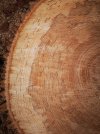

deevo
Been here a while
- Location
- Horseshoe Valley, Ontario, Canada
Longer people let them sit Dead, the higher the price goes up.Where I am, EAB showed up a couple years ago. We're starting to see it spread, but slowly. I feel like any day it will be seen everywhere. I can read about the signs, etc., but I'm curious what arborists, in the field, think about working with infested trees.

flushcut
Been here much more than a while
- Location
- Delavan, WI
Fresh dead is OK up to about 2-3 years depending on size and location. Wet feet = fast rot. They like to barber chair. 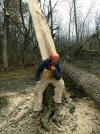
EAB barber chair.
EAB barber chair.

Tony
Carpal tunnel level member
- Location
- Lancaster, PA
More than 20% decline from EAB and we consider them to hazardous to climb without a anchor point isolated from the tree. Any rigging is accompanied, by an extensive hazard assessment and plan.
I strongly disagree with flushcut. In my experience the greatest hazard they pose is the unpredictability at any time after they are infected. Once a tree or section is dead, it is much more likely to be substantially weaker than normal.
Tony
I strongly disagree with flushcut. In my experience the greatest hazard they pose is the unpredictability at any time after they are infected. Once a tree or section is dead, it is much more likely to be substantially weaker than normal.
Tony

KTSmith
Branched out member
- Location
- Maine, New Hampshire
For Seedy J and those myriad small wounds. I'd start with cambial miner, an agromyzid fly like Phytobia or some such. Native pest on a number of northern hardwoods.
dmonn
Branched out member
- Location
- Port Washington Wisconsin
I've only removed about 300 EAB killed ash, but would second the words of caution about unpredictable behavior. Most were solid after 2-3 years dead, but you never know. I pulled a 10-inch tree down last weekend using my throw line. Totally gone at ground level, but solid wood above it. The rot was obvious on that one, but not always. I was trying to just break off an upper limb a few weeks ago, and the whole 12-inch tree came down. Broke about a foot above ground without breaking the 4-inch limb I was pulling on. No rot or visible damage, but just a weak spot in the trunk. I sawed off the remaining trunk at ground level, and it seemed solid. That was a real wake-up call for me. Just don't trust those trees.
dmonn
Branched out member
- Location
- Port Washington Wisconsin
Seedy J, in Winnipeg you may be far enough north to never have the complete devastation we have seen around here. I think I've read that if you get a few days of continuous "colder than 25 degrees below zero F" it will kill off most of the buggers, and the trees can survive. If that happens at least once every few years, the bugs stay sort of under control. Anybody else agree or disagree with that?
I didn't see any of the criss cross patterns. Do you think the markings between the rings would be a sign of past activity from a cambium miner?For Seedy J and those myriad small wounds. I'd start with cambial miner, an agromyzid fly like Phytobia or some such. Native pest on a number of northern hardwoods.
True, the cold winters here can be slowing the spread.Seedy J, in Winnipeg you may be far enough north to never have the complete devastation we have seen around here. I think I've read that if you get a few days of continuous "colder than 25 degrees below zero F" it will kill off most of the buggers, and the trees can survive. If that happens at least once every few years, the bugs stay sort of under control. Anybody else agree or disagree with that?
B_Strange
Participating member
- Location
- Simmonsville
I’ll chime in. I live in SW Virginia and have very few EAB ash tree climbs under my belt and I climbed my last ash two weeks ago for a friend. On our backroad a 12” dbh ash broke 3’ from the base after a windy day. Seeing that stump every day is a reminder to send any ash trees I can’t drop to my buddy with a lift and a crane. Just too hazardous. I’d rather sweat a little financially then be dead or crippled.

BooRad
Participating member
- Location
- Chatham, NJ
NJ (Morris County) really starting to show. Close to 30% of our work last 60 days has been ash. Not all dead, but they "bronze" and get shot up real good, even with lots of green at the ends. Seems to really have taken off.
I've climbed a bunch if they were still green, but limit the rigging to a minimum.
Main reason I purchased tracked lift (72') was to deal with these.
Went to a seminar ways back, lecture from midwest told us, " EAB will put your kids through college if it doesn't kill you".
Try to remember that. Bid high and if you don't get this one, 1000 more to bid on next week.
I've climbed a bunch if they were still green, but limit the rigging to a minimum.
Main reason I purchased tracked lift (72') was to deal with these.
Went to a seminar ways back, lecture from midwest told us, " EAB will put your kids through college if it doesn't kill you".
Try to remember that. Bid high and if you don't get this one, 1000 more to bid on next week.
flushcut
Been here much more than a while
- Location
- Delavan, WI
You can disagree all you want but my experience says different. EAB has come and gone in my area 95% + ash gone. I personally have been in on 1600 ash tree removals. Counted by the head of grounds at a golf course in Fontana WI. !00's of semi truck log loads and many 1000's of yards of chips. But that's cool take it or leave it.More than 20% decline from EAB and we consider them to hazardous to climb without a anchor point isolated from the tree. Any rigging is accompanied, by an extensive hazard assessment and plan.
I strongly disagree with flushcut. In my experience the greatest hazard they pose is the unpredictability at any time after they are infected. Once a tree or section is dead, it is much more likely to be substantially weaker than normal.
Tony

ATH
Been here much more than a while
- Location
- Findlay, Ohio
There was a paper about that from Minnesota a few years ago. The bugs die when they get that cold. However...they are in the tree and insulated, so they don't get that cold too easily. They tested the bugs outside of the tree.Seedy J, in Winnipeg you may be far enough north to never have the complete devastation we have seen around here. I think I've read that if you get a few days of continuous "colder than 25 degrees below zero F" it will kill off most of the buggers, and the trees can survive. If that happens at least once every few years, the bugs stay sort of under control. Anybody else agree or disagree with that?
deevo
Been here a while
- Location
- Horseshoe Valley, Ontario, Canada
Yep true, we had some -30 to -40 C temps a few winters back that lasted 4-5 days in a few different times in the winter, and they had that theory also about the cold but nope they still came out strong in the spring here.There was a paper about that from Minnesota a few years ago. The bugs die when they get that cold. However...they are in the tree and insulated, so they don't get that cold too easily. They tested the bugs outside of the tree.
dmonn
Branched out member
- Location
- Port Washington Wisconsin
Those are some tough bugs! I'm glad we never see those temps here. The insulation factor seems to be real. I think that's why you see the bigger trees die first. The bugs know that the bigger trees insulate them from the cold (or the dumb bugs die when they infect the smaller trees). When the bigger trees are all gone, they go after the smaller ones. Maybe. Strictly theory from observations.

ATH
Been here much more than a while
- Location
- Findlay, Ohio
Could that be a site factor? I have seen the opposite around here... But we are pretty wet heavy soils where green ash is going to do much better than white ash. What are soils like where you are?Anyone else notice white ash, even right next to a green ash seem to be a few years behind as far as die back goes? I’ve consistently seen this, are there any reasons/theories on that?
Blue Ash certainly hangs on a whole lot longer... With many not being killed at all.












New threads New posts
-
test
-
-

-
-
 Free CEUs: February 05 & March 05 - 'Urban Forestry Today' Webcasts @ Noon (Eastern)
- Started by UFT
- Replies: 0
-

-








