Redirects

jmcscrap

Participating member
Location
Woodbury, MN
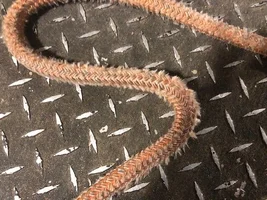
We have been seeing the ash with EAB getting more and more brittle as we go along, so we are obviously taking smaller pieces and adding in more redirects. That being said, what are you guys and gals using for this? I'm looking for more of what you can add midline without pulling all the rope through.

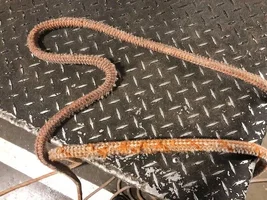
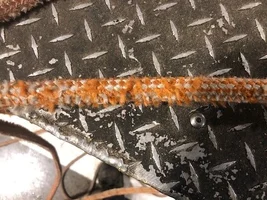
Next question - and most of this stems from what we are seeing on the ropes after starting to add in more points of contact for rigging. We have been using Omni pulleys for 95% of the quick midline or end of the branch for catching small peices and have started seeing an increase in rope wear. The first rope was a 14mm - which is outside the specs of the pulley - so we chalked it up to that and went with a 12mm rope. Problem for us is we saw the same thing on the rope.

We checked everything for a sharp edge or burr that may have caused this - but everything is smooth. We thought about friction on the tree itself? Hopefully this makes sense - thanks!!
 

Attachments

  • rope 1.webp
    rope 1.webp
    105.9 KB · Views: 82
  • rope 2.webp
    rope 2.webp
    109.5 KB · Views: 81
  • rope 3.webp
    rope 3.webp
    118 KB · Views: 79
Wow. I'm not seeing any of that, and I use the Omni-Blocks (2.0 ones for redirects, 2.6 for main block)... I keep the pulleys and the entire rope path "in the clear" and don't let it rub on the tree. I usually use aerial friction (RnW or AFB) as one of the redirects, but sometimes use a Stein friction brake at the base of the tree.

I had a friction brake a few years ago that had some ugly welding on it... it shredded a rope like that over the course of a single job. I spent an evening grinding all the welds down with an angle grinder, then sanding it all smooth. Problem went away.

It would take me two years and some natural crotch rigging to make a rope look like that. How big are the pieces you're taking?
 
I would say these ropes have seen two months of use. We looked at the welds on our porty - clean.... I'd say that we average 300-400 lbs on our big stuff.
 
That looks like rope after seasons of wear and tear. Super fast lowering? Incorrect rope size for block? Funky, head scratcher thx for posting.
 
The other?

It's so ragged, I can't tell what it might have been.
Something certainly isn't right. I've seen double-braid ropes that were used for natural crotch rigging that looked that bad, but I think you'd have to be burning big wood down at terminal velocity speeds to do that on hardware. I don't know, man... by chance, do you watch a lot of Daniel Murphy videos?
 
I'll second using omni blocks on ultra slings as my redirect. Usually a triple thimble as my main rigging and friction point, never had wear even close to that...

HOWEVER I have seen the omni block get pinned under load and not swivel in line with the rope causing the rope to run on the side plate which could cause the abnormal wear of it happens often. Hang your pulley with a little more slack and it shouldn't be a problem.

Also the short length of time I used a rigging wrench before the thimble, I did notice it was roughing up the rope more than i expected. Also noticed a similar issue with the pulley/ wrench not always swinging in line with the rope
 
Yes, I can see that being hard on the rope... I keep the pulleys coming in as straight a line as possible, out in the clear and hanging with about six inches minimum of throat on the sling. For the final fairlead into the brake, to get the rope coming in vertical and close to the tree, I use a rigging ring since they don't care about being tight against the trunk. It helps a lot to tension the line before cutting, to align everything in advance.

It also helps a lot to keep everything static and not bounce stuff around a bunch. A little swinging is one thing, but rough bouncing seems to knock everything out of whack and really slams the pulleys around.
 
It's so ragged, I can't tell what it might have been.
Something certainly isn't right. I've seen double-braid ropes that were used for natural crotch rigging that looked that bad, but I think you'd have to be burning big wood down at terminal velocity speeds to do that on hardware. I don't know, man... by chance, do you watch a lot of Daniel Murphy videos?
So pulling with an excavator to max load, then springboarding the entire tree into orbit may be tough on the rope? :lol:
 
Yes, I can see that being hard on the rope... I keep the pulleys coming in as straight a line as possible, out in the clear and hanging with about six inches minimum of throat on the sling. For the final fairlead into the brake, to get the rope coming in vertical and close to the tree, I use a rigging ring since they don't care about being tight against the trunk. It helps a lot to tension the line before cutting, to align everything in advance.

It also helps a lot to keep everything static and not bounce stuff around a bunch. A little swinging is one thing, but rough bouncing seems to knock everything out of whack and really slams the pulleys around.

We tension the line prior to cutting to get make sure everything is inline and away from the tree or as close as possible.

I did think about the Omni being pulled up and running the rope between the bark and pulley, leaving a little more slack could be the answer for that - we will try it for sure.

I'm thinking we will be going to more rings at this point and see if this alleviates the issue.
 
Where are you are storing your rope?

I have seen ropes stored in the chipper front locker, or the cabinet in chip truck where the ropes sit in sand and or grime that look this after short amount of use.
 
Wouldn’t grit have more of an effect on hardware? Remove paint or hard coat or anodizing from rings, lowering devices, and wear on carabiners?

Did it get loaded and run over a hard angle or hinge fibers or thorns? Something like that?

Just speculating.

Natural crotch rigging glazes my ropes if it’s heavy and fast.
 

New threads New posts

Back
Top Bottom