
Navigation
Install the app
How to install the app on iOS
Follow along with the video below to see how to install our site as a web app on your home screen.
Note: This feature may not be available in some browsers.
More options
You are using an out of date browser. It may not display this or other websites correctly.
You should upgrade or use an alternative browser.
You should upgrade or use an alternative browser.
Port a wrap oddity
- Thread starter Dan_Watkins
- Start date


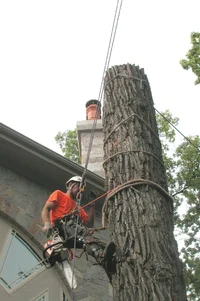
This cut destroyed a 5/8" db. for about ten feet. The rope was new. The problem was the rope was to big and the med. porty was two small(too much bend). Should have used the alluninum bollard on the winch. It was kinda funny Jason was holding 6' 7' long peices of melted fibers he found on the ground.
Attachments

- Location
- Longmont, CO
Any one speculate about the twists in the rope? If I'm running ropes, I make sure to get all of the twist out of the rope before decelerating the loads. I'm sure this may have some reason as well as the others mentioned...
- Location
- tulsa oklahoma
We use blue streak for general roping, but when it comes to taking tops out or blocking down we use 1/2" or 9/16" super or stable braid. 1/2" Hi-vee is probably not what I would want to use to take out big tops or block down large chunks. IMO.
D.W.H

D.W.H

goodaking
Participating member
Hockels could of stopped the rope. I have had this problem with my half inch super braid. I switch the ends from time to time to lesson the hockels and use a rope bag. That helps alot

Norm_Hall
New member
- Location
- Wauconda, (Chicago),IL,USA
[ QUOTE ]
Hockels could of stopped the rope. I have had this problem with my half inch super braid. I switch the ends from time to time to lesson the hockels and use a rope bag. That helps alot
[/ QUOTE ]
Try wrapping the rope in different directions every other time. That should drastically reduce the hockling.
Hockels could of stopped the rope. I have had this problem with my half inch super braid. I switch the ends from time to time to lesson the hockels and use a rope bag. That helps alot
[/ QUOTE ]
Try wrapping the rope in different directions every other time. That should drastically reduce the hockling.
jim454
Participating member
- Location
- The land of Utopia
Many times I use a friction brake to control the fall rather than lowering the load slowly to the ground. I have 2 lowering devices, 1 is a homemade porty that is unpainted the other is a bollard welded to my BMG that is powder-coated. Never have I had a problem with rope melting to the porty however I have had it happen to the powder-coated one.

- Location
- Youngstown, Ohio
That sucks.

I have had this occur on a painted porty to. I only barely remember it so it didn't cause a problem, but was enough to make me take note.
I think we were using a polyester rope. From the anecdotes above though I begin to suspect the paint being used to coat them. Maybe what a fabricator thinks is the perfect coating to prevent corrosion also happens to melt at a temperature obtainable from the friction and re-adheres instantly to any surface it is in contact with as it cools below its MP. I recall during our occurrence I had slowed the rope a bit and was fairly dismayed and then puzzled when it came to an abrupt halt and then ceased to run at all.
Best thing would be to get in contact with the manufacturers and see what they coat them with........
I think we were using a polyester rope. From the anecdotes above though I begin to suspect the paint being used to coat them. Maybe what a fabricator thinks is the perfect coating to prevent corrosion also happens to melt at a temperature obtainable from the friction and re-adheres instantly to any surface it is in contact with as it cools below its MP. I recall during our occurrence I had slowed the rope a bit and was fairly dismayed and then puzzled when it came to an abrupt halt and then ceased to run at all.
Best thing would be to get in contact with the manufacturers and see what they coat them with........
Ahh the internet what an invention.
Port-a-wraps are generally sold as aluminium, nickel plated steel and powder coated steel.
From Wiki
Powder coating is a type of coating that is applied as a free-flowing, dry powder. The main difference between a conventional liquid paint and a powder coating is that the powder coating does not require a solvent to keep the binder and filler parts in a liquid suspension form. The coating is typically applied electrostatically and is then cured under heat to allow it to flow and form a "skin."
Also from Wiki
Curing
When a thermoset powder is exposed to elevated temperature, it begins to melt, flows out, and then chemically reacts to form a higher molecular weight polymer in a network-like structure. This cure process, called crosslinking, requires a certain degree of temperature for a certain length of time in order to reach full cure and establish the full film properties for which the material was designed. Normally the powders cure at 200°C (390°F) in 10 minutes.
Yes I can imagine the porty barrel could get to 200 pretty easily under a running load.So, next time I buy a port-a-wrap it's going to be nickel coated steel. (I'm one of those anti-aluminum freaks).
Stay safe y'all
Port-a-wraps are generally sold as aluminium, nickel plated steel and powder coated steel.
From Wiki
Powder coating is a type of coating that is applied as a free-flowing, dry powder. The main difference between a conventional liquid paint and a powder coating is that the powder coating does not require a solvent to keep the binder and filler parts in a liquid suspension form. The coating is typically applied electrostatically and is then cured under heat to allow it to flow and form a "skin."
Also from Wiki
Curing
When a thermoset powder is exposed to elevated temperature, it begins to melt, flows out, and then chemically reacts to form a higher molecular weight polymer in a network-like structure. This cure process, called crosslinking, requires a certain degree of temperature for a certain length of time in order to reach full cure and establish the full film properties for which the material was designed. Normally the powders cure at 200°C (390°F) in 10 minutes.
Yes I can imagine the porty barrel could get to 200 pretty easily under a running load.So, next time I buy a port-a-wrap it's going to be nickel coated steel. (I'm one of those anti-aluminum freaks).
Stay safe y'all

I've always called them port-a-craps. I see no use for them. If the peice to lower is that small, then just do a half wrap on the trunk.
If there is some serious lowering, then put a real tool on the tree like the hobbs.
I've never gotten into the porty. A past employee brought one with him to work. Seemed like it was always not enough hold or too much hold.
I thought of them as the poor tree climbers rigging tool.
I've never really like them, then again, I haven't been a groundman using one.
If there is some serious lowering, then put a real tool on the tree like the hobbs.
I've never gotten into the porty. A past employee brought one with him to work. Seemed like it was always not enough hold or too much hold.
I thought of them as the poor tree climbers rigging tool.
I've never really like them, then again, I haven't been a groundman using one.
jim454
Participating member
- Location
- The land of Utopia
Really X?
I generally do a half wrap on the lighter stuff or don't use any friction at all. They're a heck of a lot easier to attach to the tree than a hobbs or GRCS.
Personal preference I guess...
I generally do a half wrap on the lighter stuff or don't use any friction at all. They're a heck of a lot easier to attach to the tree than a hobbs or GRCS.
Personal preference I guess...
I have never used either the hobbs or grcs, guess I am a poor tree climber.
Like most things the tool is only as good as the user. When I first started, the groundie I learned to use them off always bought the load to a screaming halt (the climber usually doing most of the screaming), and then lowered it. I only found out about letting it run by talking to another tree crew working in the same street. Wow what a difference!
Don't seem to use it that much anymore. Haven't done any big trees lately. What it does get used for quite a bit is to tie off false crotches on.
Like most things the tool is only as good as the user. When I first started, the groundie I learned to use them off always bought the load to a screaming halt (the climber usually doing most of the screaming), and then lowered it. I only found out about letting it run by talking to another tree crew working in the same street. Wow what a difference!
Don't seem to use it that much anymore. Haven't done any big trees lately. What it does get used for quite a bit is to tie off false crotches on.

tomthetreeman
Participating member
- Location
- Rhode Island
It's also good in tandem with the GRCS for lateral lowering, tip-tying, etc. It's a pain taking wraps on the trunk with that second rope when the GRCS is there, the porty keeps it organized and separate.
I used to have the medium, and I had the exact problem that X described. The large is not as bad with the too much/too little friction problem.
-Tom
I used to have the medium, and I had the exact problem that X described. The large is not as bad with the too much/too little friction problem.
-Tom

southsoundtree
Been here much more than a while
- Location
- Olympia, WA
We use a medium porty for negative blocking, lifting with a 3:1 and lowering, and use Reg Coates' good, quick 3:1 trick for pre-tensioning when negative blocking/ blocking down spar wood, lowering larger logs off of other trees nearby, etc.
Seems to work, and there is skill learned though experience. Not having worked with a GRCS or HOBBS, I can't say that it its impossible to lock up a load on either, but suspect that poor technique would make it possible.
I figure that its not always matter of what tools you have have to do the job, but what jobs you can do with the tools that you have.
A POW can be set and controlled from within a tree if a climber needed/ wanted to do so. For a two man crew, the groundman can control the catch/ run from the ground, then the climber can take control of the rigging line while the groundman controls the workpiece at ground level, swinging it around obstacles. There is less rope between the POW and work/load in this scenario, so adjust appropriately.
I think that GRCS and Hobbs would be great to have, but for 10-15 times the price, a POW does great for a lot of things, is easy to set up, and lots lighter, too.
Just get adjusted to it, know if you are rubbing a lot of branches or the trunk imparting more friction into the system, and good communication between the roper and climber about where the work is located in relation to the block (in the case where it is hard to see, like above the block, below the block, to the side of the block) and the size of the work being caught and lowered.
When we are working bigger pieces, we let it run, the slowly lower the piece, allowing more heat to transfer.
An icepack can be put in the tube if needed, or anything else that will absorb the heat from the tube. Though I've never packed the tube with mud, I could imagine that it would help if caught without an icepack/ ziplock bag full of water/ icewater.
I thought that the trunk wrap was the poor man's lowering device.
Seems to work, and there is skill learned though experience. Not having worked with a GRCS or HOBBS, I can't say that it its impossible to lock up a load on either, but suspect that poor technique would make it possible.
I figure that its not always matter of what tools you have have to do the job, but what jobs you can do with the tools that you have.
A POW can be set and controlled from within a tree if a climber needed/ wanted to do so. For a two man crew, the groundman can control the catch/ run from the ground, then the climber can take control of the rigging line while the groundman controls the workpiece at ground level, swinging it around obstacles. There is less rope between the POW and work/load in this scenario, so adjust appropriately.
I think that GRCS and Hobbs would be great to have, but for 10-15 times the price, a POW does great for a lot of things, is easy to set up, and lots lighter, too.
Just get adjusted to it, know if you are rubbing a lot of branches or the trunk imparting more friction into the system, and good communication between the roper and climber about where the work is located in relation to the block (in the case where it is hard to see, like above the block, below the block, to the side of the block) and the size of the work being caught and lowered.
When we are working bigger pieces, we let it run, the slowly lower the piece, allowing more heat to transfer.
An icepack can be put in the tube if needed, or anything else that will absorb the heat from the tube. Though I've never packed the tube with mud, I could imagine that it would help if caught without an icepack/ ziplock bag full of water/ icewater.
I thought that the trunk wrap was the poor man's lowering device.

its a rookie mistake, it most likely wont happen again. fyi, the paint got noone ta do witit kidd. ive done it so bad we had to beat the rope off the bollard with the hammer.

New threads New posts
-
test
-
 For Sale: 2018 Vermeer BC1000XL Chipper | 918 Run Hours | Deutz Diesel
- Started by Blue Ribbon Tree
- Replies: 0
-
AJ Could Have Climbing Work For Weeks and Weeks in BC . . . .
- Started by ghostice
- Replies: 1
-

-

-

-

