













Close to it
Navigation
Install the app
How to install the app on iOS
Follow along with the video below to see how to install our site as a web app on your home screen.
Note: This feature may not be available in some browsers.
More options
You are using an out of date browser. It may not display this or other websites correctly.
You should upgrade or use an alternative browser.
You should upgrade or use an alternative browser.
Our Arbor ancestors
- Thread starter the.schultz.effect
- Start date

- Location
- Retired in Minneapolis
- Location
- Chardon, OH
Maybe just a Well Preserved Fossil ?Close to it

chris_girard
Branched out member
- Location
- Gilmanton, N.H.
Hey Lawrence, thanks for bringing this thread to my attention! I have all kinds of stuff that I will try and share in the days to come.
Tom, having been friends with Ed Hobbs years ago, he generously sent me an original Bry-Dan Hook with a copy of the patent paper as well. The Hook was never put in production and sold, like Ed's other tools. I kept the Hook for years, but wanted to share it with others, so I donated it to Don Blair (who believe it or not, didn't have one).
Most of you probably don't know, but Don owns the largest and only Arborist Museum out there, located in Maryland. His collection is so large, that it takes up a whole barn! One section is dedicated to Ed Hobbs, and I'm proud to have been able to make a small contribution to it with The Hobbs Hook.
Tom, having been friends with Ed Hobbs years ago, he generously sent me an original Bry-Dan Hook with a copy of the patent paper as well. The Hook was never put in production and sold, like Ed's other tools. I kept the Hook for years, but wanted to share it with others, so I donated it to Don Blair (who believe it or not, didn't have one).
Most of you probably don't know, but Don owns the largest and only Arborist Museum out there, located in Maryland. His collection is so large, that it takes up a whole barn! One section is dedicated to Ed Hobbs, and I'm proud to have been able to make a small contribution to it with The Hobbs Hook.
Back in the early '90's before Ken Palmer was famous, he and Bob Weber were scheduled to give a couple talks at the Penn-Del Symposium. This was like in 1990 or 91 at the time when they were active in TCC competition and the time when Bob developed the Secured Footlock method that changed the TCC events. At the time, they had no photos to go with their talk to show the climbing and rigging techniques that they were going to talk about and they came to Penn State University and along with the campus arborists and myself, they set up and photographed the different things that they needed. While there I showed Ken a piece of gear that I had made for doing Spruce removals. The Spruce in that area were always affected with Cytospora and had gobs of sap that would gunk up ropes and other things. I had taken a piece of 3 strand esterlon and spliced teardrop thimbles to each end that I would set and tie into, essentially a friction saver that I used as a sap saver. Although I don't know for sure, I believe I gave Ken the idea for the ring and ring friction saver at that time. Glad he made some money on it.
Last edited:
- Location
- Chardon, OH
Yeah! Not going to deny it.@oldoakman , It takes one to know one !

dspacio
Branched out member
- Location
- Narragansett Bay
sure thing. I have around 100 photos of the logging show, among many more of the family, beginning in 1919. I put a video together of favorites of the mill.this is gold! thanks for the little window into your family history.
A few of the earliest photos are from northern Minnesota, around International Falls. Joe served in WWI, and used exit money to move his sawmill by train to Flathead Lake in Montana. They were one of the first few dozen families in Columbia Falls. The majority of the photos are from the mountainsides surrounding the valley. Joe was a younger sibling of an orphaned bunch from Saint Paul, Minn., and came to grow his business to employ up to 100 men. He kept them working during the depression by hiring them to build his house with wood they were milling.
I got a chance to visit the house as a boy, I can still remember all the rough sawn lumber visible in his sons rooms upstairs. The conifers they planted out front were 80 feet tall and the fruit trees and birdbaths in the back were epic.
You speak correct, this is gold. Every time I take a moment to reflect on his legacy as an ancestor, it's a powerful thing. I bring him in with me almost every day I am working with trees.
<iframe id="odysee-iframe" width="560" height="315" src="https://odysee.com/$/embed/milling/...927a82d6e1?r=3bEG6aG938AXeHfLpZMqMwZr1heUcTcU" allowfullscreen></iframe>
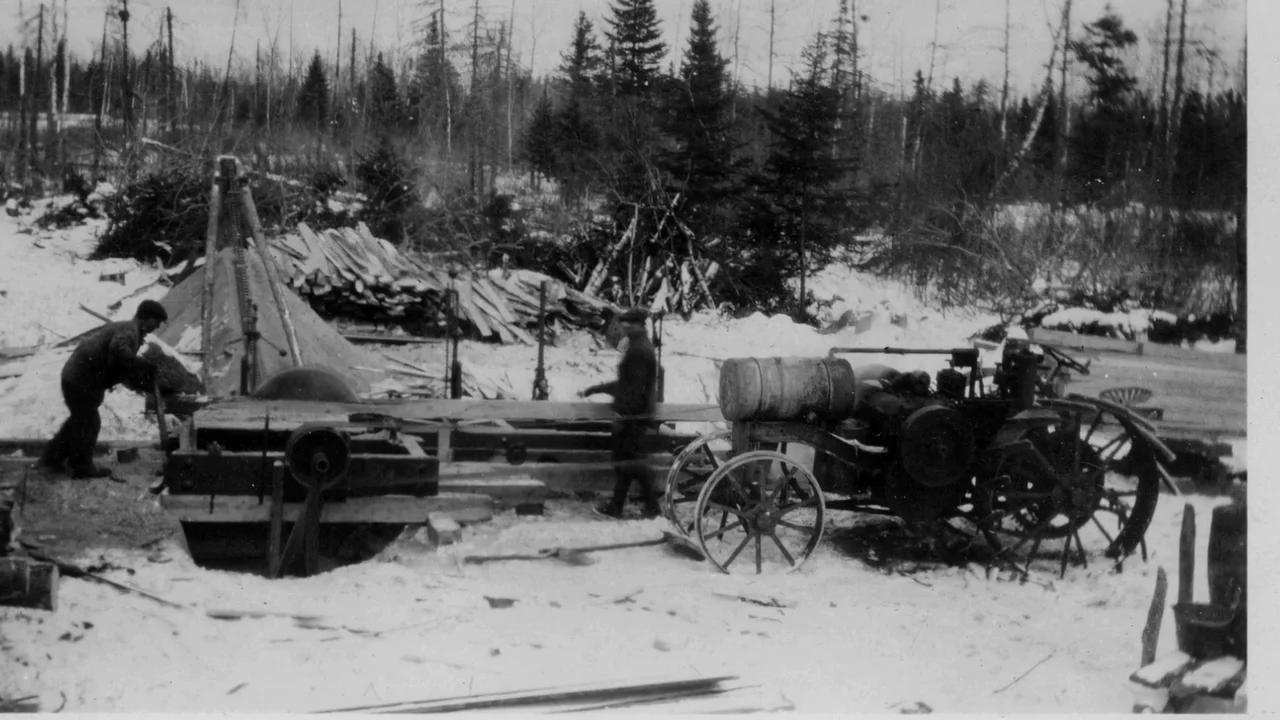
Montana Milling and Logging 1930s
Collection of photos of the logging and milling operations ran by my great-Grandfather in the early 20th Century. The first photos are from near International Falls, Minnesota, with the majority from...
 odysee.com
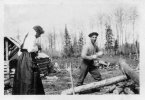
"First known photo of Joe Giroux"
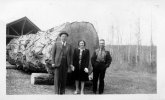
"Big Bizniz Joe"
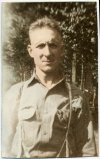
Legend

Stumpsprouts
Been here much more than a while
- Location
- Asheville
Do you know the species of the log in the photo?sure thing. I have around 100 photos of the logging show, among many more of the family, beginning in 1919. I put a video together of favorites of the mill.
A few of the earliest photos are from northern Minnesota, around International Falls. Joe served in WWI, and used exit money to move his sawmill by train to Flathead Lake in Montana. They were one of the first few dozen families in Columbia Falls. The majority of the photos are from the mountainsides surrounding the valley. Joe was a younger sibling of an orphaned bunch from Saint Paul, Minn., and came to grow his business to employ up to 100 men. He kept them working during the depression by hiring them to build his house with wood they were milling.
I got a chance to visit the house as a boy, I can still remember all the rough sawn lumber visible in his sons rooms upstairs. The conifers they planted out front were 80 feet tall and the fruit trees and birdbaths in the back were epic.
You speak correct, this is gold. Every time I take a moment to reflect on his legacy as an ancestor, it's a powerful thing. I bring him in with me almost every day I am working with trees.
<iframe id="odysee-iframe" width="560" height="315" src="https://odysee.com/$/embed/milling/...927a82d6e1?r=3bEG6aG938AXeHfLpZMqMwZr1heUcTcU" allowfullscreen></iframe>
Montana Milling and Logging 1930s
Collection of photos of the logging and milling operations ran by my great-Grandfather in the early 20th Century. The first photos are from near International Falls, Minnesota, with the majority from...
View attachment 80929
"First known photo of Joe Giroux"
View attachment 80930
"Big Bizniz Joe"
View attachment 80931
Legend
Awesome stories and pictures.
dspacio
Branched out member
- Location
- Narragansett Bay
Looks like a massive Ponderosa Pine. They are common in that area.Do you know the species of the log in the photo?
Awesome stories and pictures.
Thank you . I am glad I have heard a good many stories. Two of Joe's sons are still living in California, I hope to record some storytelling in a trip this year. They still remember so many details about machinery, innovations.. it's all about asking the right questions that light up the memory.
chris_girard
Branched out member
- Location
- Gilmanton, N.H.
Yeah, and did he ever give you credit as to where he got the idea? I sure hope so, because you deserve it.Back in the early '90's before Ken Palmer was famous, he and Bob Weber were scheduled to give a couple talks at the Penn-Del Symposium. This was like in 1990 or 91 at the time when they were active in TCC competition and the time when Bob developed the Secured Footlock method that changed the TCC events. At the time, they had no photos to go with their talk to show the climbing and rigging techniques that they were going to talk about and they came to Penn State University and along with the campus arborists and myself, they set up and photographed the different things that they needed. While there I showed Ken a piece of gear that I had made for doing Spruce removals. The Spruce in that area were always affected with Cytospora and had gobs of sap that would gunk up ropes and other things. I had taken a piece of 3 strand esterlon and spliced teardrop thimbles to each end that I would set and tie into, essentially a friction saver that I used as a sap saver. Although I don't know for sure, I believe I gave Ken the idea for the ring and ring friction saver at that time. Glad he made some money on it.




















