oak tree identification

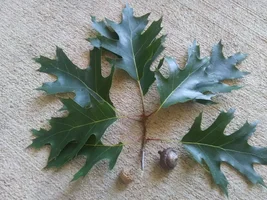
Here's a closeup of the back of a leaf. There seems to be something at the point where the secondary vines joins to the primary veins.
 

Attachments

  • oak-tree-6.webp
    oak-tree-6.webp
    185.2 KB · Views: 15
I like red as well though we have a lot of variation in leaf sinuses on them here. There is likely hybridization between similiar species as well.

Black, red, and shumard have given many a student fits in ID classes over the years.
 
I like that one for Q. shumardii

Q. velutina
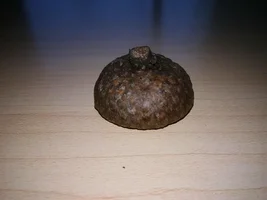
would have more pubescence on the back of the leaves and the acorn would be "frilly".

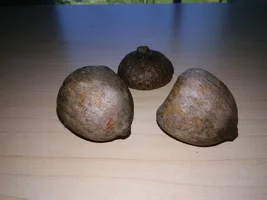
Acorn is too small and leaves cut too deep to be Q. rubra

Q. palustris
would have a smaller cap and the leaves would usually be cut deeper

Q. coccinea would also likely have deeper margins and the acorn as a little circle on the bottom.

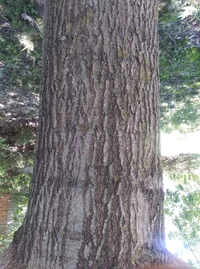
Of course that second picture sure looks like Q. upsidedownium
 
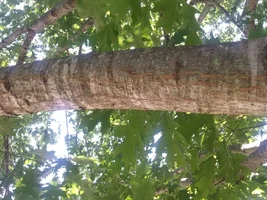
I just picked up some acorns from the front. These are not fresh on the tree, but on the ground. Unfortunately there's a resident squirrel so I can't find many. Maybe the pictures would help. Someone from another forum suggested it might be a hybrid of Northern Red Oak and Shumard. I do not know enough to agree or disagree.
 

Attachments

  • oak-tree-4 (1).webp
    oak-tree-4 (1).webp
    236.3 KB · Views: 6
  • oak-tree-4 (2).webp
    oak-tree-4 (2).webp
    279.4 KB · Views: 6
Last edited:
Besides Shumard, give some consideration to Cherrybark Oak (quercus pagoda) or to Northern Pin Oak (quercus ellipsoidalis). They are both very similar in bark, leaf, and acorn. Your circular acorn shape matches either of these two. The leaves are eerily similar to each other. But the bark picture looks exactly like cherrybark, with those long reddish streaks. It's one of the most common oaks around here. If you're in Columbia MO, you are outside the common range for northern pin.
 
  • Like
Reactions: ATH
I like red as well though we have a lot of variation in leaf sinuses on them here. There is likely hybridization between similiar species as well.

Black, red, and shumard have given many a student fits in ID classes over the years.
I was under the impression that most oak hybrids displayed almost every trait from one parent or the other, although I don't know where I read that. Nature's Garden by Samuel Thayer, maybe. There is a chapter on harvesting and using acorns.

Would that change in later generations? Do they usually reproduce as successfully as the parents?
 

New threads New posts

Kask Stihl NORTHEASTERN Arborists Wesspur TreeStuff.com Teufelberger Westminster X-Rigging Teufelberger
Back
Top Bottom