More Navarro Redwoods

Gerald_Beranek

New member
Location
Ft. Bragg, Ca.
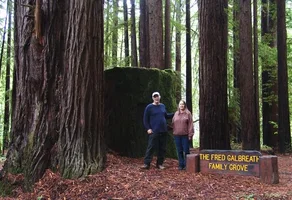
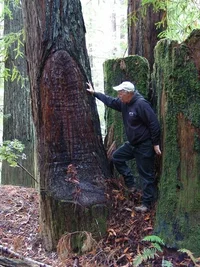
Pic one

Terri and I at the Galbreath grove along the Navarro River Redwoods. We hiked about a mile up one side of the river, crossed and then back down to the truck. Zig zagging all the way. Many fine trees and stumps to see.
 

Attachments

  • 143672-DSC00835r.webp
    143672-DSC00835r.webp
    69.4 KB · Views: 100
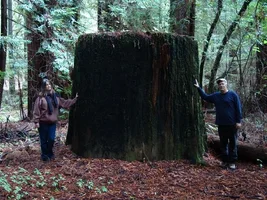
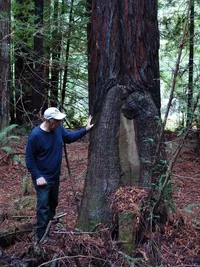
Pic Two

One of the many old growth stumps scattered amongst the second growth trees. A lot of these stumps are still fairly sound and good lumber could be milled from them.
 

Attachments

  • 143673-Nav105013r.webp
    143673-Nav105013r.webp
    82.5 KB · Views: 90
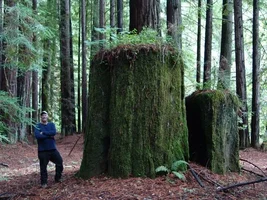
Pic Four

Logging occured on the river flats up through the early 80's. This pic show a couple of codominate second growth that had been ripped and felled off their partners. The wounds are clearly on the way to healing over.
 

Attachments

  • 143675-Nav105rip1.webp
    143675-Nav105rip1.webp
    87.3 KB · Views: 77
Pic Six

Another rip cut from the same time, approximately 25 years ago. This one isn't closing quite as quick, but is well on its way. Personally I never did care for leaving trees to heal such large wounds. In the tree selection process I would have taken both here.
 

Attachments

  • 143677-Nav105rip3.webp
    143677-Nav105rip3.webp
    92.9 KB · Views: 74
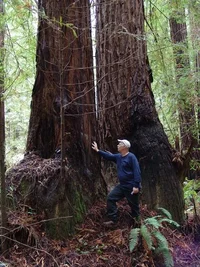
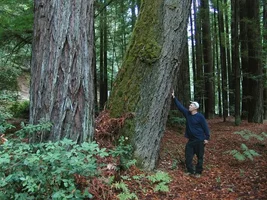
Pic Seven

As you go farther inland, about 10 miles, the Douglas fir begin showing up on the flats. Usually solitary, odd and scattered. Here this fir has butted up closely to the redwood neighbor.
 

Attachments

  • 143678-Redwoodandfir.webp
    143678-Redwoodandfir.webp
    90 KB · Views: 83
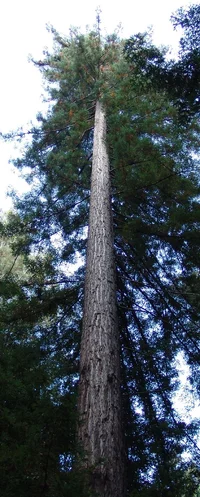
Pic Eight

Click on the pic and scroll. Looking up the perfect stem of a fine second growth redwood. To think someone would want to top a fine tree like this just to prove a point.
 

Attachments

  • 143679-tallsecgro.webp
    143679-tallsecgro.webp
    276.4 KB · Views: 78
Hi, Jerry,
What was the point of "rip cuts"?
Why were the loggers leaving one behind?
(Especially when the tree left behind was now in "newly injured" condition as well)
Why not take both? Did it have to do with quotas?

-Diane-
 
Diane,

Second growth redwoods often grow in very tight groups around the old growth stumps.

In select cut logging practices in the second growth stands the forester marks the trees to thin the stand for uniformity. So the remaining trees have close, or equal, to the same amount of room to grow. It sounds good in theory alright, but thinning the clumps by ripping the co dominate trees apart can present many problems. Way more problems than there is room here to be specific on. In minor degrees often not, but with major rips certainly so.

It's only my opinion that the thinning of redwood sucker clumps not be practiced through ripping the co dominant trees in the group. From my experience it's not good for the leave trees.
 
I agree with what you are saying, Jerry.
Also, I've noticed when thinning doesn't happen two redwoods growing too closely will fuse together along their full trunk length and continue to grow into a single tree.
I'm not sure of the quality of lumber this type of tree would make, but it is an interesting phenomenon.
-Diane-
 
[ QUOTE ]
Pic Two

A lot of these stumps are still fairly sound and good lumber could be milled from them.

[/ QUOTE ]

Last time I was in Humboldt county, I bought some chunks of redwood to take home for turning.
They were cut from a stump in an area that had been logged in 1929.
The wood is very light weight, but totally sound, and has the most wonderfully rippled grain.
It is really special to get a piece of wood like that on the lathe.
 
Sounds like you got some curly redwood there, Stig.

Diane, When the redwoods grow together, like in your example, the growth at the union is increased to hasten the bond. The grain in the wood at the union is rather course until the bond is complete and the growth evens out. The phenomena is not exclusive to the redwoods, but they do exhibit it more pronouncedly than other trees.
 

New threads New posts

Back
Top Bottom