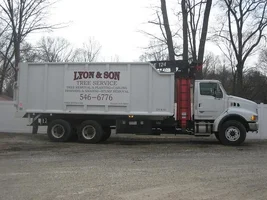
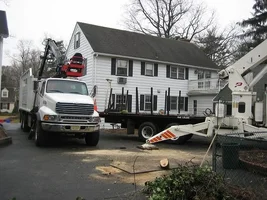
The GVW rating of the truck is limited by the axle. Bridge law says only 20klbs per axle and defines an axles as anything with wheel centers under 40". States existing laws can be grandfathered in (Michigan for example allows 164klbs GVW on 11 axles).
Even still, a standard tandem is typically only good for 34klbs under bridge law. From 40" to 96" spread is good for 34klbs. Going to 96.1" makes it go up to 38klbs. It takes 3 axles over 97" to get 42klbs. To meet bridge law and get 40k on a 2 axle group, the axles have to be 10' apart.
One exception is that 2 sets of tandems can carry 68klbs provided the front and rear axle are spread 36' or more.
Soooo, all that to say I don't know for sure what Mass's rules are, but I think they follow bridge law as they have a GVW of 80klbs max. To meet bridge law, 3 axles won't be carrying 80klbs. For 4 axles to carry 80klbs, they need to be spread over 57' (too long for a straight vehicle).
Soo, for example take a Chevy T8500 tandem, add a steering pusher, and you're good for 76klbs, excluding bridge law. It's hard to get a legal 80klbs on a straight truck.
Page 127
http://www.gmfleet.com/pdf/2009_car_and_truck_guide.pdf#Chevy_T-Series_T8500+Tandem
I'm out of time, but other mfg's make other class 8 cab overs. A behind the cab knuckleboom normally has to be set back to get a full chart so that rarely makes sense. On a rear mount, I'd go cab over for sure.