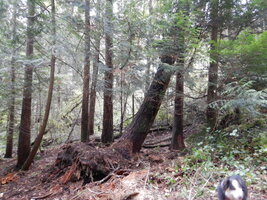
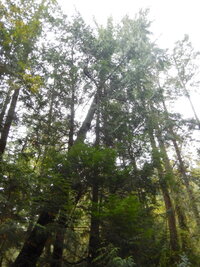
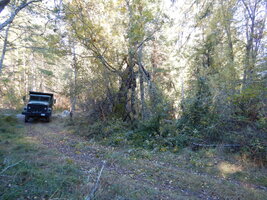
I had a good one today, a doug fir over 100' tall that had partially uprooted maybe 20 years ago, then the top corrected and kept growing. Massive leverage and tension. In many cases, or most, I do a shallow face and bore-cut like most people agree with here, but not in this situation.
Now this was 'in the woods' so I had space to make a mess, but it is an area being cleaned up, leaning towards a road, and as just so happened, their army 6x6 dump truck broke down literally a few degrees away from the natural lean of the tree. I asked it we could pull it out of the way with the excavator that was near by, but its air brakes were locked and that wasn't going to work, so I had to make due.
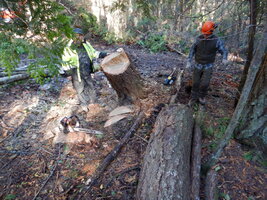
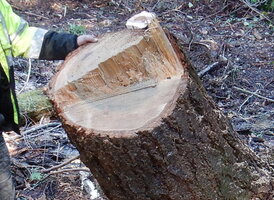
I'd considered a bore-cut, but knew that since I was trying to bend this thing about 25* from where it naturally wanted to go, if I made anything like a normal, straight-across hinge, it would break the tension side and hang up in the other big firs or hit the truck, either itself or with colleterial damage. Also, being partially uprooted for so long, core-rot was likely. So I made a fairly normal depth face for firs out here, a wide angle one, then started in on an intentionally uneven hinge from the compression side as my pivot point and intending to leave the tension side being much,
much wider. The cut-height is pretty even here, it just looks weird given the absurd width of the tension side of the hinge and wood that tore out. Of course things happened very quickly, but I saw the tree start to move and swing where I wanted, so right away I got the hell out of there. It folded exactly where I wanted, well off its lean and well away from the truck, that light-filled spot in the last photo is where it landed. In the closeup you can see the discoloration (early-ish decay) and brittleness of the wood, and the super fat tension side of the hinge that actually had fiber to hold on and let it swing as needed. Hope that makes sense.
(and every tree and situation are different, we all know that)