Inventory + Specifications = Street Tree Retrenchment

Very well done, great work! It seems like the deciding factor of success is the individual trees ability to respond to the pruning by sprouting lower in the canopy. Many willow oaks we work with have pushed their foliage to the tips and when the tree begins to decline there is nothing left for the tree to fall back on.
What can be done to encourage the desired sprouting?
The other major problem we are having is extensive basal decay, Inonotus dryadeus, ganaderma, etc. As our large trees are dying and being removed, the trees that remain are subject to new wind loading that they haven't seen before. The effect of reducing bending moment may be overcome by new wind forces in trees of reduced mechanical ability because of decay.
Thank you for posting your results, this is really fasinating work. Well done sir!
 
Very well done, great work! It seems like the deciding factor of success is the individual trees ability to respond to the pruning by sprouting lower in the canopy. Many willow oaks we work with have pushed their foliage to the tips and when the tree begins to decline there is nothing left for the tree to fall back on.
What can be done to encourage the desired sprouting?
"Small cuts on the outside stimulates
new growth on the inside."

Great stuff guy, thanks for documenting and sharing.
 
Yes, a deciding factor of success is the individual trees ability to respond to the pruning by sprouting lower in the canopy. What can be done to encourage the desired sprouting? scraping outer bark off of nodes seems worth trying. Nicking phloem off just above buds might trigger them by cutting off auxin. Remember that if buds and small laterals get light, they get big. For big trees, throw the 1/3 rule aside.

"The other major problem we are having is extensive basal decay, Inonotus dryadeus, ganaderma, etc." My unfavorite adjective, extensive! The sight of conks drives people crazy. 1st attached

"As our large trees are dying" They sure do look like they are living! The trees in Burlington are the same age, the same species, and squeezed into Narrower spaces. No one says they are dying.
And...is anyone really assigned to make that judgment? Fools rush in; why jump to conclusions? Think in Tree Time. The tree knows better!

"and being removed, the trees that remain are subject to new wind loading that they haven't seen before." Bingo! This added risk needs to be a factor in those removal decisions, along with irreplaceable tree benefits. Sadly, the replacement trees will never replace the existing trees in canopy size). Once all the data are considered, and fungus inspected and accepted for what it is, tree retention makes sense.

"The effect of reducing bending moment may be overcome by new wind forces in trees of reduced mechanical ability because of decay." How likely is that? Examples are rare. Decay gets waaay too much credit for strength loss. It's much more likely the tree will compartmentalize and survive. Noted scientists agree, https://www.bartlett.com/resources/Compartmentalization-Of-Decay-In-Trees.pdf
This is just basic reduction pruning. Nothing radical.

 

Attachments

Frank Rinn presented some very interesting findings on veteran trees and their preservation at the GSTC earlier this year. Decay, cavities and all the rest that signify removal in North America become retrenchment in Europe. We are too quick to condemn a tree than to find a way to manage it.
 
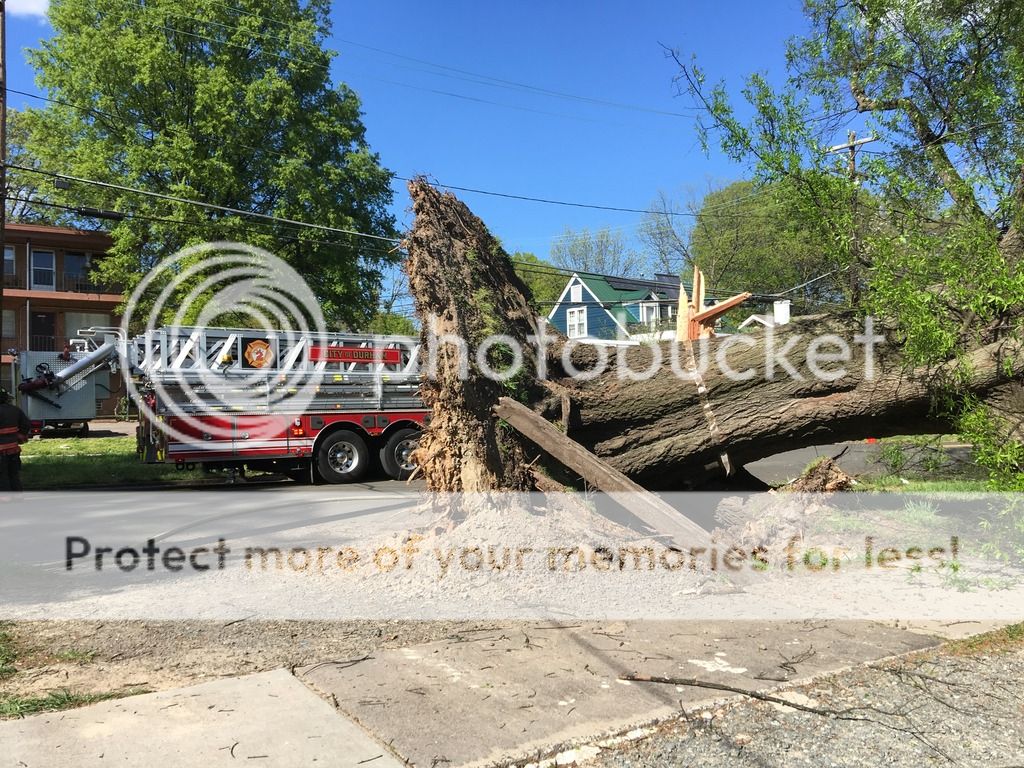
This is why we are are concerned with basal decay.

image_zpsemeisi8v.jpeg


image_zpsf6qsn7su.jpeg

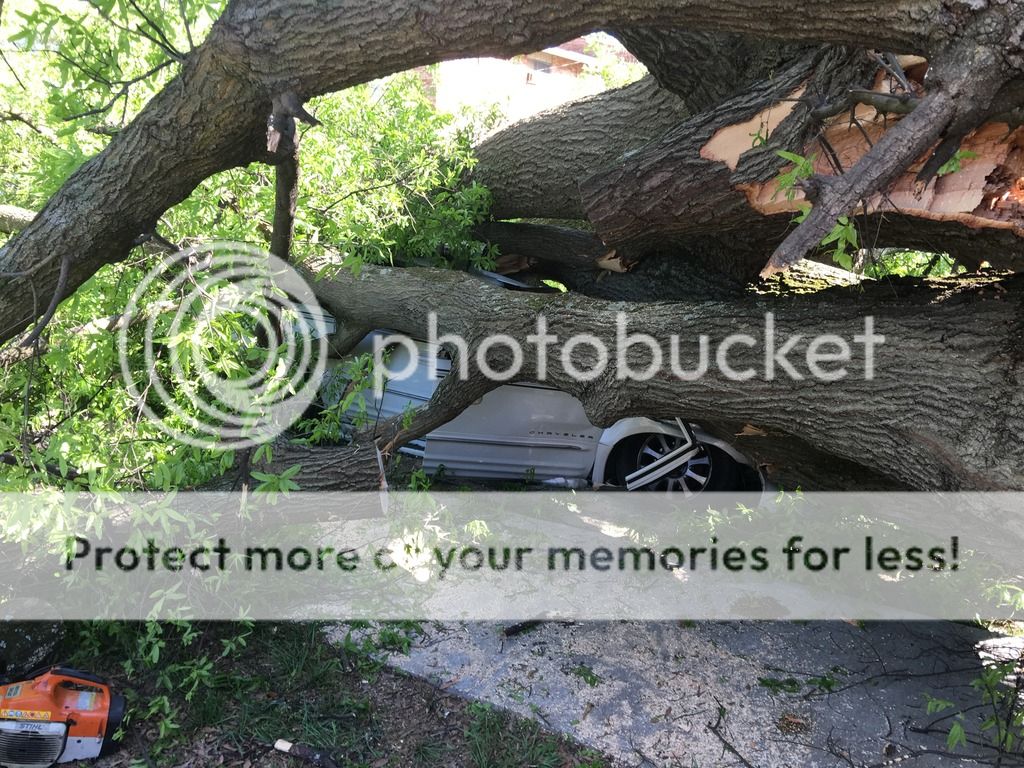
When a pregnant women was killed by a tree failure we have some difficult questions to answer.
 
Serious tree failure to be sure. Were the buttress or major woody roots decayed? I don't see that in the picture. There is certainly a lot of human hardscape encroachment. Usually when I see a toppling like that, the stem is pretty sound. Either the roots have been severed or are decayed, or root extension has been physically inhibited. I'm just not seeing decay here, but that might be the angle of the photo.
 
Yes, the woody roots were decayed. The stem was completely sound. This condition of hardscape and seriously limited rooting space is common throughout our city. We have had many failures like this one crushing houses and cars. The root conditions are usually the same a mushy/spongy mess that should be woody and strong. It just seems like root health or lack thereof is something we only see after a failure.
 
I also don't see root decay visible in the picture--and the roots are up in the air to look at! Looks more like a soil failure.
What can be seen is the wires across the street. If the utility is allowed to exceed its scope and cut excessive amounts off, the trees become imbalanced and more susceptible to windthrow. So it's the utility and those who enable their destruction that have difficult questions to answer.

Forensics of tree failures cannot ignore loading, which is always half of the equation. It can't be blamed on the fungus and the budgets.

Root condition is hard to inspect, unless a probe or a shovel or some other low tech tool is used. Drilling is not defendable.
Roots can grow under pavement, if they are not cut. Burlington's 90 year old willow oak street trees have much less surface area, and just as much abuse by public works. Yet they are reduced and retained, with a reasonable amount of confidence.

Good observation treehumper; glad to hear Frank is spreading the word. Here's his report on a tree we worked with that's ~95% hollow.
 

Attachments

New threads New posts

Kask Stihl NORTHEASTERN Arborists Wesspur TreeStuff.com Teufelberger Westminster X-Rigging Teufelberger
Back
Top Bottom