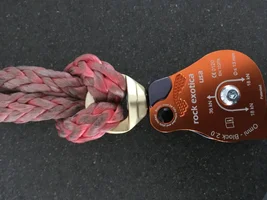
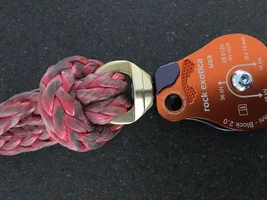
From what I can see on one of the small ultraslings that I made out of Samson Icetail (Technora) that gets used a lot for all kinds of stuff (haul line anchor, hanging a big saw so I can move around without it on my saddle, light rigging redirect, etc.) the problem isn't with the brummel used for the end splice. When you choke the sling off, it puts a lot of pressure on the interconnecting brummels where the sling passes through the adjustment eye you're using. I'm basing this on physical observation of the sling. It was my test piece, so I abuse the hell out of it to see for myself what's likely to go wrong. I even use it for an attachment point when I'm leaving a thick hinge on a branch, then coming down and pulling it off the tree. Anyway, the wear on the sling... where it shows the most fiber crushing, fuzzing and softening up... is where the sling passes through the "crotch" of the eyes being used the most to make it fit the limb. The first eye up from the end splice doesn't get used much, and it shows none of this wear.
So, if I had to guess, I'd say that the pressure applied to those spaced brummels forming the eyes (and always the "corner" toward the end splice or load) are crushing fibers pretty bad. There doesn't seem to be this kind of wear with the brummel forming the end splice, so I'd guess that a deadeye sling wouldn't be a problem. Maybe Nick can offer a better opinion, because I've never actually tried to break one of these, yet. I think it would be fair to say that a brummel in general is going to cause some self abrasion, but with an end eye splice I don't think it would be anywhere near the kind of friction and damage that the ultrasling construction seems to cause.
I guess you'd have to break test some of each, before you could really assess the risk.