Double Ended Double Adjustable Lanyard - Super Versatile!

Zebco Kid

Branched out member
Location
Ashland, Oregon
Hello All,

I found this entire piece super informative.
I was particularly interested in his DEDA lanyard setup. I created a 22’ double sewn eye with Blaze rope and an ISC triple locking snap sewn in on one end.

Took it out on its maiden climbing voyage yesterday. It is awesome! Just remember that the lanyard end (ISC Snap) is not a primary. The other end is.
If you just want to see what I'm talking about, it is here on the video. Once again, the whole piece is good.

35:00 - 35:52


Let me know if you try it.

ZK
 
What do you mean by “ not a primary” ?

I tried a DEDA for a few months, it was just too much rope that seldom was needed and too many loops of rope hanging off me, snagging on everything. I’m happier with a single lanyard and an overhead tie in. If I’m spurring, I’ll use my climbing line as a lanyard until I get my to my tie in point.
But whatever works for you man! Your way or my way aren’t “ right or wrong”, it’s just about preference.
 
The double ended lanyard has been covered in quite a few threads.

Definitely a useful tool, though I don’t use one these days. If I need that third point, I’ll haul up my micro system (40’ of 10mm reep schnur on a belay device in a ditty bag) or use my rope tail with a Blake’s hitch. Less clutter on the standard harness configuration.
 
. I’m happier with a single lanyard and an overhead tie in. If I’m spurring, I’ll use my climbing line as a lanyard until I get my to my tie in point.
I do the same exact thing, although im working on using my 2 in 1 more, spread the wear between that and my main lanyard
 
Remember the thread on the HELL lanyard a few years ago? (Hook on other End of Long Lanyard). I made a 20ft one and use it in conifers that have lots of limbs small enough for the hook. Other end is my normal lanyard config. And the hook comes off fairly quick if I don't want it that climb, because I use a quick link thru the supplied shackle. The Captain hook shackle itself is a PITA to remove in the field.
 
Last edited:
Hello Jonny,

What I mean by not using the lanyard end as a primary is that the combination of the ISC snap and the ART positioner are not intended for life support suspension. They are for work positioning. On the other hand, the other end of the 22' blaze rope is terminated with a rated carabiners, pulley, and hitch, which when deployed can be used for life support (primary).

Also, I understand having too much on the belt, etc. I find that I do less hauling of the far end of the rope, which is a different type of hassle.

Crimson King, although the double ended lanyard has been covered a bunch on this site, I thought this was a bit more interesting, as the length of rope was sufficient for climbing, and not just positioning. I already had a double ended lanyard (Ultimate Positioning Lanyard - Sterling Rope). I find the setup I posted above to be more useful for recreational climbing. The Ultimate Positioning Lanyard seems better for true arborist work positioning (in my humble opinion).

Like Jonny said, "Whatever works..." I'm just trying out different approaches for the fun of it. And, fun I am having!

ZK
 
What I mean by not using the lanyard end as a primary is that the combination of the ISC snap and the ART positioner are not intended for life support suspension.
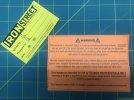
I'm curious where you found this info? I use my ART positioner as life support all of the time. In the literature and product videos that I watched it is even rated to hold you in single line (will not descend single line but rated to hold for work positioning)
 
Work positioning stuff like lanyard adjusters are definitely rated for life support. The warning you probably saw in the Positioner owner’s manual probably said not to be used for fall arrest life support. No shock loads ever.
 
Hello All,

I should start by saying that I'm no expert. Not even close. I should avoid passing along information where I come off authoritative.

Jonny, you are correct. See the pic attached.
 

Attachments

  • F6AA1F06-2DA4-40C4-9ED9-377EECB03FFE_1_201_a.jpeg
    F6AA1F06-2DA4-40C4-9ED9-377EECB03FFE_1_201_a.jpeg
    341.9 KB · Views: 28
Hello All,

I should start by saying that I'm no expert. Not even close. I should avoid passing along information where I come off authoritative.

Jonny, you are correct. See the pic attached.
No worries, misinterpretation happens to all of us at some point. I suspect you'll now use that end of your lanyard with a bit more confidence.
 
Hey Jehinten. Thank you for sticking with this. I'm not totally clear on the difference between "Fall Arrest Life Support" and falling in a tree and being caught by the ISC Snap and ART positioner.

And...if your answer clears it up the way I hope, yes, I will be using that end of my lanyard with more confidence and versatility.

Thank you.

ZK
 
Hey Jehinten. Thank you for sticking with this. I'm not totally clear on the difference between "Fall Arrest Life Support" and falling in a tree and being caught by the ISC Snap and ART positioner.

And...if your answer clears it up the way I hope, yes, I will be using that end of my lanyard with more confidence and versatility.

Thank you.

ZK
Fall arrest is gear that is designed to catch you in a fall, almost no tree climbing gear is rated for that. Our gear is rated for work positioning. This is one of the reasons it's important to keep unnecessary slack out of your system and to not climb higher than your tie in point.
 
Ok. Understood. I had the belief that it (no slack) was the practice because any fall in a tree is unwelcome simply due to the fact it’s going to hurt.…unlike rock climbing, where falling is common.
 
I have been rolling mainly with a Double End Lanyard. It's 27' of 1/2" 16-strand. I can move around a small-to-midsize tree with that alone, while always maintaining one tie-in -point. I have also been able to go way out in those small, spreading trees by sharing load between two points, leaning away from each. For this, I totally dig the DEDA.

The extra rope does get ridiculous at times. I got one of those scuba clips that keeps a few daisy chains stashed well. I tend to keep one end more of a "bucked in" length, and the other end is where I create slack if I am tossing to a reach a distant limb or some such. I could likely use the rope tail .. I like that idea.
 
I think any lanyard or similar positioning system is/should be regarded as life support - cause what's holding your life as you reposition a climb line? Or the other end of the deda? Or do you remove that option from your climb activities? The captain hook blurs the lines because it stays hooked reliably only under load yet if you messed up a traverse you'd hit pretty darn hard.
 
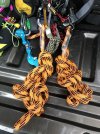
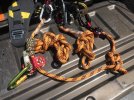
955A608B-8BCF-4F52-9DDE-031D4AF2CE51.jpeg22' Blaze Double Ended Lanyard. ISC snap on the short end for positioning and transfers. The tension is controlled by an A.R.T. Positioner. The long end for climbing is controlled by a Hitch Climber Pulley and eye to eye prusik. I thoroughly enjoy this setup. And yes, doubling up the daisy chain is the only way to fly (climb as the case is).
 

Attachments

  • 93D90903-AA2E-4899-AF61-28ACFBDDEED9_1_201_a.jpeg
    93D90903-AA2E-4899-AF61-28ACFBDDEED9_1_201_a.jpeg
    780.8 KB · Views: 23
I remember Moss or someone else talked about doubling line before daisy chaining it. It is just as quick to do as a normal daisy chain, releases just as quick, and soaks up a lot of line.
yep,exactly. it's always a bight in the middle of the line that I am going to shrink. Keep the ends attached to the Ds.

He also told me he's not a fan of the DEDA, as he doesn't like closed loops hanging from him. This was a strong insight from him. The guy in the video above also talked and stressed shortening ropes with daisy chains... like every time you change your work position.
 
I have a double ended lanyard system that I consider essential to working. Essential not for having 3 tie ins ( I rarely or never do) but for advancing higher in the tree. I work in a lot of Doug Firs and you'll rarely get your highest possible tie in from throwing or shooting from the ground. Having a double ended lanyard makes it so when I reach my tie in, I can just leap frog with my two lanyard ends up and up until I get to the tippy top, vs just using my lanyard and main climb line to advance.

I have my setup and system down to where it rarely gets in the way and stays stowed nicely. Also having a super long lanyard comes real in handy too.
 
I have a double ended lanyard system that I consider essential to working. Essential not for having 3 tie ins ( I rarely or never do) but for advancing higher in the tree. I work in a lot of Doug Firs and you'll rarely get your highest possible tie in from throwing or shooting from the ground. Having a double ended lanyard makes it so when I reach my tie in, I can just leap frog with my two lanyard ends up and up until I get to the tippy top, vs just using my lanyard and main climb line to advance.

I have my setup and system down to where it rarely gets in the way and stays stowed nicely. Also having a super long lanyard comes real in handy too.
As you said, those firs full of lots of smallish limbs, are a real challenge with a throw line to get a high TIP. Lots of those trees out here in the PacNW. I put a Captain Hook on each end of my long lanyard for a while, to make the leap frogging quicker. I had bought a second one anyway, for my daughter, when she was home for an extended visit and climbing with me. I made an extendable pole, to push each hook up as high as I could each time. This was made from a golf ball retrieval pole. Telescopes down to 1-1/2 foot long and hangs from the saddle when not wanted. Extends out to 9 feet and is great for pushing the hook or a throw bag up through clutter.
 

New threads New posts

Back
Top Bottom