

- Location
- Brooklyn, NY
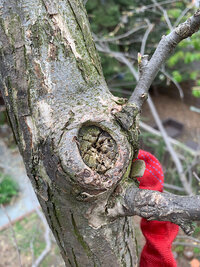
In a juvenile American Elm that had been treated with Paclo a few years prior, many cuts as small as 1" dia. were still far from closed, with wood decaying. The tree is in fine fettle and had been growing at a good clip prior to treatment.
If Paclo is slowing growth might it also be inhibiting wound closure? A friend suggested Paclo might inhibit primary but not secondary growth, but the lack of wound closure seems to contradict that. Anyone know if Paclo inhibits secondary growth as well as primary and if that affects would closure?
@KTSmith , @guymayor, @ATH , @colb , @evo
If Paclo is slowing growth might it also be inhibiting wound closure? A friend suggested Paclo might inhibit primary but not secondary growth, but the lack of wound closure seems to contradict that. Anyone know if Paclo inhibits secondary growth as well as primary and if that affects would closure?
@KTSmith , @guymayor, @ATH , @colb , @evo
Last edited:


