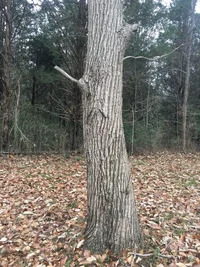
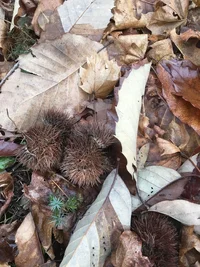
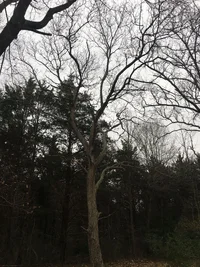
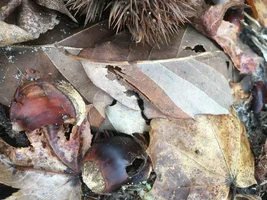
I came across this tree in a customers back yard and I have never seen one before.Does anyone recognize it and are they common in parts of the US?

Follow along with the video below to see how to install our site as a web app on your home screen.
Note: This feature may not be available in some browsers.
It’s spread by fungal spores?There's quite a bit on the need (or not) of tool sterilization in various Treebuzz threads. I can say firmly that chestnut blight has not been shown or even suggested to be spread via pruning wounds.
Thanks for the great ID information and article about the fungus that decimated these beauties! Its a sad story but it’s fascinating! I feel really blessed that I came across this tree! Im going to study and go back to attempt to ID! Just one other observation,I know there is great arborists all around this world but the New England area seems like a hot spot,they are serious about their trees up there!Yes, the chestnut blight fungus produces spores which infect small wounds into the secondary phloem (the inner bark). Now, I mean very small wounds, such as those caused by native insects that themselves may not be considered a pest. Some experts would say that the spores are spread by wind and rain, and this is likely true for some part of it, but I expect that the spores are themselves carried on the surfaces of the insects. So it can be less random chance and more inadvertent mutualism. Infection is not observed as associated with pruning-sized wounds.
More good info is at: http://plantclinic.cornell.edu/factsheets/chestnutblight.pdf.