













Why Is It So Expensive to Cut Down a Tree?
The rising costs of labor and equipment are trickling down to homeowners who need to call “timber!”
By Dan Levin
Jan. 1, 2026, 5:00 a.m. ET
What is removing a tree worth? Quotes vary widely, depending on size, risk and proximity to a home or vehicles. But tree care professionals say they’ve seen a sharp increase in operating costs since the pandemic.
“There are guys who bid $15,000 for a tree, there are guys who bid $1,200,” said Brandon Dolan, a certified arborist and owner of Gray Squirrel Tree Service in Napanoch, N.Y. “You can go from amateur hour, who have no clue, all the way up to top professional.”
One reason for the increase in price is a labor shortage. Noel Boyer, the owner of All About Trees in Springfield, Mo., and board chair of the Tree Care Industry Association, said that a decade ago he could hire an entry-level worker for around $11 an hour. Now the starting wage is about $18, while in larger cities it’s $26. The actual cost to employers is around $45 an hour. “It’s the payroll taxes and the insurance and everything else that you put into that employee,” Mr. Boyer said.
With inexpensive labor harder to come by, many arborists have invested in machinery that can do the job and reduce physical danger — for a price.
“A lot of people used to have a climber in the tree making the cuts to remove a tree,” Mr. Boyer said. “Now they’ve got these million-dollar grapple saws. You literally park this thing out at the street, reach over the house, it grabs a hold of a limb, cuts it off and lays it into the street or into the dump truck.”
The price of equipment, including chippers, cranes and trucks, has increased by about 50 percent in the last five years, said John Smithmyer of Bartlett Tree Experts, which operates in 32 states. That trickles down to customers. Overall, Mr. Smithmyer said, costs to homeowners have risen by more than 25 percent since the pandemic.
If the tree has got to go, Mr. Boyer advises vetting company credentials before signing a contract. Check for a business license, professional certification, proof of workers’ compensation insurance and read online reviews.
The rising costs of labor and equipment are trickling down to homeowners who need to call “timber!”
By Dan Levin
Jan. 1, 2026, 5:00 a.m. ET
What is removing a tree worth? Quotes vary widely, depending on size, risk and proximity to a home or vehicles. But tree care professionals say they’ve seen a sharp increase in operating costs since the pandemic.
“There are guys who bid $15,000 for a tree, there are guys who bid $1,200,” said Brandon Dolan, a certified arborist and owner of Gray Squirrel Tree Service in Napanoch, N.Y. “You can go from amateur hour, who have no clue, all the way up to top professional.”
One reason for the increase in price is a labor shortage. Noel Boyer, the owner of All About Trees in Springfield, Mo., and board chair of the Tree Care Industry Association, said that a decade ago he could hire an entry-level worker for around $11 an hour. Now the starting wage is about $18, while in larger cities it’s $26. The actual cost to employers is around $45 an hour. “It’s the payroll taxes and the insurance and everything else that you put into that employee,” Mr. Boyer said.
With inexpensive labor harder to come by, many arborists have invested in machinery that can do the job and reduce physical danger — for a price.
“A lot of people used to have a climber in the tree making the cuts to remove a tree,” Mr. Boyer said. “Now they’ve got these million-dollar grapple saws. You literally park this thing out at the street, reach over the house, it grabs a hold of a limb, cuts it off and lays it into the street or into the dump truck.”
The price of equipment, including chippers, cranes and trucks, has increased by about 50 percent in the last five years, said John Smithmyer of Bartlett Tree Experts, which operates in 32 states. That trickles down to customers. Overall, Mr. Smithmyer said, costs to homeowners have risen by more than 25 percent since the pandemic.
If the tree has got to go, Mr. Boyer advises vetting company credentials before signing a contract. Check for a business license, professional certification, proof of workers’ compensation insurance and read online reviews.

 (guy in a bandana straddling a limb) You'd think the NYT would get a better photo!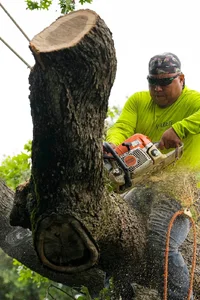




 )
)






















