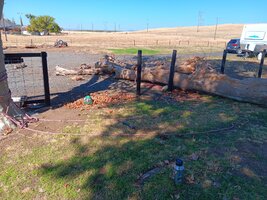
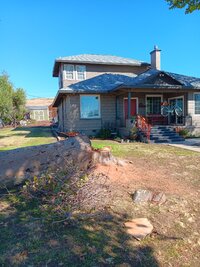
Spidey senses tingling, but is it overreacting?

Matias

Been here much more than a while
Location
Butte County
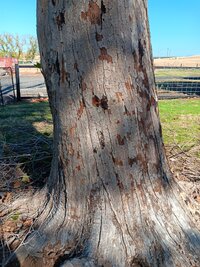
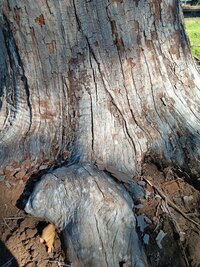
So I'm looking at this 32" DBH sycamore that got hat-racked 4.5 years ago, and started to look sickly two years after, and succumbed completely almost a year and a half ago. It has a black powdery fungus blooming out from patches all over. I thought I would just walk out to the ends of what's left and just know off manageable pieces on my own. The cracks up in the unions were almost 7mm wide in some spots, and they were creaking like nothing I have ever been on, so I stopped and am asking for opinions here.

Should I insist on a lift, which means probably handing this one over to a buddy, or do I need to put my boots back on and get this done? I had been advised by guys I trust that it was approaching the length of time dead that they'd rather not climb it anymore, and would be a borderline case.20231007_103348.jpg20231007_103332.jpg20231007_103324.jpg
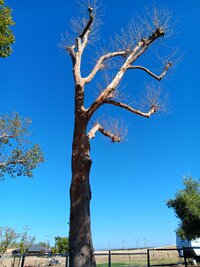
 
I dunno, don’t get solo stuff, never do it.
You cannot find anyone just to unclip a Krab for €100 for a morning?
I had planned to do that, but I am working on finding someone with the time and the inclination, and was hoping to get this done before the rains come.
 
Do you have to rig it or can you bomb pieces? I'd be nervous climbing something that dead. Would be even .ore concerned rigging...
 
I’d approach by setting a rigging line roughly 2/3 way up, divide tree in 4 quadrants and do a pull test from all 4 sides- look for movement at the basal in relation to the rest of the trunk/canopy. May indicate structural stability or compromise (decay) of roots. Especially look for uplift or decompression of soil around roots/root flare when pull testing. Sound with rubber mallet or hammer at basal and up as you climb if you go the limbing and felling route. Brown rot may not reveal itself as a hollow sound from what I’m told, however white rot will indicate hollow sound. If you’re gaffing into seriously squishy cambium layer, I’d be very cautious on moving dynamically while climbing. Slash cut limbs down to avoid more dynamic forces or take smaller controlled snap cuts. If there’s any live trees around, use those as a tie in. If the tie in angle is extreme from one live tree, try to triangulate with a 2nd tie in on another live tree, with this method consider using a breakaway lanyard for your flip-line or use a key ring that could hold your weight without breaking as saddle attachment for flip-line.

I don’t frequently climb for dead removals, but I run ropes and ground for many. Those are some things I’ve picked up from more experienced folks. Hopefully that helps. Good luck and trust your gut. Never feel bad about walking away form something, there’s plenty of more enjoyable climbs in your future. Cheers.
 
Last edited:
20231007_143249-jpg.90478
20231007_143233.jpg
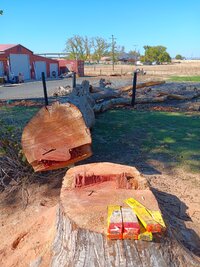
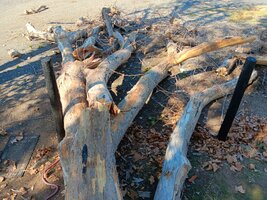
Not the most mechanically perfect hinge, but I hit my shot. Crisis averted, and thank you to all who weighed in.
 

Attachments

  • 20231007_143249.jpg
    20231007_143249.jpg
    1 MB · Views: 138

New threads New posts

Kask Stihl NORTHEASTERN Arborists Wesspur TreeStuff.com Teufelberger Westminster X-Rigging Teufelberger
Back
Top Bottom