Permanent friction saver options.

I'm getting a new house with an amazing water oak in the backyard. I'll be climbing the tree often with friends and family so what would be the best option for friction savers that are permanently installed?

I can't think of a rope I would feel confident in constantly exposing to the sun and rain and then climbing on. Maybe two eye bolts similar to cabling eyes and then two rigging rings to act as the friction saver? A through bolt might need to be installed a little lower in the tree (thicker diameter wood) than what I would aim for while setting up for a good limb walk pruning. What about a chain friction saver I measure to perfectly sit in the crotch of my choosing?

Any thoughts, recommendations, or ideas?
 
Why not a tube style that is installed with the climb line every time? I would not want to bolt a nice tree just to climb it. A chain ring saver sounds safe to leave long term, but I would want it wrapped in something to protect the tree. Firehose sleeve or something.
Another idea for 2 ropes: make a false crotch on a basal anchor and pull your doubled rope up on an access line.
I'm not a fan of "permanent" climbing aids. I don't even keep a line in my trees.
 
No permanent rope for sure. UV eats rope pretty fast. Honestly, I'd just leave throw line over a crotch and then haul up a climb line every time with a floating crotch if I wanted to MRS. I've done it before on my back yard trees. You can use something more natural tone if you don't want to see it all the time.

I wouldn't want to use eye bolts. You are damaging the tree unnessicarily and you are trusting your life to the integrity of said tree. I wouldn't want to leave chain either because the tree will start growing funky where the chain is laying.
 
That sounds like a great excuse for a big shot or an apta.

In all seriousness I keep a throwline installed in a pair of large Firs on my property to swap with a climbing line when needed. Simply exchange the throwline with the climb line when you're done and secure it to the trunk of the tree.

Even if you have a friction saver installed permanently you'd need a line threaded through the rings to make it useful.
 
Last edited:
What I've seen done is swaged cable (professionally swaged with certified swager). Eyes on each end with rubber tubing over the cable. For the proper safety factor I'd go with 3/8" or 1/2 cable.

Good idea if can be affordably done. Want to be able to inspect it if there for years and cable can be hard to inspect and can corrode under right conditions... depends on how long it will be there. I have seen wirecore lanyards corrode through and break before...
 
I have considered that but after a day working and get back it would probably cost me the practice climb before dark if I had bad session on throwball (my accessible trees have somewhat tight crotches) so I can see the application of a permanent TIP.

I am considering the same thing soon so I will likely use a chain with the double application of trying to correct the growth tip of a nearby spruce that is wind blown and growing horizontally now...
 
I'm getting a new house with an amazing water oak in the backyard. I'll be climbing the tree often with friends and family so what would be the best option for friction savers that are permanently installed?

I can't think of a rope I would feel confident in constantly exposing to the sun and rain and then climbing on. Maybe two eye bolts similar to cabling eyes and then two rigging rings to act as the friction saver? A through bolt might need to be installed a little lower in the tree (thicker diameter wood) than what I would aim for while setting up for a good limb walk pruning. What about a chain friction saver I measure to perfectly sit in the crotch of my choosing?

Any thoughts, recommendations, or ideas?

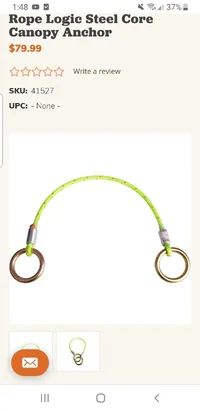
Just came across this on my daily checks of multiple internet arb shops to look at the shiny things and fibres....then remembered this topic had recently come up....this may a good low cost/impact tool that could be left in the tree for long periods with regular inspectionScreenshot_20200106-134900_Chrome.webp
 
Wire core fs...first time I seen that. Is that supposed to be for crane use or something?
 
Wire core fs...first time I seen that. Is that supposed to be for crane use or something?
My understanding is that it is steel core and rope sheath, but they function independently for redundancy. On the web site it does say for semi-permanent canopy anchor
 
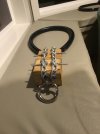
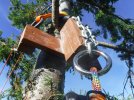
I used a chain that went through a very durable rubber hose. Here is a foto of our contraption which does show two shackles and we ended up only using one. The large ring is held by that one shackle which is wired so as to not become undone. We will need to put some padding between the board and the tree. We wanted the ring to come out a bit from the trunk which is why we added the wood. The “T”bar was put there to prevent the rotation of the chains. It seems to work quite well. We are recreational Tree Climbers and this permanent chain friction saver is 70 up from the ground on our Douglas Fir. I just got trained and am climbing this about 3 times a week. We take the climbing rope down after each climb and just keep the throw line permanently attached. The rope is stored in a large Husky container that is latched shut on the two sides to keep out moisture. We have a permanent basal anchor there also and use a 300 foot rope in case we would ever need to lower a climber.5B8C17E9-43BE-40D7-92C6-AF23B0F22126.jpeg
2781B410-0A7B-4AE3-84E2-7D949D32B06C.jpeg
 
Last edited:
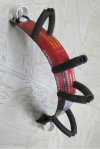
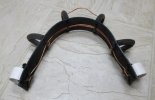
Here's my permanent friction saver made from scrap stuff.
Friction saver update 2020-10-30.jpg
Frictionsaver 2020-11-05 .jpg
The plastic strip is cut from a paint bucket. The guides are small rubber hose. The end guides are pvc pipe with the inside edges tapered. It's held together with black zip ties. The #12 copper wires stiffen the plastic strip to hold it in place on the limb or crotch. You can make them longer to fit big limbs or crotches. I drill 1/4" holes along the edges of the strip for the zip ties.

The wire on top is used to lift it into place with my telescopic pole after running a throw line with weight through the guides.

A light bookmark line will hold them in place, and the rope feeds through the guides very easily when you're ready to climb.

I use a big shot to get a line in the tree, and then use the telescopic pole to advance the tie-in-point higher and install the friction saver.

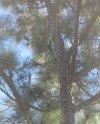
This one is about seventy-five feet up.
FS in tree 2020-11-05.jpg
 
Last edited:

New threads New posts

Kask Stihl NORTHEASTERN Arborists Wesspur TreeStuff.com Teufelberger Westminster X-Rigging Teufelberger
Back
Top Bottom